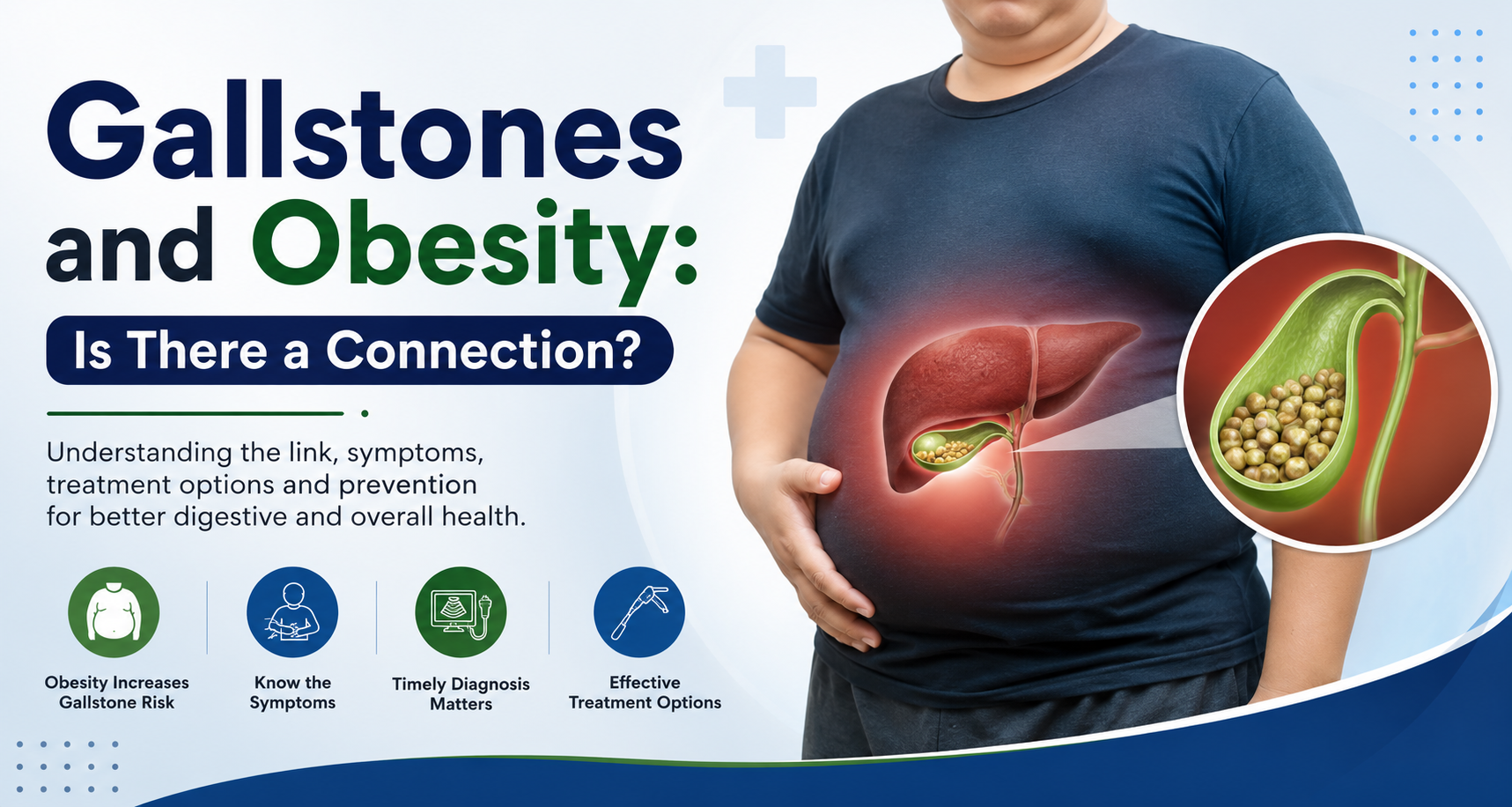
Gallstones and obesity are more closely connected than many people realise. A person may initially notice only weight gain, abdominal heaviness or occasional indigestion and not think much of it. But obesity, particularly excess abdominal fat, can increase the likelihood of developing gallstones and experiencing gallstone-related problems.
The connection can become especially important when someone is trying to lose weight. While achieving a healthier weight can reduce several obesity-related health risks, losing weight too quickly can also increase the risk of gallstone formation.
This creates an important distinction: healthy, gradual weight management is beneficial, while crash diets and very rapid weight loss can work against gallbladder health.
In clinical practice, patients sometimes dismiss repeated upper-abdominal discomfort as acidity or “gas,” particularly when the pain appears after a heavy or oily meal. Gallstone pain can resemble other digestive problems, so persistent or recurring symptoms should not simply be ignored.
This article explains the relationship between gallstones and obesity, how to recognise warning signs, how gallstones are diagnosed and treated, and what people undergoing obesity treatment should know about their gallbladder.
What Are Gallstones?
Gallstones, medically called cholelithiasis, are hard deposits that form inside the gallbladder.
The gallbladder is a small, pear-shaped organ located beneath the liver. Its main function is to store and concentrate bile, a digestive fluid produced by the liver. When you eat, particularly a meal containing fat, the gallbladder contracts and releases bile into the small intestine to help with digestion.
Gallstones can vary considerably in size. Some are as small as grains of sand, while others can become much larger. They may occur as a single stone or as multiple stones.
The two broad types are:
Cholesterol stones
These are the most common type in many populations. They develop when there is too much cholesterol in the bile or when the gallbladder does not empty effectively.
Pigment stones
These are associated with excess bilirubin in bile and can occur in certain blood or liver conditions.
Not everyone who has gallstones develops symptoms. Gallstones that are discovered incidentally and do not cause symptoms are often called silent gallstones and may not require treatment.
The problem begins when a stone blocks the normal flow of bile.
Is There a Connection Between Gallstones and Obesity?
Yes. Obesity is an established risk factor for gallstone disease.
People with obesity may have changes in bile composition, including increased cholesterol concentration. Obesity can also affect how efficiently the gallbladder empties. Both factors may encourage the formation of cholesterol gallstones.
Research and clinical guidelines also associate increasing body mass index and waist circumference with a higher risk of symptomatic gallstone disease.
The relationship is not simply about body weight on the weighing scale. Where the body stores fat matters as well.
Why does obesity increase gallstone risk?
Several mechanisms may contribute:
1. Higher cholesterol in bile
Obesity can increase cholesterol production and secretion into bile. When bile becomes overly saturated with cholesterol, crystals can form and gradually develop into stones.
2. Reduced gallbladder emptying
People with obesity may have a gallbladder that does not contract and empty as efficiently. When bile remains in the gallbladder for longer, conditions may become more favourable for stone formation.
3. Abdominal or visceral fat
Excess fat around the waist is associated with metabolic changes that may increase gallstone risk.
4. Insulin resistance and metabolic syndrome
Obesity commonly occurs alongside insulin resistance, type 2 diabetes, abnormal cholesterol levels and high triglycerides. These metabolic factors are also associated with gallstone disease.
So, the connection between obesity and gallstones is not just mechanical. It involves changes in metabolism, bile composition and gallbladder function.
Other Risk Factors for Gallstones
Obesity is important, but it is not the only risk factor.
A person with a healthy BMI can also develop gallstones.
Common risk factors include:
- Female sex
- Increasing age
- Family history of gallstones
- Pregnancy
- Certain hormonal influences
- Type 2 diabetes and insulin resistance
- Metabolic syndrome
- High triglyceride levels
- Certain liver or blood disorders
- Some intestinal diseases
- Rapid weight loss
- Very-low-calorie diets
- Previous bariatric or metabolic surgery associated with rapid weight loss
Therefore, it would be inaccurate to assume that every person with obesity will develop gallstones—or that every person with gallstones has obesity.
Gallstone formation usually results from a combination of genetic, metabolic, dietary and physiological factors.
Can Losing Weight Cause Gallstones?
This is one of the most important points for people seeking Obesity Treatment in Delhi or elsewhere.
Healthy weight loss is beneficial, but rapid weight loss can increase the risk of gallstones.
When the body loses weight very quickly, the liver may release more cholesterol into bile. At the same time, prolonged fasting or very-low-calorie diets can reduce how frequently the gallbladder empties.
These changes can promote gallstone formation. Rapid weight loss following certain types of weight-loss surgery can also increase the risk.
That does not mean people with obesity should avoid losing weight. Quite the opposite.
The key is to pursue weight loss under appropriate medical guidance rather than relying on crash diets, prolonged fasting or unmonitored extreme calorie restriction.
What Symptoms Can Gallstones Cause?
Many gallstones remain completely silent.
When a stone blocks the cystic duct or another bile duct, symptoms may occur.
The classic symptom is biliary colic, which typically causes pain in the upper-right or upper-middle part of the abdomen.
The pain may:
- Begin suddenly
- Occur after eating, particularly after a heavy meal
- Last for several hours
- Feel severe or persistent
- Spread toward the back or right shoulder in some people
- Be accompanied by nausea or vomiting
Some patients describe the discomfort as severe pressure rather than a sharp pain.
This is one reason gallstones can initially be mistaken for acidity, indigestion or other gastrointestinal problems.
Warning symptoms that should not be ignored
Seek prompt medical attention if abdominal pain is accompanied by:
- Fever or chills
- Persistent vomiting
- Yellowing of the eyes or skin
- Dark, tea-coloured urine
- Pale or clay-coloured stools
- Severe or prolonged abdominal pain
These symptoms may indicate inflammation, infection or blockage involving the gallbladder or bile ducts and can sometimes signal pancreatitis or another serious complication.
How Are Gallstones Diagnosed?
Diagnosis usually begins with a detailed medical history and physical examination.
Your doctor may ask:
- Where exactly is the pain?
- How long does it last?
- Does it occur after meals?
- Is there nausea or vomiting?
- Have you experienced fever or jaundice?
- Have you recently lost weight rapidly?
- Do you have diabetes or high cholesterol?
- Is there a family history of gallstones?
- Have you undergone weight-loss surgery?
Abdominal ultrasound
Ultrasound is usually the first-line imaging test for suspected gallstones.
It is non-invasive, does not involve radiation and can identify stones within the gallbladder in many cases.
Blood tests
Blood tests may be recommended to look for evidence of inflammation, infection or problems involving the liver, bile ducts or pancreas.
Additional imaging
Depending on the clinical situation, a doctor may recommend tests such as:
- CT scan
- MRI/MRCP
- HIDA scan
- Endoscopic ultrasound
If a stone is suspected in the common bile duct, ERCP may sometimes be used. Importantly, ERCP is generally used selectively because it is an invasive procedure and can also be therapeutic—for example, to remove a stone obstructing the bile duct.
Treatment Options for Gallstones
Treatment depends on whether the stones are causing symptoms or complications.
1. Observation for silent gallstones
If gallstones are discovered incidentally and are not causing symptoms, treatment may not be necessary in many patients.
However, patients should understand which symptoms should prompt medical review.
2. Laparoscopic gallbladder surgery
For symptomatic gallstones, the standard definitive treatment is generally laparoscopic cholecystectomy, in which the gallbladder is removed through minimally invasive surgery.
The gallbladder is not essential for normal life. After removal, bile continues to flow from the liver into the intestine.
For appropriately selected patients, laparoscopic surgery can offer effective treatment while avoiding repeated episodes of gallstone pain.
3. ERCP for bile duct stones
If a gallstone has moved into and blocked the common bile duct, ERCP may be used to remove the obstructing stone.
Depending on the situation, gallbladder removal may then be recommended to reduce the risk of further gallstone-related episodes.
4. Medicines and other non-surgical treatments
Certain medicines can dissolve some cholesterol stones, but they are suitable only in selected circumstances and may require prolonged treatment. Stones can also recur.
Shock-wave treatment is used only rarely.
For patients who are medically fit for surgery and have symptomatic gallstone disease, surgery is generally the more definitive approach.
Gallstones and Obesity Treatment: What Should Patients Know?
Patients undergoing obesity management need a balanced approach.
If you have obesity and gallstones, the treatment plan should consider both conditions rather than treating them in isolation.
For example, someone preparing for metabolic or bariatric surgery may already have gallstones. The surgeon may evaluate the gallbladder based on symptoms, ultrasound findings and the overall surgical plan.
Likewise, someone who has recently lost a significant amount of weight and develops recurrent upper-abdominal pain should not automatically assume it is simply a side effect of dieting.
The right approach is to assess the symptoms and investigate when clinically indicated.
This is particularly important because rapid weight loss can increase gallstone risk even though long-term weight management is beneficial for overall health.
Can Gallstones Be Prevented?
Not every case can be prevented because some risk factors—such as age, genetics and certain medical conditions—cannot be changed.
However, several lifestyle measures can support gallbladder and metabolic health.
Aim for gradual, sustainable weight loss
If you have obesity, losing excess weight can provide important health benefits. The goal should be a medically appropriate, sustainable weight-loss plan rather than a crash diet.
Avoid extreme dieting
Very-low-calorie diets and prolonged fasting can increase gallstone risk, particularly when they result in rapid weight loss.
Eat a balanced diet
A practical eating pattern can include:
- Vegetables and fruits
- Whole grains
- Pulses and legumes
- Adequate protein
- Appropriate amounts of healthy fats
Reducing excessive refined carbohydrates, added sugar and unhealthy fried or highly processed foods may also support better metabolic health.
Stay physically active
Regular physical activity can support healthy weight management and metabolic health.
Manage associated conditions
If you have diabetes, high triglycerides, fatty liver disease or other metabolic problems, keeping these conditions under appropriate medical care is important.
When Should You See a Doctor?
Do not wait for repeated attacks before seeking medical advice if you are experiencing unexplained upper-abdominal pain.
A consultation is particularly appropriate when:
- Pain repeatedly follows meals
- Pain occurs in the upper-right abdomen
- You have unexplained nausea or vomiting
- You have recently lost a substantial amount of weight
- You have obesity along with recurrent abdominal symptoms
- You have already been diagnosed with gallstones
- You develop jaundice, fever or severe persistent pain
Some patients wait because the pain settles after a few hours. But a resolved attack does not necessarily mean the underlying problem has disappeared. Gallstone attacks can recur, and complications can develop when a stone remains lodged in a duct.
FAQs
1. Is obesity a risk factor for gallstones?
Yes. Obesity is associated with a higher risk of gallstone formation. Changes in cholesterol metabolism, bile composition, gallbladder emptying and abdominal fat distribution may contribute.
2. Can losing weight reduce the risk of gallstones?
Gradual, healthy weight loss may help reduce obesity-related health risks. However, very rapid weight loss can increase gallstone risk. Weight management should therefore focus on a sustainable approach.
3. Can rapid weight loss cause gallstones?
Yes. Rapid weight loss can increase cholesterol secretion into bile and may reduce gallbladder emptying, creating conditions that favour gallstone formation.
4. What does gallstone pain feel like?
Gallstone pain commonly occurs in the upper-right or upper-middle abdomen and may last for several hours. It may occur after meals and can be associated with nausea or vomiting.
5. Do all gallstones require surgery?
No. Silent gallstones that do not cause symptoms often do not require treatment. Symptomatic gallstones, however, commonly require evaluation for laparoscopic gallbladder removal.
6. Can you live normally without a gallbladder?
Yes. The gallbladder is not essential for normal life. After gallbladder removal, the liver continues producing bile, which flows directly into the intestine.
7. Is gallstone surgery possible in people with obesity?
In many patients, laparoscopic gallbladder surgery can be performed safely, but the individual surgical risk depends on overall health, obesity severity, diabetes, heart or lung conditions, previous abdominal operations and other factors. A surgeon should assess each patient individually.
8. Can gallstones come back after gallbladder removal?
The gallbladder itself is removed during cholecystectomy, so gallstones cannot form inside the removed gallbladder. However, stones can occasionally be present in or later develop within the bile ducts, which is a different clinical situation.
9. Should I lose weight if I already have gallstones?
Weight management may still be beneficial, particularly if you have obesity. However, avoid crash diets and rapid weight-loss plans. Your doctor or dietitian can help determine a safe strategy.
10. Can obesity and gallstones be treated together?
Yes. A patient’s weight, metabolic health, gallbladder symptoms and surgical history can all be considered when developing a treatment plan. This is particularly relevant for people considering bariatric or metabolic surgery.
Conclusion
The connection between gallstones and obesity is real, but it is not as simple as saying that excess weight directly causes every gallstone.
Obesity can alter cholesterol metabolism and bile composition, affect gallbladder emptying and increase the likelihood of symptomatic gallstone disease. At the same time, rapid weight loss can temporarily increase the risk of stone formation.
For someone seeking Obesity Treatment in Delhi, this is an important part of the bigger picture. Weight management should focus not only on reducing numbers on the scale but also on improving metabolic health safely and sustainably.
If you have recurring upper-abdominal pain, nausea after meals or other symptoms suggestive of gallstones, do not assume that it is ordinary acidity. A proper clinical assessment and, when appropriate, an ultrasound can help identify the cause.
A personalised consultation with an experienced surgeon can help determine whether observation, medical management, gallbladder surgery, or a broader obesity-management plan is appropriate for you.
Leave a Reply