

If you have been struggling with obesity for years, you may have already checked your BMI. Perhaps you have even searched online to find out whether your number qualifies you for bariatric surgery.
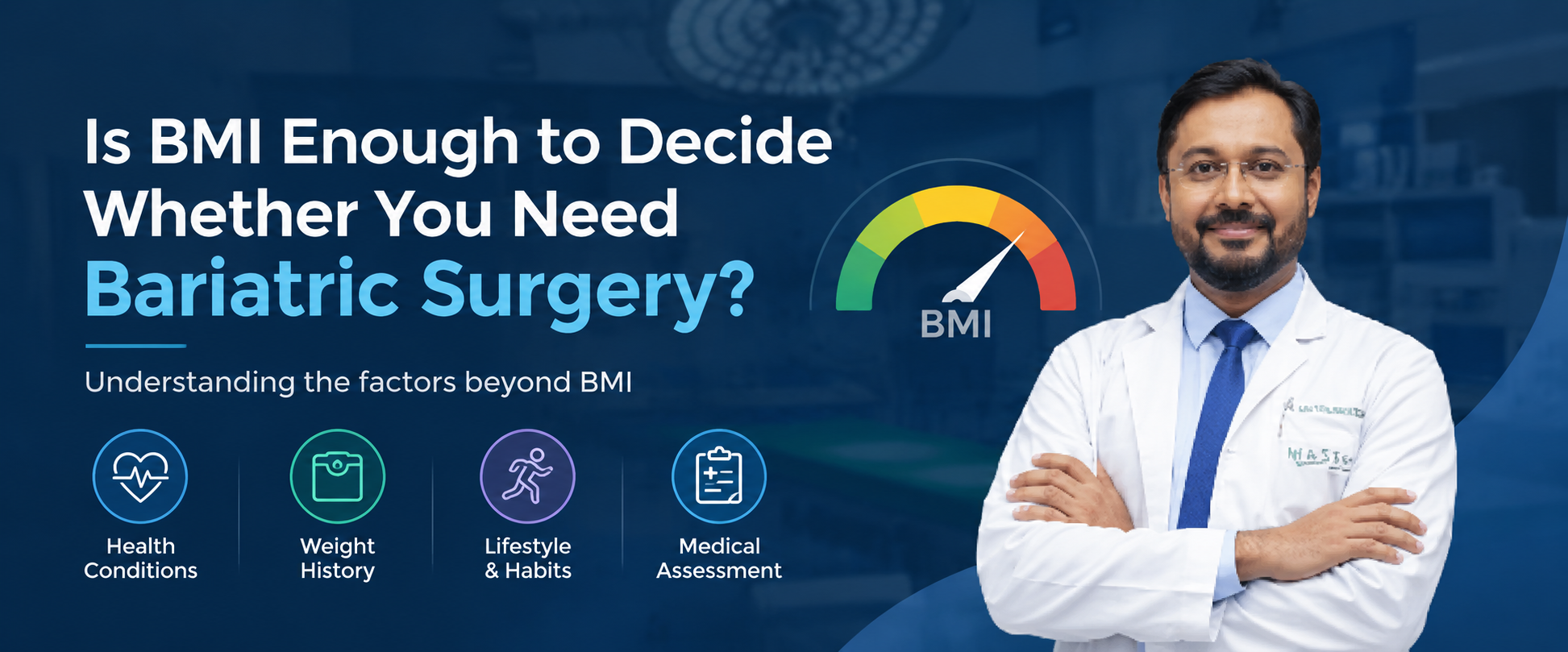
But there is an important point many patients miss: BMI is a useful starting point, not the whole decision.
A person with a BMI of 36 may have diabetes, high blood pressure and sleep apnoea, while another person with the same BMI may have a very different health profile. Similarly, people of Asian backgrounds can develop metabolic complications at lower BMI levels than some conventional BMI categories suggest.
This is why a bariatric surgeon does not decide about surgery by looking at one number alone. A proper assessment considers your BMI, medical conditions, abdominal fat, previous attempts at weight management, nutritional status, eating patterns, psychological readiness and ability to follow long-term postoperative care.
Current metabolic and bariatric surgery guidelines also recognise that BMI thresholds should not be applied identically to every population, including Asian patients.
If you are considering Obesity Treatment in Delhi, understanding this assessment can help you have a more useful conversation with your doctor.
What Is BMI and Why Is It Used in Bariatric Surgery?
BMI, or body mass index, is calculated using your weight and height:
BMI = weight in kilograms ÷ height in metres²
It is widely used as a screening measure for overweight and obesity because it is simple and inexpensive. However, BMI is a surrogate measure of body fat rather than a direct measurement of body fat. The World Health Organization also notes that additional measurements, such as waist circumference, can provide useful information.
For adults, conventional BMI categories generally classify:
- 25–29.9: Overweight
- 30–34.9: Obesity
- 35–39.9: Higher-grade obesity
- 40 or above: Severe obesity
However, these numbers should not be interpreted in isolation.
BMI does not tell us where a person carries fat. It also does not directly show muscle mass, abdominal fat distribution or the presence of obesity-related diseases.
For example, a muscular person may have a high BMI without having the same amount of body fat as someone with the same BMI and a large amount of abdominal fat.
That is one reason a clinical assessment is more meaningful than simply entering your height and weight into an online BMI calculator.
So, Is BMI Enough to Decide on Bariatric Surgery?
No. BMI is important, but it is not enough by itself to decide whether bariatric surgery is appropriate.
Modern guidelines use BMI as one of the important eligibility measures, but they also consider obesity-related medical problems and the individual’s overall clinical situation.
The 2022 ASMBS/IFSO guidance recommends metabolic and bariatric surgery for adults with a BMI of 35 kg/m² or higher, regardless of whether obesity-related comorbidities are present. It also recommends surgery for people with type 2 diabetes and BMI of 30 kg/m² or higher and says surgery should be considered for selected people with BMI 30–34.9 kg/m² who have not achieved substantial or durable improvement with nonsurgical treatment.
More recent evidence and guidance continue to recognise the importance of obesity-related disease and differences in risk among Asian populations.
So, rather than asking only, “What is my BMI?”, a better question is:
“How is obesity affecting my health, and would bariatric surgery provide meaningful health benefits for me?”
What Other Factors Does a Bariatric Surgeon Consider?
1. Obesity-related health conditions
Your existing health conditions can significantly affect the treatment decision.
A doctor may look for conditions such as:
- Type 2 diabetes
- High blood pressure
- Obstructive sleep apnoea
- Fatty liver disease
- Abnormal cholesterol levels
- Heart-related risk factors
- Joint problems affected by excess weight
- Polycystic ovary syndrome in appropriate patients
- Gastroesophageal reflux disease
- Other metabolic complications
For example, someone with obesity and poorly controlled type 2 diabetes may need a different discussion from someone who has obesity without significant medical complications.
Bariatric surgery can improve several obesity-related conditions, but the expected benefits and risks need to be considered individually. NICE lists conditions such as type 2 diabetes, hypertension, obstructive sleep apnoea and fatty liver disease among conditions that may improve following bariatric surgery.
2. Waist circumference and abdominal fat
Two people can have the same BMI but carry their body fat differently.
Abdominal or central fat is particularly relevant because it is associated with cardiometabolic risk. Waist circumference can therefore provide additional information that BMI does not capture. WHO has specifically examined waist circumference and waist-to-hip ratio as measures related to body fat distribution and disease risk.
Current NICE guidance recommends considering waist-to-height ratio alongside BMI in adults with BMI below 35 kg/m², particularly when assessing central adiposity and related health risks.
This can be particularly relevant for Indian and other Asian patients, who may develop metabolic risk at lower BMI levels.
3. Your ethnicity and metabolic risk
This is an important consideration for Indian patients.
Traditional BMI categories were developed using broad population data and do not perfectly represent health risk in every ethnic group. People of Asian backgrounds can develop central adiposity and cardiometabolic complications at lower BMI levels.
The ASMBS/IFSO guidelines specifically note that conventional BMI thresholds do not apply equally to all populations and recognise clinical obesity at lower BMI levels in Asian populations.
NICE similarly recommends using lower BMI thresholds for people from South Asian and several other ethnic backgrounds when assessing obesity and considering bariatric surgery.
This does not mean that every Indian patient with a lower BMI needs surgery. It means that BMI should be interpreted in the context of the person’s metabolic risk and overall health.
4. Previous attempts to lose weight
A bariatric evaluation usually includes a discussion about what you have already tried.
Your doctor may ask:
- Have you followed a structured diet?
- Have you worked with a dietitian?
- Have you increased physical activity?
- Have you used weight-management medicines when appropriate?
- Did you lose weight initially but regain it?
- How long were previous interventions maintained?
- Did obesity-related health problems improve?
This conversation is not about blaming the patient for unsuccessful weight loss.
Obesity is a chronic, complex disease, and maintaining substantial weight loss can be difficult. Understanding what has and has not worked helps the medical team choose a more appropriate treatment pathway.
NICE recommends considering previous attempts to manage weight and the person’s response to earlier interventions during bariatric assessment.
5. Nutritional health
Bariatric surgery changes the way you eat and, depending on the procedure, can affect nutrient intake and absorption.
Before surgery, your medical team may assess your nutritional status and identify deficiencies that need attention.
This matters because surgery is not simply an operation followed by a return to normal eating habits.
After surgery, patients generally need structured dietary progression, nutritional monitoring and appropriate vitamin and mineral supplementation according to the procedure and their individual needs.
6. Eating behaviour and psychological factors
A responsible bariatric assessment also considers eating behaviour and psychological health.
This does not mean that a patient has to be “perfect” psychologically before surgery.
Instead, the team needs to understand factors that could affect recovery and long-term adherence. These may include emotional eating, binge-eating symptoms, unrealistic expectations, difficulty following dietary recommendations or untreated psychological concerns.
NICE recommends multidisciplinary assessment that includes nutritional and psychological needs, previous weight-management efforts and factors that could affect postoperative outcomes.
7. Ability to follow long-term follow-up
Bariatric surgery is not a one-day solution.
Long-term follow-up is an important part of treatment. Patients may need regular medical reviews, nutritional monitoring, supplementation and lifestyle support.
Before surgery, the doctor should explain what postoperative care will involve so that you can make an informed decision.
What Tests May Be Done Before Bariatric Surgery?
The exact evaluation varies from patient to patient.
Depending on your medical history, a bariatric team may assess:
- Height and weight
- BMI
- Waist circumference
- Blood pressure
- Blood glucose and HbA1c
- Lipid profile
- Liver function
- Kidney function
- Nutritional markers
- Sleep-related symptoms
- Existing medical conditions
- Current medications
- Eating patterns
- Previous weight-loss treatments
- Psychological and behavioural factors
- Fitness for anaesthesia and surgery
Additional investigations may be recommended based on your age, symptoms and existing conditions.
The goal is not simply to determine whether you “qualify” for surgery. The assessment helps determine whether surgery is appropriate, which procedure may be suitable, and how to reduce avoidable risks.
Does a Lower BMI Mean Bariatric Surgery Is Never an Option?
Not necessarily.
This is an area where older information found online can be confusing.
Historically, bariatric surgery was often discussed using strict BMI thresholds. Modern guidelines have broadened the discussion because evidence has evolved and because obesity-related diseases can occur at different BMI levels.
For example, the 2022 ASMBS/IFSO guidelines recommend metabolic surgery for people with type 2 diabetes and BMI of 30 kg/m² or higher, and recommend considering surgery in selected people with BMI 30–34.9 kg/m² who have not achieved substantial or durable results through nonsurgical treatment.
For Asian populations, the guidelines also recognise that conventional BMI cut-offs may underestimate health risk.
However, a lower BMI does not automatically mean surgery is indicated. The decision requires an individual assessment.
What If Your BMI Is High but You Have No Other Health Problems?
A high BMI can still be clinically significant even when you currently feel healthy.
Some obesity-related conditions develop gradually and may not produce obvious symptoms in their early stages.
For example, a person may have insulin resistance, fatty liver disease, sleep apnoea or high blood pressure without feeling seriously unwell.
The 2022 ASMBS/IFSO recommendations state that metabolic and bariatric surgery is recommended for individuals with BMI ≥35 kg/m² regardless of the presence or severity of obesity-related comorbidities.
That does not mean surgery is compulsory. It means that BMI at this level can itself be an important part of the medical indication for discussing surgery.
What Are the Main Bariatric Surgery Options?
Once a patient is considered suitable for surgery, the next question is which procedure may be appropriate.
Common procedures include:
Sleeve gastrectomy
Sleeve gastrectomy removes a large portion of the stomach, leaving a smaller, sleeve-shaped stomach.
It can help reduce food intake and also affects hormonal signals involved in appetite and metabolism.
Gastric bypass
Gastric bypass creates a smaller stomach pouch and reroutes part of the digestive tract.
It can produce significant weight loss and has important metabolic effects, particularly in patients with certain obesity-related conditions.
Other metabolic procedures
Depending on the patient’s BMI, health conditions, previous surgery, eating pattern and other factors, additional procedures may be considered.
The choice should not be made simply because one procedure is popular or because someone you know had a particular operation.
NICE recommends choosing the surgical intervention jointly with the patient, considering obesity severity, comorbidities, evidence, available facilities and the experience of the surgical team.
When Should You Talk to a Bariatric Surgeon?
Consider discussing bariatric treatment with a qualified specialist if:
- You have obesity that has persisted despite structured weight-management efforts.
- Your weight is contributing to diabetes or other metabolic conditions.
- You have sleep apnoea or significant obesity-related breathing problems.
- Obesity is limiting your mobility or daily activities.
- You have repeatedly lost and regained substantial weight.
- You are considering surgery but are unsure whether you meet the criteria.
- You have a BMI in a range where metabolic disease may make surgery worth discussing.
Do not wait until complications become severe before seeking medical advice.
At the same time, an online BMI calculator should not be used to decide that you definitely need surgery.
How Can You Prepare for a Bariatric Surgery Consultation?
You can make your appointment more useful by bringing information about:
- Your current weight and previous weight changes
- Previous diets and weight-loss programmes
- Current medications
- Diabetes or blood pressure records
- Previous blood test reports
- Sleep problems or snoring
- Previous surgeries
- Dietary habits
- Any history of weight-loss medication
- Questions about risks, recovery and long-term follow-up
It can also help to write down what you hope to achieve.
For some patients, the primary goal may be weight reduction. For others, it may be better diabetes control, improved mobility, reduced sleep-apnoea symptoms or a better ability to participate in daily activities.
Having a clear discussion about these goals helps the surgeon and multidisciplinary team assess whether bariatric surgery is appropriate.
Common Mistakes Patients Make When Judging Bariatric Surgery Eligibility
Looking only at the BMI number
A BMI calculator cannot tell you whether surgery is right for you.
Assuming a lower BMI automatically rules out surgery
Obesity-related diseases and ethnic differences can affect the assessment.
Assuming a high BMI automatically means surgery is necessary
Even when BMI is high, a complete medical evaluation is still needed.
Comparing yourself with another patient
Two people with the same BMI can have very different medical histories, eating patterns, metabolic risks and surgical considerations.
Focusing only on the operation
Bariatric surgery is one part of a longer treatment pathway. Nutrition, physical activity, medical monitoring and follow-up remain important after surgery.
Frequently Asked Questions
Is BMI the only criterion for bariatric surgery?
No. BMI is an important starting point, but doctors also consider obesity-related diseases, abdominal fat, previous weight-management efforts, nutritional and psychological factors, surgical fitness and the patient’s ability to participate in long-term follow-up.
What BMI is needed for bariatric surgery?
Eligibility depends on the guideline and the individual’s medical situation. The 2022 ASMBS/IFSO guidelines recommend metabolic and bariatric surgery for BMI ≥35 kg/m² and also support surgery in selected patients with BMI 30–34.9 kg/m², particularly when type 2 diabetes or other obesity-related disease is present or nonsurgical treatment has not produced durable results.
Can Indians need bariatric surgery at a lower BMI?
Asian populations can develop central adiposity and metabolic complications at lower BMI levels. Current guidelines recognise this and recommend considering lower BMI thresholds for Asian patients in appropriate circumstances. However, lower BMI alone does not mean surgery is automatically required.
Does waist circumference matter for bariatric surgery?
Yes. Waist circumference provides information about abdominal fat that BMI cannot provide. It can be useful when assessing metabolic health and obesity-related risk, particularly in people with lower BMI.
Can someone with diabetes benefit from bariatric surgery?
Metabolic and bariatric surgery can provide important benefits for appropriately selected people with obesity and type 2 diabetes. Current ASMBS/IFSO guidance recommends metabolic surgery for patients with type 2 diabetes and BMI ≥30 kg/m².
Does everyone with a BMI over 35 need bariatric surgery?
No. A BMI of 35 or above can meet an important guideline threshold for discussing surgery, but the final decision requires an individual medical assessment, including surgical fitness, nutritional and psychological considerations, expectations and long-term follow-up.
What happens during a bariatric surgery assessment?
The medical team may review your BMI, waist measurement, obesity-related conditions, medications, nutritional status, eating behaviour, previous weight-loss attempts, psychological factors and fitness for anaesthesia and surgery.
Is bariatric surgery the only option for treating obesity?
No. Treatment can include nutrition and lifestyle interventions, physical activity, behavioural support, anti-obesity medications when appropriate, and metabolic or bariatric surgery for selected patients. The appropriate approach depends on the person’s health and treatment goals.
Conclusion
BMI matters, but it should not make the decision on its own.
For someone considering Obesity Treatment in Delhi, a proper bariatric evaluation should look beyond weight and height. Medical conditions, abdominal fat, metabolic risk, previous treatment attempts, nutritional health, eating behaviour and long-term follow-up all have a role.
This is especially important for Indian patients because metabolic risk can occur at lower BMI levels in Asian populations
Leave a Reply