

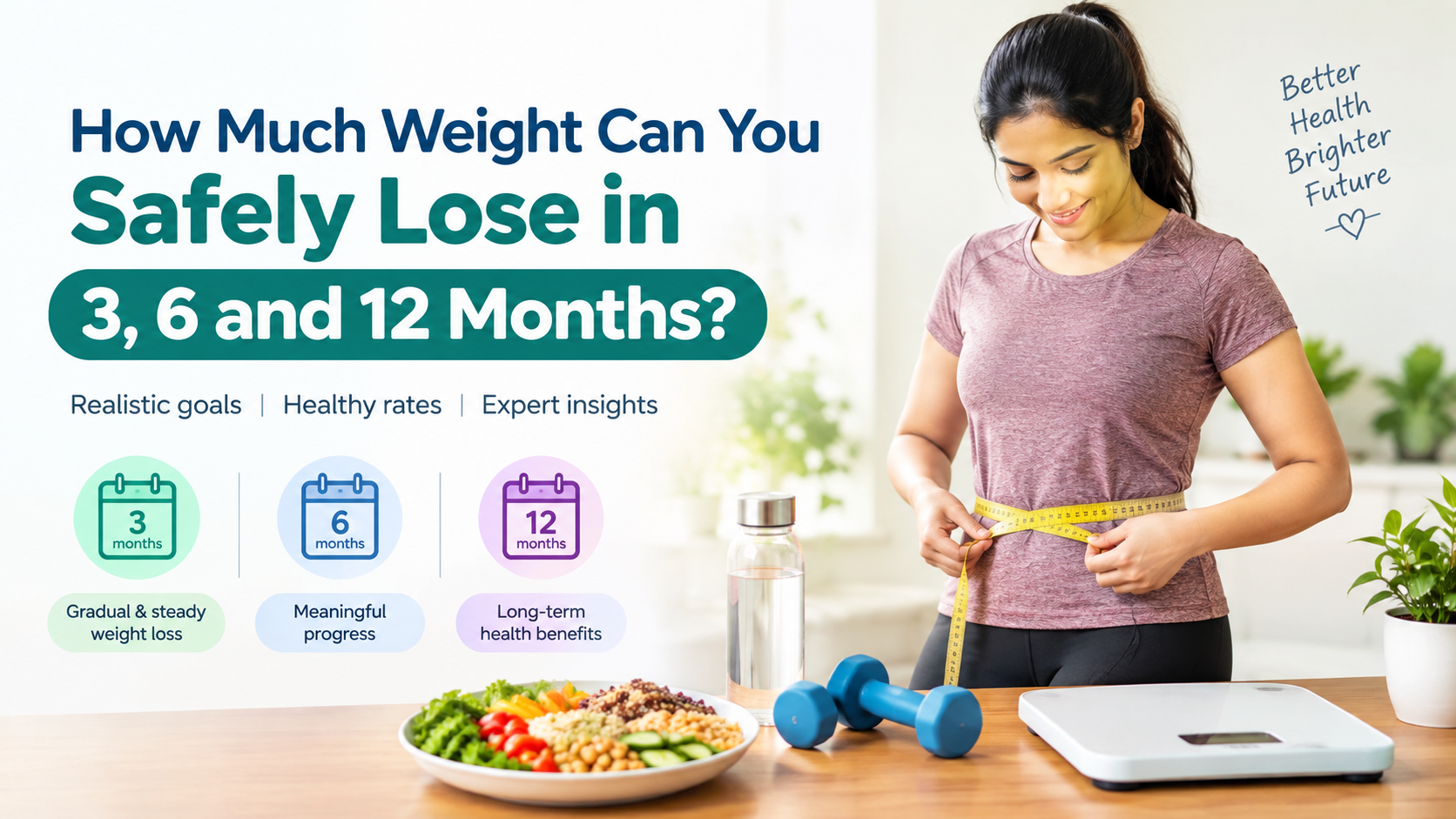
If you have decided to lose weight, one of the first questions that probably comes to mind is, “How many kilos can I realistically lose in the next few months?”
It is a reasonable question. Someone may tell you they lost 10 kg in two months, while another person may lose only 4–5 kg during the same period. This can make it difficult to know what is actually safe and achievable.
The truth is that there is no single weight-loss number that applies to everyone. Your starting weight, age, medical conditions, diet, activity level, medications, sleep, hormones and the treatment approach you follow can all affect the pace of weight loss.
For many adults, a gradual reduction of around 0.5 to 1 kg per week is considered a practical short-term target. Indian clinical guidelines also describe an initial goal of approximately 5–10% of body weight, rather than focusing only on a particular number of kilograms.
For example, if you weigh 100 kg, losing 5–10 kg can already represent meaningful progress. It may also improve blood sugar, blood pressure, triglycerides and other obesity-related health risks.
When discussing Obesity Treatment in Delhi, the more important question is therefore not simply, “How quickly can I lose weight?” It is, “How much weight can I lose safely while protecting my health and maintaining the result?”
How Much Weight Can You Safely Lose in 3 Months?
For many people following a medically supervised lifestyle-based weight-loss programme, a reasonable target may be around 5–10% of starting body weight over six months, with approximately 0.5–1 kg per week often used as a practical short-term range.
That means a person weighing 100 kg might aim to lose roughly:
- 3 months: around 6–12 kg as a broad practical range
- 6 months: around 5–10% or potentially more depending on treatment
- 12 months: highly variable depending on the treatment approach
These figures should not be treated as promises.
A person weighing 70 kg does not necessarily need or should lose weight at the same rate as someone weighing 130 kg. People with significant obesity may initially lose weight faster, while someone closer to a healthy weight may lose more slowly.
What Happens During the First Few Weeks?
Weight can sometimes fall relatively quickly at the beginning of a diet. Part of this early change may come from reduced glycogen stores and associated water rather than body fat alone.
After that initial period, weight loss often becomes slower and less predictable.
This is one reason patients should not become discouraged if the weighing scale stops dropping every week. A temporary plateau does not automatically mean that treatment has failed.
Your waist measurement, blood pressure, blood sugar, physical activity and improvements in obesity-related symptoms can also provide useful information about progress.
How Much Weight Can You Lose in 6 Months?
Six months is a more useful period for assessing meaningful changes in body weight than a few weeks.
Clinical guidelines have traditionally recommended 5–10% weight loss within six months as an initial goal for many adults with overweight or obesity.
Indian obesity-management guidelines similarly describe 5–10% weight loss as a short-term goal, while longer-term targets can be individualized.
Consider a simple example:
If your starting weight is 100 kg:
- 5% loss = 5 kg
- 10% loss = 10 kg
- 15% loss = 15 kg
A 5–10 kg reduction may sound modest compared with dramatic transformations seen online. Medically, however, it can be significant.
Even relatively modest weight loss can improve several metabolic risk factors. Current cardiovascular-kidney-metabolic guidance continues to recommend at least 5–10% weight loss as a clinically meaningful target for many adults with overweight or obesity.
Why 5–10% Weight Loss Matters
Patients sometimes think that they have to reach their “ideal weight” before their health can improve.
That is not necessarily true.
Losing 5–10% of your starting body weight may help improve:
- Blood pressure
- Blood glucose
- Triglyceride levels
- Some cholesterol-related risk factors
- Joint discomfort
- Sleep-related breathing problems
- Metabolic health
Indian clinical guidance also notes that weight-loss goals should consider obesity-related conditions rather than focusing only on the weighing scale.
For example, a person with type 2 diabetes may benefit from a relatively modest weight reduction if it helps improve glucose control. Someone with obesity and knee pain may notice improved mobility even before reaching their long-term weight goal.
How Much Weight Can You Safely Lose in 12 Months?
The 12-month picture is more complicated because weight loss usually does not continue at exactly the same rate throughout the year.
A person might lose weight relatively quickly during the first few months and then experience a plateau. Metabolism, appetite, adherence, treatment changes and lifestyle factors can all influence the later stages.
With lifestyle treatment alone, clinical evidence has commonly shown average losses around 5–10% of initial body weight, although individual results vary substantially.
However, people receiving prescription anti-obesity medication or undergoing metabolic and bariatric surgery can experience substantially greater weight loss.
That does not mean that medication or surgery is necessary for everyone.
The appropriate treatment depends on factors such as BMI, obesity-related diseases, previous attempts at weight loss, medications, eating patterns, physical health and individual circumstances.
Weight Loss With Diet and Exercise
Lifestyle modification remains an important part of obesity treatment.
A sustainable plan usually combines:
- A nutritionally balanced, calorie-controlled diet
- Regular physical activity
- Adequate protein and other essential nutrients
- Good sleep
- Behavioural changes
- Regular monitoring and follow-up
The goal should not be to eat as little as possible.
Very restrictive diets can cause fatigue, nutritional deficiencies and loss of lean muscle mass. Very-low-calorie diets should only be used in selected circumstances and under appropriate medical supervision.
A common mistake is to dramatically reduce food intake because someone wants to lose 10 or 15 kg quickly. This may produce a rapid change on the scale, but maintaining that approach can become difficult.
A better question is: Can I follow this eating pattern six months from now?
If the answer is no, the plan probably needs to be reconsidered.
Weight Loss With Medicines
For some people, lifestyle changes alone do not produce sufficient weight loss.
Prescription weight-management medicines may then be considered as part of a comprehensive treatment plan.
Depending on the medication and the individual, treatment can produce considerably more weight loss than lifestyle intervention alone. NIDDK notes that adults using prescription weight-management medicines alongside lifestyle changes lose, on average, additional weight compared with lifestyle treatment without medication, although results differ substantially between medicines and individuals.
Newer medications, including GLP-1 and related treatments, have changed the way clinicians approach obesity management. Indian guidelines published in 2025 recognize medications such as semaglutide and tirzepatide as options for selected patients and describe different potential weight-loss targets depending on the therapy.
However, these medicines should not be treated as quick-fix injections.
They require appropriate patient selection, dose adjustment, monitoring and attention to side effects. They also work best as part of an overall obesity-management plan.
If weight loss is less than expected, the doctor may need to review the dose, adherence, medical conditions, other medicines or whether another treatment would be more appropriate.
Weight Loss After Bariatric Surgery
For people with severe obesity who meet appropriate criteria, metabolic and bariatric surgery can produce considerably greater weight loss than lifestyle treatment alone.
Common procedures include:
Sleeve Gastrectomy
Sleeve gastrectomy removes a large portion of the stomach, leaving a smaller, sleeve-shaped stomach. It reduces the amount of food that can be consumed and also produces metabolic and hormonal effects.
Gastric Bypass
Gastric bypass creates a smaller stomach pouch and changes the pathway through which food passes through the small intestine. It can produce substantial weight loss and metabolic benefits.
NIDDK reports that people undergoing weight-loss surgery lose, on average, around 15–30% of their starting weight, depending on the type of operation and individual factors.
For example, a person starting at 120 kg could potentially lose substantially more weight after surgery than someone using lifestyle measures alone. But individual outcomes vary, and surgery should never be presented as a guaranteed number on the scale.
Surgery also requires lifelong attention to eating habits, physical activity, nutritional supplementation and follow-up.
What Determines How Fast You Lose Weight?
Two people can follow apparently similar weight-loss plans and achieve very different results.
Several factors can influence the pace.
Starting Weight
People with a higher starting weight may lose more kilograms initially. That does not necessarily mean they are losing a higher percentage of body weight.
Percentage weight loss is often a more useful way to compare progress.
Diet
A sustainable calorie deficit is necessary for weight loss, but the quality and nutritional balance of the diet matter too.
A plan should provide adequate protein, fibre, vitamins and minerals while remaining practical for the person’s lifestyle.
Physical Activity
Exercise can support weight loss and is particularly important for maintaining muscle, improving fitness and supporting long-term weight management.
Walking, resistance training and other forms of activity can be incorporated based on the person’s health and physical ability.
Someone with severe knee arthritis, for instance, may need a different exercise strategy from a person who can comfortably run.
Sleep and Stress
Poor sleep and chronic stress can make appetite regulation and adherence more difficult.
Weight management should therefore look beyond food and exercise.
Medical Conditions
Conditions such as hypothyroidism, polycystic ovary syndrome, sleep apnoea and type 2 diabetes may affect weight management or require specific treatment.
Certain medicines can also contribute to weight gain.
Age and Muscle Mass
As people age, maintaining muscle becomes increasingly important. Losing weight too quickly without appropriate nutrition and physical activity can result in loss of lean mass.
This is particularly important when setting weight-loss goals for older adults.
Previous Weight-Loss Attempts
A person’s history matters.
Someone who has repeatedly lost and regained weight may need a structured long-term treatment plan rather than another short-term diet.
Why Losing Weight Too Quickly Can Be a Problem
Rapid weight loss can sound attractive, but faster is not automatically better.
Depending on the method and the person’s health, excessive or poorly supervised weight loss may increase the risk of:
- Nutritional deficiencies
- Muscle loss
- Dehydration
- Fatigue
- Gallstones
- Difficulty maintaining the weight loss
- Weight regain
This does not mean that every person who loses weight quickly will experience these problems. The concern is particularly relevant when people use extreme diets, prolonged fasting, unregulated supplements or medicines without medical supervision.
The aim of Obesity Treatment in Delhi should therefore be meaningful and sustainable weight reduction, not simply achieving the largest possible drop on the scale.
When Should You Consider Medical Treatment for Obesity?
You do not have to wait until obesity begins affecting every part of your life before seeking professional help.
Consider speaking with an obesity specialist if:
- You have repeatedly tried dieting but regained the weight.
- Your weight is increasing despite lifestyle changes.
- You have type 2 diabetes, hypertension or high cholesterol.
- You experience snoring, daytime sleepiness or suspected sleep apnoea.
- Obesity is affecting your knees, back or mobility.
- You are considering weight-loss injections.
- You are considering bariatric surgery.
- You are unsure which treatment is appropriate for your BMI and health condition.
A proper assessment can help determine whether lifestyle treatment, medication, endoscopic treatment, surgery or a combination of approaches is appropriate.
What Should You Do During Weight Loss?
Focus on the Trend, Not One Day
Body weight naturally fluctuates because of water retention, food intake, bowel movements, salt consumption and hormonal changes.
A single increase does not necessarily represent fat gain.
Look at the trend over several weeks.
Prioritise Protein and Nutrient-Dense Foods
Adequate protein can help support muscle mass during weight loss. Include appropriate sources such as eggs, dairy, pulses, lean meats, fish or other suitable protein foods according to your dietary preferences and medical needs.
Vegetables, fruits, whole grains and other high-fibre foods can also support a balanced eating pattern.
Stay Physically Active
Aim for regular movement that matches your fitness level.
If you have joint problems, begin with low-impact activities and discuss exercise limitations with your doctor or physiotherapist.
Do Not Chase Extreme Weight-Loss Targets
A social-media transformation is not a medical benchmark.
Someone else may lose 15 kg in three months, but that does not mean you should attempt to match that result.
Your treatment target should reflect your starting weight, health conditions and the method being used.
Keep Follow-Up Appointments
Regular follow-up allows your healthcare team to monitor weight, blood pressure, blood sugar, nutritional status, medication effects and other health indicators.
This becomes particularly important when medications or bariatric surgery are involved.
What Does a Safe Weight-Loss Timeline Look Like?
There is no universal number, but the following can provide a general framework:
| Time period | Practical expectation |
|---|---|
| 3 months | Gradual loss may occur, often around 0.5–1 kg per week in appropriate patients, but individual results vary |
| 6 months | An initial target of around 5–10% of starting weight is commonly used |
| 12 months | Results vary widely depending on lifestyle treatment, medication, surgery and individual health factors |
| Long term | Maintaining lost weight and improving obesity-related health should remain the focus |
These are not guaranteed targets. The Indian clinical guideline specifically emphasizes individualized goals, and weight loss should not be the only measure of successful obesity treatment.
The Goal Is More Than a Lower Number on the Scale
For someone seeking obesity treatment, the final goal should not simply be a particular number.
A successful treatment plan may mean:
- Better blood sugar control
- Lower blood pressure
- Improved sleep
- Less knee or back discomfort
- Greater mobility
- Reduced dependence on certain medicines
- Improved physical fitness
- Better quality of life
- Maintaining weight loss over time
This is why experienced obesity care looks at the whole patient rather than the weighing scale alone.
When Patients Commonly Make a Mistake
One common pattern is to start with an extremely restrictive diet, lose weight rapidly and then stop the diet once the target is reached.
The problem is that obesity is a chronic condition, and the factors that contributed to weight gain may still be present.
Another common mistake is assuming that a plateau means the treatment has stopped working.
Weight loss naturally slows as the body adapts. A plateau may call for a review of calorie intake, activity, sleep, medications or treatment strategy rather than abandoning the entire plan.
For some patients, continuing lifestyle treatment is appropriate. Others may need additional medical support.
When Is Bariatric Surgery Considered?
Bariatric surgery may be considered for selected adults with obesity, particularly when obesity is severe or when significant obesity-related health conditions are present.
Eligibility depends on current clinical criteria, BMI, associated diseases, previous treatment attempts and an assessment by an appropriately trained medical team.
NIDDK describes surgery as an option for certain adults with BMI 40 or higher, BMI 35 or higher with serious obesity-related health problems, and in some circumstances BMI 30 or higher with difficult-to-control type 2 diabetes. Exact eligibility should be assessed individually and according to the applicable clinical guidance.
Surgery is a major medical intervention, not simply a shortcut to weight loss. Patients need to understand the potential benefits, risks, nutritional requirements and long-term follow-up involved.
A Patient-Centred Approach to Obesity Treatment in Delhi
There is no single “best” weight-loss method for every patient.
A young adult with mild obesity and no medical complications may benefit from structured lifestyle intervention. Another person with severe obesity, diabetes, sleep apnoea and previous unsuccessful weight-loss attempts may need a more comprehensive approach that could include medication or metabolic surgery.
That is why an assessment is important before choosing a treatment.
During an obesity consultation, the focus should include more than body weight. BMI, waist circumference, medical history, medications, blood sugar, blood pressure, eating habits, physical activity and obesity-related complications can all help guide treatment.
The purpose is to identify an approach that is medically appropriate and realistic for the individual.
Conclusion
So, how much weight can you safely lose in 3, 6 and 12 months?
For many people, a gradual loss of around 0.5–1 kg per week can be a reasonable short-term range, while an initial goal of 5–10% of starting body weight over about six months is commonly recommended.
However, the answer changes depending on whether weight loss is achieved through lifestyle modification, prescription medication, endoscopic treatment or bariatric surgery.
The most meaningful target is not the fastest possible weight loss. It is safe, medically appropriate and sustainable weight reduction that improves your health and can be maintained over time.
If you are struggling to lose weight despite consistent efforts, or if obesity is already affecting your blood sugar, blood pressure, sleep, joints or daily life, consider discussing your options with a qualified obesity specialist. A personalised assessment can help determine which approach is appropriate for your situation.
Medical disclaimer: This article is for general educational purposes and does not replace an individual medical consultation. Weight-loss targets should be decided with a qualified healthcare professional, particularly if you have obesity-related medical conditions, take prescription medicines, are pregnant or planning pregnancy, or are considering weight-loss medication or surgery.
FAQs
1. How much weight can I safely lose in 3 months?
A commonly used practical range is about 0.5–1 kg per week for appropriate patients, but the actual amount varies. Starting weight, medical conditions, diet, activity and treatment method all affect results.
2. Is losing 10 kg in 3 months safe?
It can be safe for some people but inappropriate for others. The answer depends on starting weight, nutritional intake, medical conditions and how the weight loss is achieved. A healthcare professional can help set an appropriate target.
3. How much weight should I lose in 6 months?
An initial goal of approximately 5–10% of starting body weight within six months is commonly recommended for adults with overweight or obesity.
4. Can I lose 20 kg in 6 months?
Some people with significant obesity may lose 20 kg within six months, particularly with intensive medical treatment, but this is not a suitable target for everyone. The appropriate goal depends on starting weight and treatment method.
5. How much weight can I lose in one year?
There is no universal 12-month target. Lifestyle treatment often produces around 5–10% weight loss on average, while some anti-obesity medications and bariatric procedures can produce greater losses. Individual results vary significantly.
6. Is losing weight quickly better?
Not necessarily. Gradual, sustainable weight loss is generally preferred because the objective is not only to lose weight but also to maintain the reduction and protect nutritional and muscle health.
7. Can weight-loss injections help me lose more weight?
Prescription anti-obesity medicines can help selected patients achieve greater weight loss when combined with lifestyle changes. The amount varies by medication and individual response, and treatment should be medically supervised.
8. How much weight can you lose after bariatric surgery?
Weight loss depends on the procedure and the individual. NIDDK reports that people undergoing weight-loss surgery lose approximately 15–30% of their starting weight on average, depending on the type of surgery.
9. Why does weight loss slow down after a few months?
As body weight decreases, energy requirements also change. Appetite, activity, adherence and metabolic adaptation can contribute to a slower rate of weight loss. A plateau should be reviewed rather than automatically considered treatment failure.
10. What is a healthy weight-loss goal for someone with obesity?
For many adults, an initial target of 5–10% of starting body weight is clinically meaningful. Longer-term targets should be individualized based on BMI, obesity-related diseases, treatment response and personal circumstances.
Internal Linking Suggestions
For the Dr Sachin Ambekar website, consider linking this article naturally to relevant existing pages or blogs such as:
- Bariatric Surgery — link from the section discussing surgical weight loss.
- Bariatric Surgeon in Delhi — link when discussing specialist assessment and surgical eligibility.
- Weight Loss Injections / Mounjaro and Ozempic — link from the section discussing prescription weight-loss medicines.
- Obesity Treatment in Delhi — link the primary keyword to the relevant treatment/service page if available.
- Dos and Don’ts After Bariatric Surgery — link from the section discussing long-term post-surgical lifestyle and follow-up.
- Weight Regain After Weight Loss — useful contextual link from the section explaining why maintaining weight loss matters.
- Obesity and Knee Joint Diseases — link when discussing improvements in mobility and joint-related symptoms.
Leave a Reply