

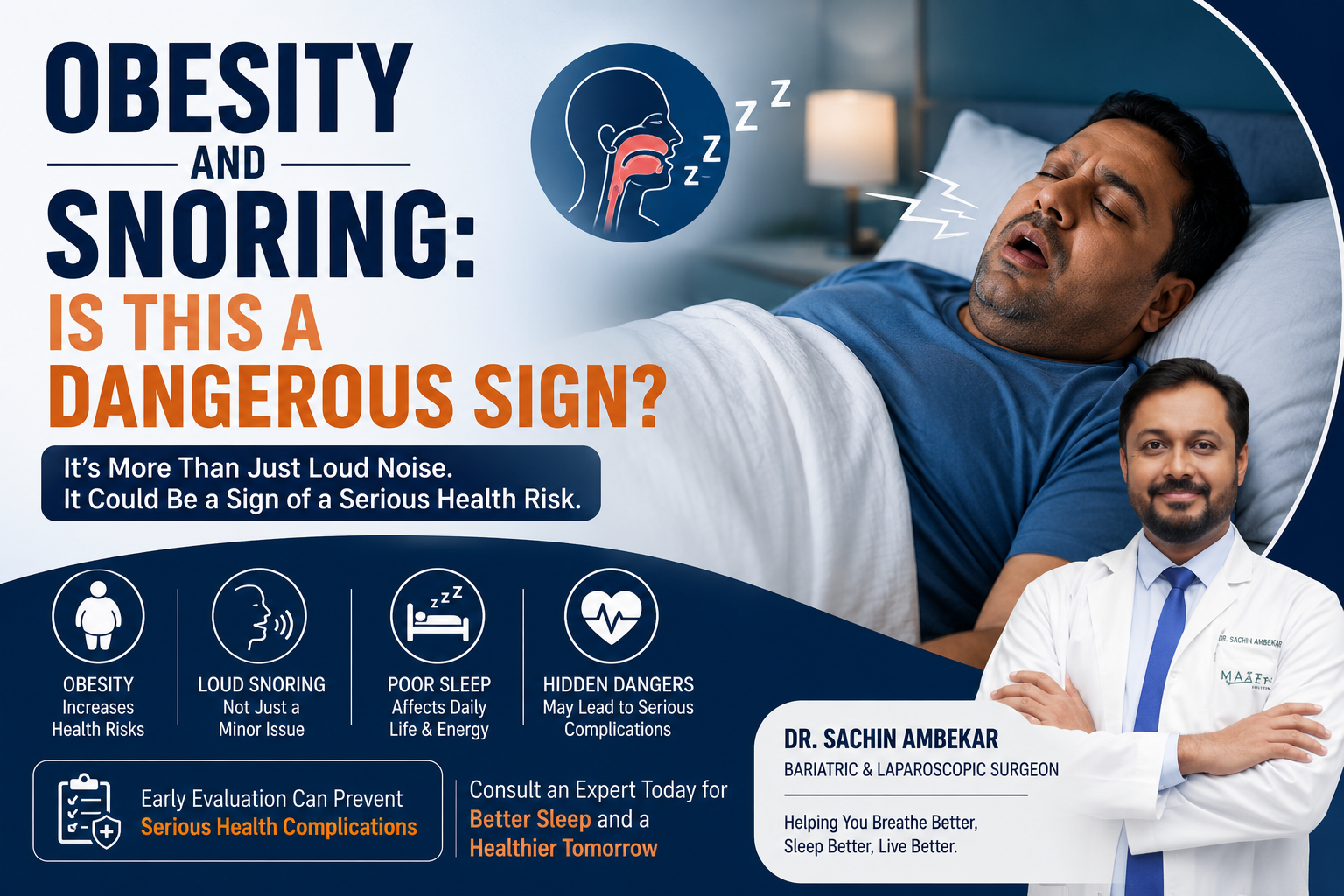
Snoring is often treated as a harmless nuisance. A partner may complain about the noise, family members may joke about it, and many people simply accept it as part of getting older or gaining weight.
But when snoring becomes loud, frequent, or is accompanied by pauses in breathing, choking, morning headaches, or excessive daytime sleepiness, it deserves more attention.
This is particularly important if you are living with obesity.
Obesity and snoring are closely associated, and in some people, persistent snoring can be an early warning sign of obstructive sleep apnea (OSA)—a sleep-related breathing disorder in which the upper airway repeatedly becomes blocked during sleep. Untreated OSA can affect sleep quality and daytime functioning and is associated with problems such as high blood pressure and cardiovascular disease.
The important point is that not everyone who snores has sleep apnea, and not everyone with sleep apnea is obese. However, excess weight is an important risk factor, and people with obesity who snore regularly should not automatically dismiss it.
For patients seeking Obesity Treatment in Delhi, understanding the connection between excess weight, snoring and sleep apnea can be an important part of comprehensive health management.
What Is the Connection Between Obesity and Snoring?
Snoring happens when air moves through a partially narrowed upper airway during sleep. As the tissues in the throat relax, airflow can make the soft tissues vibrate, producing the familiar snoring sound.
Obesity can increase the likelihood of this airway narrowing.
Excess tissue around the neck and upper airway can contribute to crowding of the breathing passage. Fat distribution around the abdomen and chest can also influence breathing mechanics. When a person lies down and the muscles of the upper airway naturally relax during sleep, these factors can make airway obstruction more likely.
This does not mean that every person with obesity will develop sleep apnea. Facial anatomy, neck structure, age, sex, nasal congestion, alcohol consumption, smoking and other factors can also affect the risk.
When snoring may be more than just snoring
Occasional, quiet snoring is not necessarily a sign of disease.
The concern increases when snoring is:
- Loud and persistent
- Present most nights
- Associated with pauses in breathing
- Followed by gasping or choking
- Accompanied by significant daytime sleepiness
- Associated with morning headaches or dry mouth
- Affecting concentration, memory or mood
A bed partner may notice these symptoms before the person who is snoring does.
In clinical practice, this is one reason seemingly minor complaints should not always be ignored. A patient may come for help with weight management while their spouse reports that they stop breathing repeatedly during sleep. That observation can be an important clue.
What Is Obstructive Sleep Apnea?
Obstructive sleep apnea is a condition in which the upper airway repeatedly becomes blocked or narrowed during sleep, causing breathing to stop or become significantly reduced for periods of time.
The brain may briefly arouse the person from sleep to reopen the airway. These awakenings can happen repeatedly without the individual fully remembering them the next morning.
As a result, someone may spend what appears to be seven or eight hours in bed but still wake feeling exhausted.
During these breathing interruptions, oxygen levels can fall. Severe OSA can place stress on the cardiovascular system and is associated with hypertension and other cardiovascular problems.
This is why persistent, loud snoring in a person with obesity should be viewed as a possible health signal rather than simply an inconvenience.
Why Does Obesity Increase the Risk of Sleep Apnea?
The relationship between obesity and obstructive sleep apnea is complex.
1. Increased tissue around the neck
Additional soft tissue around the neck can narrow the upper airway. During sleep, when throat muscles relax, the airway may become more vulnerable to collapse.
2. Increased abdominal and chest fat
Excess weight around the abdomen and chest can affect the mechanics of breathing. This may increase the effort required to breathe while lying down.
3. Reduced airway stability during sleep
The upper airway has to remain open while you breathe. In susceptible individuals, excess surrounding tissue combined with normal muscle relaxation during sleep can make obstruction more likely.
4. Weight gain can create a cycle
Poor-quality sleep can contribute to daytime fatigue. A tired person may find it harder to remain physically active and may experience changes in appetite and eating patterns. Over time, this can make weight management more difficult.
This does not mean sleep apnea directly causes obesity in every patient. Rather, the two conditions can influence each other, creating a cycle that may be difficult to break without appropriate treatment.
Is Snoring Always a Dangerous Sign?
No.
Snoring by itself does not automatically mean that you have sleep apnea or another dangerous condition.
Some people snore because of nasal congestion, sleeping position, alcohol use, anatomical features or temporary factors. However, loud habitual snoring combined with other symptoms should be evaluated.
The distinction is important.
If someone snores but wakes refreshed, has no witnessed breathing pauses and has no other concerning symptoms, the situation may be very different from someone who snores loudly, repeatedly stops breathing and falls asleep during the day.
A medical evaluation helps determine which situation applies.
Warning Signs That Should Not Be Ignored
If you have obesity and snore regularly, watch for the following symptoms.
Loud or persistent snoring
Snoring that occurs most nights and is loud enough to disturb your partner deserves attention.
Pauses in breathing
A partner may notice that you appear to stop breathing for several seconds before suddenly snorting, gasping or taking a deep breath.
This is one of the more important warning signs of OSA.
Gasping or choking during sleep
Some people wake suddenly feeling as though they cannot breathe. They may not immediately understand why this is happening.
Excessive daytime sleepiness
Feeling tired after a full night’s sleep can be a sign that sleep is repeatedly being interrupted.
Daytime sleepiness can also affect driving, work performance and concentration.
Morning headaches
Some people with sleep apnea report headaches after waking.
Dry mouth or sore throat
Repeated mouth breathing and disrupted sleep can leave the mouth and throat dry in the morning.
Poor concentration or memory
Sleep fragmentation can affect attention, concentration and daytime mental performance.
High blood pressure
Sleep apnea and hypertension frequently coexist, and hypertension is an important reason to consider OSA when other symptoms are present.
Who Is More Likely to Have Obstructive Sleep Apnea?
Several factors can increase the likelihood of OSA.
These include:
- Overweight or obesity
- Larger neck circumference
- Increasing age
- Certain facial or airway structures
- High blood pressure
- Smoking
- Chronic nasal congestion
- Alcohol use
- Family history
- Certain sleep positions
- Previous stroke or cardiovascular conditions
Obesity is an important risk factor, but it is not a requirement. People who are not overweight can also develop sleep apnea.
This is particularly relevant when discussing weight loss. Treating obesity may reduce one important risk factor, but weight alone does not explain every case of snoring or OSA.
How Is Sleep Apnea Diagnosed?
Snoring alone cannot diagnose sleep apnea.
Your doctor may begin with a detailed medical and sleep history. This can include questions about:
- How often you snore
- Whether anyone has noticed breathing pauses
- Daytime sleepiness
- Morning headaches
- Sleep quality
- Alcohol or medication use
- Weight changes
- Blood pressure and other health conditions
A physical examination may include assessment of your weight, neck, airway and other risk factors.
Sleep study
A sleep study is commonly used to confirm obstructive sleep apnea.
Depending on your health and risk profile, your doctor may recommend a home sleep apnea test or an overnight sleep study, known as polysomnography. Home testing can be appropriate for selected patients, while a laboratory study may be necessary in some situations or when a home test does not provide a clear answer.
The test can monitor breathing patterns, oxygen levels, heart rate and other parameters during sleep.
The severity of OSA is generally assessed using the apnea-hypopnea index (AHI), which measures the number of breathing interruptions or reductions occurring per hour of sleep.
Treatment Options for Obesity-Related Snoring and Sleep Apnea
Treatment depends on the underlying cause and severity.
There is no single treatment that is right for everyone.
1. Weight management
For patients with obesity, medically supervised weight management is an important part of treatment.
A comprehensive approach can include nutrition, physical activity, behavioural support and, where appropriate, anti-obesity medication or metabolic/bariatric surgery.
The American Thoracic Society recommends comprehensive lifestyle intervention for patients with OSA who are overweight or obese, including dietary changes, increased physical activity and behavioural guidance.
Even when weight loss does not completely eliminate sleep apnea, reducing excess weight may improve disease severity and overall metabolic health.
2. CPAP or PAP therapy
For moderate-to-severe obstructive sleep apnea, positive airway pressure therapy is a major treatment option.
A CPAP machine delivers a continuous flow of air through a mask to help keep the airway open during sleep.
The machine can be highly effective when appropriately prescribed and consistently used.
Importantly, patients should not stop CPAP simply because they have started a weight-loss programme. Treatment decisions should be based on follow-up assessment and, where appropriate, repeat sleep testing.
3. Positional therapy
Some people experience more airway obstruction when sleeping on their back.
If testing shows position-dependent OSA, a doctor may recommend strategies to encourage side sleeping.
4. Oral appliances
Selected patients may benefit from a mandibular advancement device or another oral appliance designed to help maintain airway space during sleep.
These devices are not suitable for everyone and should be selected with professional guidance.
5. Treating nasal obstruction
Chronic nasal congestion or structural nasal problems may worsen nighttime breathing. Addressing the underlying nasal condition can be useful as part of an overall treatment plan.
6. Surgery or other specialist treatments
Some patients may require specialist evaluation for airway surgery or other treatment approaches.
For people with obesity and OSA who are unable or unwilling to use PAP therapy, current AASM guidance recommends discussing referral to a bariatric surgeon in appropriately selected adults with obesity and BMI of 35 kg/m² or higher.
This does not mean that bariatric surgery is automatically required for anyone who snores.
The decision depends on BMI, obesity-related health problems, previous weight-loss efforts, sleep apnea severity, overall health and the individual’s preferences and treatment goals.
Can Weight Loss Reduce Snoring?
In many people with obesity, weight reduction can improve snoring and reduce the severity of obstructive sleep apnea.
Research and clinical guidelines support weight management as an important component of OSA care in patients who are overweight or obese.
However, it is important to keep expectations realistic.
Losing weight does not guarantee that snoring will disappear or that sleep apnea will be completely cured. Airway anatomy and other risk factors continue to matter.
This is why patients diagnosed with OSA should continue their prescribed treatment and discuss any changes with their doctor rather than assuming that weight loss alone has solved the problem.
When Should You See a Doctor?
Consider speaking with a doctor if:
- You snore loudly on a regular basis
- Your partner notices pauses in breathing
- You wake up choking or gasping
- You feel unusually sleepy during the day
- You have morning headaches
- You have high blood pressure along with loud snoring
- You have obesity and persistent nighttime breathing symptoms
- You frequently fall asleep unintentionally during the day
Particular caution is needed if daytime sleepiness affects driving. Falling asleep at the wheel can put you and others at serious risk.
If breathing pauses are frequent, prolonged, or accompanied by significant symptoms, do not rely on home remedies alone. Get assessed.
Obesity Treatment in Delhi: Why Sleep Health Matters
When someone seeks Obesity Treatment in Delhi, the focus should not be limited to the number on the weighing scale.
A good obesity assessment considers the person’s overall health, including conditions that may be linked to excess weight.
Sleep apnea is one such condition.
During an obesity consultation, symptoms such as loud snoring, daytime sleepiness, hypertension and witnessed breathing pauses can provide useful clues that further sleep evaluation may be needed.
For patients who meet appropriate criteria, weight-loss treatment may form part of a broader strategy to improve obesity-related health problems.
The goal should be sustainable improvement in health rather than simply rapid weight reduction.
Practical Steps You Can Take Tonight
If you are overweight or obese and concerned about snoring, a few simple measures may help while you arrange medical evaluation:
- Try sleeping on your side rather than your back.
- Avoid alcohol close to bedtime.
- Do not take sleeping pills or sedating medicines unless prescribed and reviewed by your doctor.
- Maintain a regular sleep schedule.
- Work toward gradual, sustainable weight loss if you are overweight.
- Keep physically active according to your health and fitness level.
- Ask your partner whether they have noticed pauses in your breathing.
- Seek medical assessment if symptoms are persistent.
These steps can support better sleep, but they should not replace diagnosis and treatment when sleep apnea is suspected.
Conclusion
Obesity and snoring can be connected, and persistent loud snoring may sometimes be a warning sign of obstructive sleep apnea.
The important distinction is between ordinary snoring and snoring accompanied by breathing pauses, gasping, daytime sleepiness, morning headaches or other symptoms.
If you have obesity and regularly snore, it is worth discussing the symptoms with a doctor rather than simply accepting them as normal.
Sleep health is part of overall health. Identifying sleep apnea early can help you access appropriate treatment, while addressing obesity through a personalised and medically supervised plan may improve several aspects of your health.
If you are looking for Obesity Treatment in Delhi, discuss your weight, sleep symptoms and associated health conditions with an experienced bariatric surgeon. A comprehensive assessment can help determine whether lifestyle management, medical treatment, sleep-apnea therapy or a combination of approaches is appropriate for you.
Medical disclaimer: This article is intended for general education and does not replace an individual medical consultation, diagnosis or treatment plan. Persistent snoring, witnessed breathing pauses or excessive daytime sleepiness should be medically evaluated.
FAQs
Is snoring dangerous if I am obese?
Snoring itself is not always dangerous, but loud and persistent snoring in a person with obesity can be a sign of obstructive sleep apnea. The concern is greater when snoring is accompanied by breathing pauses, choking, daytime sleepiness or morning headaches.
Does obesity cause snoring?
Obesity can increase the risk of snoring because excess tissue around the neck and upper airway can contribute to airway narrowing during sleep. However, snoring has multiple causes and can occur in people who are not obese.
Can losing weight stop snoring?
Weight loss can reduce snoring and may improve obstructive sleep apnea in people whose excess weight contributes to airway obstruction. However, it does not guarantee that snoring or sleep apnea will completely disappear.
How do I know if my snoring is sleep apnea?
Warning signs include loud habitual snoring, witnessed pauses in breathing, gasping or choking during sleep, excessive daytime sleepiness, morning headaches and poor concentration. A sleep study is generally needed to confirm OSA.
Can sleep apnea be treated without CPAP?
Depending on the cause and severity, treatment may include weight management, positional therapy, oral appliances and selected surgical or other specialist treatments. CPAP/PAP remains an important treatment, particularly for moderate-to-severe OSA.
Should I see a bariatric surgeon if I have obesity and sleep apnea?
If you have obesity and diagnosed OSA, a bariatric surgeon may be part of a multidisciplinary treatment team. AASM guidance specifically recommends discussing bariatric-surgery referral with appropriately selected adults with OSA and obesity at BMI ≥35 kg/m² who are unable or unwilling to use PAP therapy.
Is snoring a sign that I need obesity treatment?
Not necessarily. Snoring can occur for many reasons. However, if you have obesity along with persistent snoring or symptoms suggestive of sleep apnea, it is reasonable to discuss both your sleep symptoms and weight with a qualified healthcare professional.
Can sleep apnea cause serious health problems?
Untreated obstructive sleep apnea can contribute to daytime impairment and is associated with conditions including high blood pressure and cardiovascular disease. Appropriate diagnosis and treatment are therefore important.

Leave a Reply