

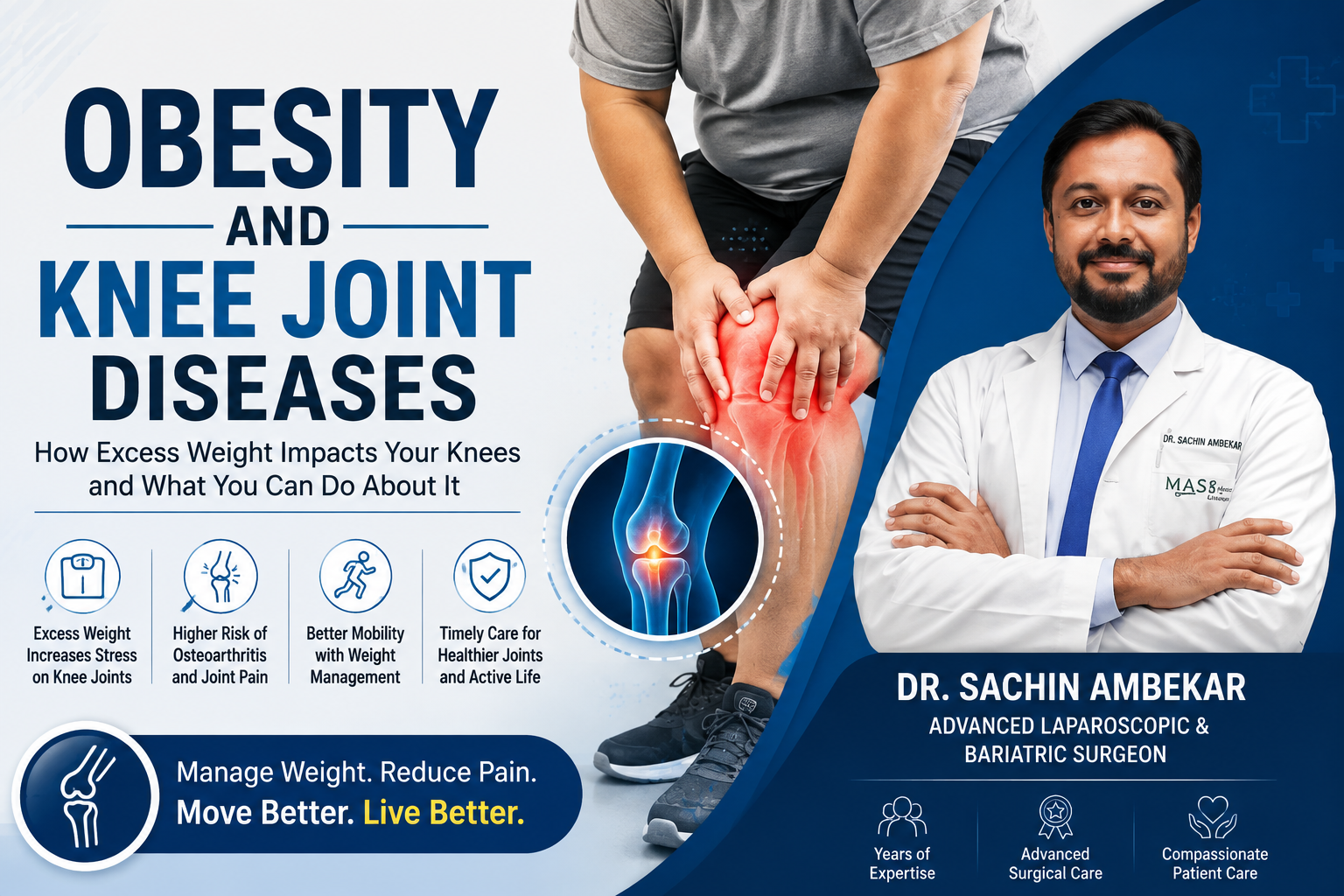
Knee pain is often dismissed as a normal part of getting older. But when knee discomfort begins to interfere with walking, climbing stairs, getting up from a chair, or enjoying everyday activities, it deserves proper attention.
One important factor that can contribute to knee problems is excess body weight.
Obesity does more than increase the load carried by the knees. It can also contribute to changes in movement, inflammation and metabolic health, all of which may influence joint health. Knee osteoarthritis is particularly common among people who are overweight or living with obesity, and the relationship can become a difficult cycle: knee pain makes movement harder, reduced activity makes weight management more difficult, and increasing weight can place further stress on the knees. The American Academy of Orthopaedic Surgeons (AAOS) recognises obesity as an important factor associated with knee osteoarthritis and recommends sustained weight loss to improve pain and function in overweight and obese patients with knee OA.
For patients looking for Obesity Treatment in Delhi, this connection is important. Managing obesity is not simply about reducing a number on the weighing scale. For some patients, effective weight management can also be an important part of protecting mobility, reducing joint stress and improving overall quality of life.
What Is the Connection Between Obesity and Knee Joint Diseases?
The knee is a weight-bearing joint. It helps support your body while you stand, walk, climb stairs and perform many everyday movements.
When body weight increases, the knee has to work harder during these activities. Over time, this additional mechanical stress can contribute to damage and degeneration of the structures within the joint.
The most common knee condition associated with obesity is knee osteoarthritis (OA).
Osteoarthritis occurs when the tissues within a joint gradually deteriorate. In the knee, the protective cartilage can become thinner and less effective at cushioning movement. This may eventually lead to pain, stiffness, swelling and reduced mobility.
However, it would be too simplistic to say that obesity causes every case of knee arthritis. Age, previous injuries, genetics, occupation, physical activity, muscle strength, joint alignment and other medical conditions can all influence the risk.
Obesity is one important and potentially modifiable factor.
The AAOS notes that obesity has a direct impact on the development of osteoarthritis of the hip and knee and that weight reduction may reduce the risk of symptomatic knee osteoarthritis and improve arthritic symptoms.
How Does Excess Weight Affect the Knees?
1. Greater mechanical load
The knees absorb and transmit forces every time you move.
Walking, climbing stairs and standing up from a chair can place substantial forces through the knee. With excess body weight, the mechanical demand on the joint increases.
This does not mean that every overweight person will develop arthritis. But over many years, increased loading may contribute to joint degeneration, particularly when combined with other risk factors.
2. Reduced physical activity
There is another side to the problem.
Someone with obesity may initially experience occasional knee discomfort. Because movement becomes uncomfortable, they may start avoiding walking, exercise or activities they previously enjoyed.
Over time, reduced physical activity can lead to:
- Loss of muscle strength
- Reduced stamina
- Further weight gain
- Greater difficulty with everyday activities
- More stiffness around the knee
This creates a cycle that can be difficult to break without appropriate medical guidance.
3. Metabolic and inflammatory effects
Obesity is also associated with chronic low-grade inflammation and metabolic changes.
Fat tissue is biologically active. It can produce substances that influence inflammatory pathways throughout the body. Therefore, the relationship between obesity and osteoarthritis is not purely mechanical.
This is one reason why weight management may benefit joint health beyond simply reducing the physical load on the knees.
Which Knee Problems Can Be Associated With Obesity?
Knee osteoarthritis
Knee osteoarthritis is the most important condition to consider.
Typical symptoms include pain during walking or activity, stiffness after periods of inactivity, swelling and difficulty with movements such as climbing stairs.
As the condition progresses, pain may occur more frequently and can eventually affect daily activities.
Patellofemoral pain
The patellofemoral joint is where the kneecap meets the thigh bone. Problems involving this area can cause pain around or behind the kneecap, particularly when climbing stairs, squatting or sitting for prolonged periods.
Excess weight may increase the load placed on the knee during these activities.
Meniscal and other knee problems
Obesity may also be associated with an increased burden of musculoskeletal problems and can complicate recovery when knee injuries occur.
However, knee pain should never automatically be attributed to weight. A proper assessment is important because different conditions can cause similar symptoms.
Symptoms You Should Not Ignore
Knee symptoms can develop gradually, which is one reason many patients delay seeking medical advice.
Common warning signs include:
- Persistent knee pain
- Pain while walking or climbing stairs
- Knee stiffness after sitting or resting
- Swelling around the joint
- Difficulty bending or straightening the knee
- A grinding or clicking sensation
- Feeling that the knee is unstable
- Difficulty getting up from a chair
- Reduced walking distance
- Avoiding activities because of knee discomfort
One common pattern seen in practice is that patients initially adapt their routine instead of addressing the underlying problem. They may stop taking stairs, walk less, avoid outings or depend increasingly on pain medicines.
If knee pain is repeatedly changing the way you live, it is worth getting evaluated.
How Is Obesity-Related Knee Pain Diagnosed?
Diagnosis starts with a detailed medical history and physical examination.
A doctor may ask:
- When did the pain begin?
- Is it worse during activity or at rest?
- Is there swelling?
- Have you had a previous knee injury?
- How much can you walk comfortably?
- Does the knee lock or give way?
- Have you gained weight recently?
- What treatments or medicines have you already tried?
The doctor will also assess knee movement, tenderness, swelling, alignment and muscle strength.
Imaging tests
Depending on the symptoms, an X-ray may be recommended to assess changes associated with osteoarthritis.
An MRI is not necessary for every patient with knee pain. It may be considered when the doctor suspects a meniscal injury, ligament problem or another condition that cannot be adequately assessed through examination and standard imaging.
The goal is not simply to find an abnormality on a scan. The important question is whether the findings explain the patient’s symptoms and what treatment is appropriate.
Treatment Options for Obesity and Knee Joint Problems
Treatment should be individualised. A patient with mild knee pain and obesity may need a very different approach from someone with advanced osteoarthritis and significant mobility limitations.
1. Weight management
Weight management is one of the most important areas to address when obesity and knee disease occur together.
Even modest weight loss can be meaningful for people with arthritis. Research and clinical guidelines support weight loss as part of management for overweight and obese patients with symptomatic knee osteoarthritis. The AAOS specifically recommends sustained weight loss to improve pain and function.
The approach should focus on sustainable changes rather than crash diets.
Depending on the patient’s BMI, health conditions, previous weight-loss attempts and individual circumstances, treatment may include:
- Nutrition counselling
- Physical activity
- Behavioural strategies
- Medical weight-management options
- Anti-obesity medications when appropriate
- Bariatric procedures for carefully selected patients
This is where Obesity Treatment in Delhi can become relevant for patients whose excess weight is contributing to multiple health problems, including mobility limitations.
2. Low-impact physical activity
Knee pain does not always mean that all exercise should stop.
In fact, appropriate movement can help maintain muscle strength and joint function.
Depending on the individual’s condition, activities such as:
- Walking at a comfortable level
- Stationary cycling
- Swimming
- Water-based exercise
- Strengthening exercises
- Physiotherapy-guided exercises
may be useful.
Patients with significant pain should not suddenly begin intense workouts. A physiotherapist or doctor can help determine the safest starting point.
3. Physiotherapy
Physiotherapy can help improve strength, flexibility, balance and movement patterns.
Strengthening the muscles around the hip and knee can improve functional stability and make everyday movements easier.
A personalised exercise programme is generally more useful than randomly following strenuous exercises online.
4. Medicines for pain
Pain-relieving medicines may be used when appropriate.
Depending on a person’s medical history, doctors may consider medications such as non-steroidal anti-inflammatory drugs (NSAIDs) or other pain-relief options.
However, these medicines are not suitable for everyone. Kidney disease, stomach ulcers, cardiovascular disease, blood-thinning medicines and other conditions can influence which medication is safe.
Patients should avoid taking painkillers regularly without medical advice.
The AAOS knee osteoarthritis guideline includes several pharmacological options for symptom relief but emphasises that treatment should be based on the individual patient’s circumstances.
5. Injections in selected patients
In some cases, an orthopaedic specialist may recommend an injection to help manage symptoms.
For example, intra-articular corticosteroid injections may provide short-term pain relief for some patients.
They are not a permanent solution for the underlying osteoarthritis, and their suitability depends on the patient’s condition.
6. Surgery for advanced knee disease
When knee osteoarthritis becomes severe and pain significantly affects quality of life despite appropriate non-surgical treatment, knee replacement may be considered.
Obesity does not automatically mean that a patient cannot undergo knee surgery. However, higher body weight can influence surgical planning and complication risks.
The AAOS notes that obesity is associated with increased challenges and complications in musculoskeletal care, particularly as BMI increases.
For this reason, some patients may benefit from addressing obesity as part of their broader treatment plan before or alongside orthopaedic management.
Can Weight Loss Improve Knee Pain?
Yes, weight loss can help many patients with knee osteoarthritis, although the degree of improvement varies.
Weight reduction decreases the load placed on the knee and may also improve metabolic and inflammatory factors associated with obesity.
Importantly, the objective is not necessarily to reach an “ideal” weight immediately.
For someone struggling with knee pain, even a gradual and medically appropriate reduction in body weight can be a useful first step.
The AAOS guideline found that sustained weight loss can improve pain and function in overweight and obese patients with knee osteoarthritis.
The most appropriate target should be discussed with a healthcare professional, particularly if the patient has diabetes, hypertension, sleep apnoea, fatty liver disease or other obesity-related conditions.
Can Bariatric Treatment Help Patients With Severe Obesity and Knee Problems?
For patients with severe obesity who have struggled to achieve lasting weight loss through lifestyle measures alone, bariatric treatment may be considered after a comprehensive medical assessment.
Bariatric surgery is not a direct treatment for knee arthritis. Its purpose is to treat obesity and related metabolic disease in appropriately selected patients.
However, meaningful and sustained weight loss may reduce the physical burden placed on weight-bearing joints and make physical activity easier.
The decision to pursue bariatric surgery should consider BMI, obesity-related medical conditions, previous attempts at weight management, nutritional status, psychological readiness and overall health.
A consultation with an experienced bariatric surgeon in Delhi can help determine whether structured medical weight management, medication, bariatric surgery or another approach is appropriate.
The important point is that treatment should address the patient as a whole rather than treating knee pain and obesity as completely unrelated problems.
When Should You See a Doctor?
Do not wait until knee pain becomes severe.
You should consider medical evaluation if:
- Knee pain persists for several weeks
- Pain interferes with work or daily activities
- You have difficulty walking or climbing stairs
- Your knee frequently swells
- The knee locks or gives way
- You have suffered a knee injury
- You are avoiding physical activity because of pain
- You have obesity along with progressive joint symptoms
- Pain is not adequately controlled with simple measures
Sudden severe pain, significant swelling after an injury, inability to bear weight, fever with a hot swollen knee, or a visibly deformed joint requires prompt medical assessment.
Practical Tips to Protect Your Knees
If you are living with obesity and experiencing knee discomfort, small changes can make a difference.
Start with manageable activity
You do not have to begin with an intense gym programme. Short periods of low-impact activity may be more realistic and sustainable.
Focus on gradual weight loss
Avoid extreme diets that are difficult to maintain. A structured approach usually works better in the long term.
Strengthen supporting muscles
Strong thigh and hip muscles can help support knee function. Exercise should be adapted to your symptoms.
Avoid prolonged inactivity
Rest can be useful during painful flare-ups, but prolonged inactivity can lead to muscle weakness and further loss of mobility.
Choose supportive footwear
Comfortable, well-fitting footwear can make walking easier and may improve overall comfort.
Manage associated health conditions
Diabetes, high blood pressure, sleep apnoea and other obesity-related conditions should also be addressed as part of comprehensive care.
Seek help early
Waiting for pain to become severe can make returning to normal activity more difficult.
FAQs
Does obesity increase the risk of knee osteoarthritis?
Yes. Obesity is an important risk factor for knee osteoarthritis. Increased mechanical loading and obesity-related metabolic and inflammatory changes can contribute to joint problems.
Can losing weight reduce knee pain?
Yes. Sustained weight loss can improve pain and physical function in overweight or obese patients with knee osteoarthritis.
How much weight should I lose to improve my knees?
There is no single target that applies to everyone. Even modest, sustained weight loss may provide health benefits, but the appropriate target depends on your BMI, medical conditions, age and overall health.
Is walking safe if I have obesity and knee pain?
Walking may be appropriate for many people, but the intensity should match the severity of the knee problem. If walking causes significant pain, consider discussing low-impact alternatives and a personalised exercise programme with a doctor or physiotherapist.
Does bariatric surgery cure knee arthritis?
No. Bariatric surgery treats severe obesity; it does not directly repair damaged knee cartilage. However, substantial weight loss may reduce stress on the knees and can improve mobility and overall health in appropriately selected patients.
Can I avoid knee replacement by losing weight?
Weight loss may reduce symptoms and improve function, particularly in patients with overweight or obesity and knee osteoarthritis. However, it cannot guarantee that knee replacement will never be needed. Treatment depends on the severity of joint damage and the patient’s symptoms.
Should I see an orthopaedic doctor or a bariatric surgeon?
It depends on the main problem. Progressive knee symptoms may require an orthopaedic evaluation, while significant obesity may benefit from assessment by a bariatric or obesity-medicine specialist. In some patients, coordinated care is the most appropriate approach.
What is the best Obesity Treatment in Delhi for someone with knee pain?
There is no single best treatment for everyone. Depending on the individual’s BMI, medical conditions, previous weight-loss attempts and health goals, treatment may involve nutrition, exercise, medication, structured medical weight management or bariatric surgery. A personalised assessment is important before choosing an approach.
Conclusion
Obesity and knee joint disease can reinforce each other. Excess weight can increase the burden on the knees, while knee pain can make exercise and everyday movement more difficult. Over time, this can create a frustrating cycle of pain, inactivity and further weight gain.
The good news is that this cycle can be addressed from more than one direction.
Weight management, appropriate physical activity, physiotherapy, medical treatment and orthopaedic care all have a role depending on the individual patient. For people with significant obesity, comprehensive Obesity Treatment in Delhi may be an important part of improving mobility and reducing the broader health consequences of excess weight.
If knee pain is affecting your ability to move, work or enjoy everyday life, do not simply accept it as an unavoidable consequence of age or weight. A proper medical assessment can help identify the cause and create a treatment plan that fits your health, lifestyle and long-term goals.
Medical disclaimer: This article is intended for general educational purposes and does not replace an individual medical consultation. Knee pain can have many causes, and treatment should be based on a clinical assessment by a qualified healthcare professional.

Leave a Reply