
Introduction
A small bulge around the belly button or groin may not seem like a serious problem at first. Many people notice it while coughing, standing, lifting something heavy, or getting out of bed and simply decide to “watch it.”
This is particularly common among people who are overweight or living with obesity. The bulge may be blamed on excess abdominal fat, and medical consultation is often delayed.
But a hernia is not simply a problem of extra weight.
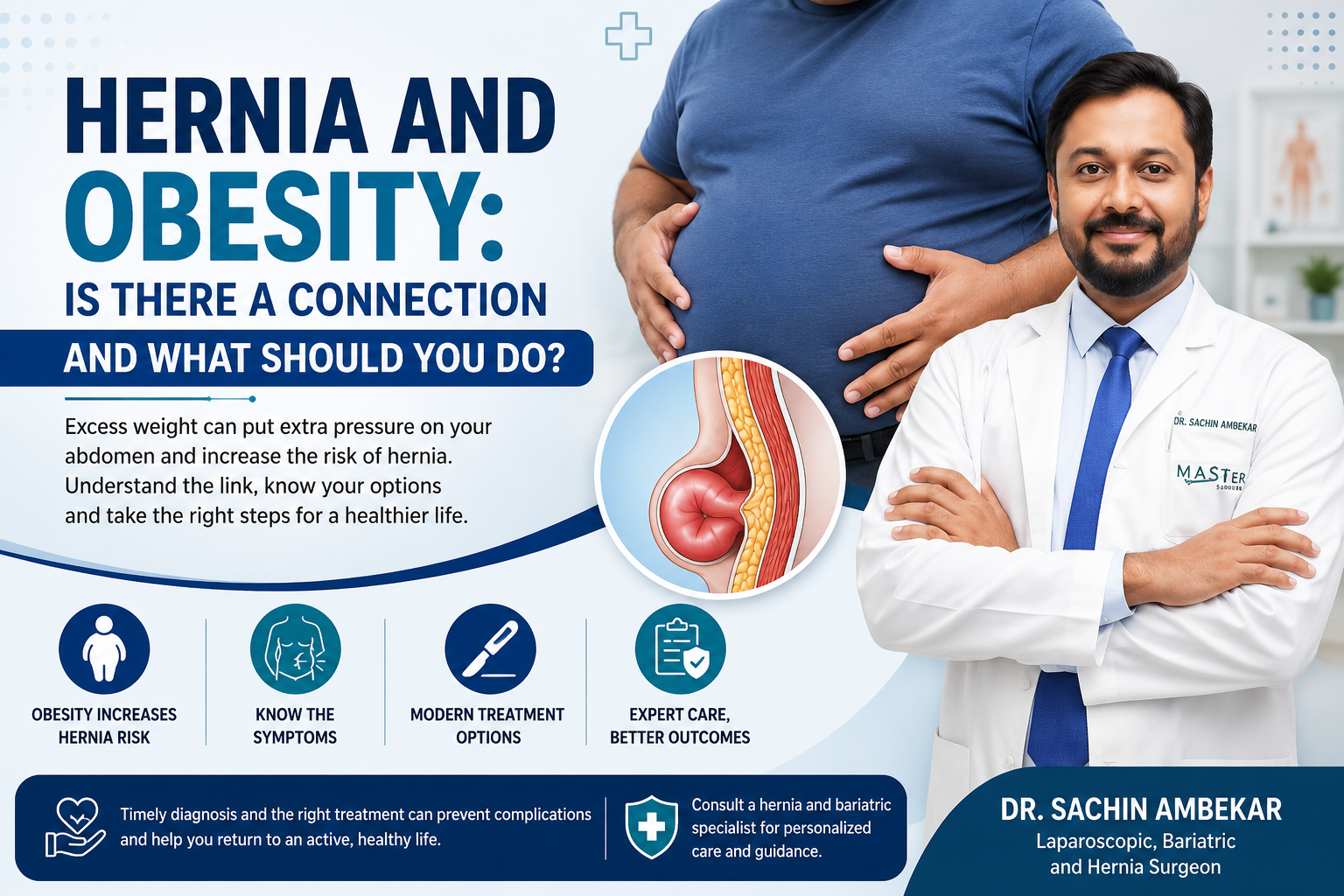
A hernia develops when tissue, fat, or sometimes part of the intestine pushes through a weak area in the abdominal wall. Obesity can increase the pressure placed on the abdominal wall and is associated particularly with abdominal wall or ventral hernias. It can also make hernia treatment more technically challenging and may increase the risk of wound complications or recurrence after some types of repair.
The important point is that having obesity does not mean you cannot have successful hernia treatment. It does mean that your surgeon may need to consider your weight, overall health, type and size of hernia, previous operations, and whether weight management should be part of the treatment plan.
For patients looking for Obesity Treatment in Delhi, understanding this connection can be especially useful. Sometimes treating the hernia and addressing excess weight need to be considered together rather than as two completely separate problems.
What Is a Hernia?
A hernia occurs when an internal structure, commonly fatty tissue or part of the intestine, pushes through a weak point in the muscles or connective tissues of the abdominal wall.
The abdominal wall normally provides strong support for the organs inside the abdomen. If an area becomes weak, pressure from inside the abdomen can push tissue through that opening.
Common types include:
Inguinal hernia
This develops in the groin and is the most common type of abdominal wall hernia. It may appear as a lump that becomes more noticeable when standing, coughing or straining.
Umbilical hernia
This occurs around the belly button. Adults with obesity may develop or experience enlargement of an umbilical hernia because of increased pressure on the abdominal wall.
Ventral hernia
A ventral hernia develops through a weakness in the front abdominal wall. Umbilical and epigastric hernias are examples.
Incisional hernia
This occurs at or near a previous abdominal surgical incision. The abdominal wall may remain weaker at the site of the old operation.
Femoral hernia
This occurs in the upper thigh or groin region. Femoral hernias are less common but deserve particular attention because they can have a higher risk of complications.
Not every hernia causes pain. Some people have a noticeable swelling but very little discomfort. Others experience dragging, pressure or pain, especially during physical activity.
Is There a Connection Between Hernia and Obesity?
Yes. Obesity is associated with a higher risk of abdominal wall hernias, particularly ventral hernias.
Research has found a relationship between increasing BMI and the occurrence of ventral hernias. A large 2024 study involving more than 1.3 million ambulatory patients found that the odds of having a ventral hernia increased across overweight and obesity categories compared with normal BMI.
There are several reasons for this association.
1. Increased pressure inside the abdomen
Excess abdominal weight can increase the mechanical load on the abdominal wall. Over time, this additional pressure may contribute to the development or enlargement of a weak area.
This does not mean that obesity is the only cause. Hernias can also result from age-related tissue weakness, previous surgery, inherited weakness, chronic coughing, constipation and repeated straining.
2. Abdominal fat can place additional stress on weakened tissues
The amount and distribution of body fat matter. Visceral fat, which surrounds internal organs, may contribute to increased abdominal pressure and has been associated with incisional hernia development and more challenging abdominal wall reconstruction.
3. Chronic coughing or straining may add pressure
Some people with obesity also have conditions that cause persistent coughing or difficulty with physical activity. Repeated coughing, constipation and straining can temporarily increase pressure inside the abdomen.
Over time, repeated pressure may aggravate an existing weak point.
4. Obesity can affect recovery after surgery
The connection does not end once the hernia is diagnosed.
Patients with obesity can have a higher risk of wound-healing problems and other postoperative complications following complex abdominal wall reconstruction.
This is one reason surgeons often discuss weight management and other health factors before elective hernia surgery.
Can Obesity Make a Hernia Worse?
It can.
A hernia may gradually become larger, especially when the underlying abdominal wall weakness continues to experience pressure.
Patients commonly ignore a hernia when:
- The lump is painless
- It disappears when lying down
- It only appears while coughing or standing
- They assume it is “just fat”
- They are worried about surgery
- They are advised by family members to wait until it becomes painful
The problem is that pain is not a reliable measure of hernia severity.
A large hernia may sometimes produce relatively little pain, while a smaller hernia can become painful if tissue becomes trapped.
A hernia can also become incarcerated, meaning the protruding tissue becomes stuck, or strangulated, when its blood supply is compromised. Strangulation is a medical emergency.
Symptoms of Hernia in People With Obesity
Symptoms vary according to the location and size of the hernia.
You may notice:
- A visible lump in the abdomen or groin
- Swelling around the belly button
- A bulge that becomes prominent when coughing or straining
- Discomfort while walking or exercising
- A dragging or pulling sensation
- Pain while lifting
- Tenderness around the swelling
- A feeling of pressure in the abdomen
- A lump that becomes smaller when lying down
Some people have no symptoms at all.
If you have obesity, it may sometimes be harder to notice a small abdominal wall hernia because the swelling can be hidden beneath abdominal tissue. This is another reason not to dismiss a new or unusual lump.
When Is a Hernia an Emergency?
Most hernias are not emergencies at the moment they are diagnosed. However, certain changes require urgent medical assessment.
Seek emergency care if you develop:
- Sudden or severe abdominal or groin pain
- A hernia that becomes hard, very tender or cannot be pushed back
- Increasing swelling
- Red, purple or dark discoloration over the lump
- Nausea or repeated vomiting
- Difficulty passing stool or gas
- Severe abdominal distension
These symptoms can indicate bowel obstruction or strangulation and should not be managed at home.
Do not wait for a routine appointment if these symptoms occur.
How Is a Hernia Diagnosed?
Diagnosis usually begins with a detailed medical history and physical examination.
Your surgeon may ask:
- When did you first notice the lump?
- Does it disappear when you lie down?
- Does coughing make it more prominent?
- Do you have pain?
- Have you had previous abdominal surgery?
- Do you have constipation or chronic cough?
- Have you experienced recent weight gain or weight loss?
- Do you have diabetes or other medical conditions?
- Have you had a previous hernia repair?
The surgeon will examine the abdomen or groin, often while you are standing and sometimes while coughing or straining.
An ultrasound may be useful when the diagnosis is uncertain or when the hernia is difficult to assess clinically. CT imaging may be considered for larger, complicated or recurrent abdominal wall hernias and can help define the anatomy before complex surgery.
How Is Hernia Treated When You Have Obesity?
There is no single treatment strategy suitable for every patient.
The decision depends on the type and size of the hernia, symptoms, risk of complications, BMI, other medical conditions, previous operations and whether weight reduction is appropriate before surgery.
1. Observation in selected cases
Some small, minimally symptomatic hernias can be monitored, depending on the type and individual circumstances.
However, monitoring does not mean ignoring the hernia. Changes in size, pain or the ability to push the lump back should be reported to your doctor.
2. Hernia repair surgery
When a hernia is symptomatic, enlarging or at significant risk of complications, surgical repair may be recommended.
Depending on the type of hernia, repair may be performed through an open or minimally invasive approach. Mesh is commonly used to reinforce the weakened abdominal wall, although the appropriate technique depends on the individual case.
For patients with obesity, surgical planning can be more complex because excess abdominal tissue, previous operations and associated medical conditions can affect the procedure and recovery.
3. Weight management before surgery
This is an important part of the conversation for many patients.
If the hernia is not an emergency, your surgeon may recommend improving your weight and overall health before elective repair. This can involve:
- Nutrition counselling
- Increased physical activity within safe limits
- Management of diabetes and blood pressure
- Smoking cessation
- Treatment of constipation or chronic cough
- Structured medical weight management
- Bariatric surgery for appropriately selected patients
Importantly, there is no universal rule that every patient must lose a specific amount of weight before hernia surgery. The decision should be individualized.
Current evidence on exactly how much preoperative weight loss improves hernia outcomes remains limited, so delaying necessary treatment solely to reach an arbitrary number on the weighing scale is not appropriate for every patient.
4. Bariatric surgery and hernia surgery
For patients with severe obesity and a significant abdominal wall hernia, the order of treatment can be complicated.
In some patients, weight-loss treatment may be considered before definitive hernia repair. In others, especially where the hernia is symptomatic or carries a significant risk, hernia repair may need to be addressed sooner.
There are also situations where both procedures may be considered together.
The available evidence does not support one universal approach for every patient. Specialist reviews emphasize individualized decision-making and, where appropriate, multidisciplinary planning between bariatric and hernia surgeons.
This is why patients with both obesity and hernia should not assume that they need either “hernia surgery first” or “weight-loss surgery first.” The right sequence depends on the individual.
What Should You Do If You Have Both Hernia and Obesity?
A practical approach is to address both problems rather than treating them as unrelated.
Step 1: Get the hernia assessed
Do not assume every abdominal lump is caused by obesity. Have it examined by a qualified surgeon.
Step 2: Understand the type and size of your hernia
An inguinal hernia requires a different approach from a large incisional or ventral hernia.
Step 3: Assess your overall health
Conditions such as diabetes, high blood pressure, sleep-related breathing problems and heart or lung disease may influence surgical planning and anaesthesia risk.
Step 4: Discuss weight management honestly
If weight is contributing to your health risks, discuss realistic options with your doctor. This does not mean blaming the patient for having obesity. It means identifying modifiable factors that may improve long-term health and surgical readiness.
Step 5: Ask about the timing of surgery
Ask whether your hernia should be repaired now, monitored, or treated after a period of weight management.
Step 6: Follow an individualized recovery plan
After surgery, gradually return to activity according to your surgeon’s instructions. Avoid suddenly lifting heavy objects or returning to strenuous exercise before you are ready.
Can Losing Weight Prevent or Reduce Hernia Problems?
Weight reduction may reduce some of the mechanical stress associated with excess abdominal weight and can improve overall health.
However, losing weight does not close an established hernia defect.
If there is a genuine abdominal wall opening, weight loss may make the abdomen healthier and may improve surgical risk factors, but it should not be considered a replacement for appropriate hernia repair when repair is indicated.
This distinction is important. Patients sometimes lose weight and assume that the hernia itself has been “cured.” It has not necessarily been repaired.
Prevention and Recovery Tips
Not every hernia can be prevented, but several measures can help reduce abdominal wall strain and support overall health.
Maintain a healthy weight
If you are overweight or living with obesity, gradual, medically appropriate weight reduction can be beneficial for overall health and may form part of surgical preparation.
Avoid unnecessary heavy lifting
If you already have a hernia, discuss your activity level with your doctor rather than abruptly starting heavy strength training.
Prevent constipation
Adequate fluids, fibre and appropriate physical activity can help reduce repeated straining. If constipation is persistent, discuss treatment with a healthcare professional.
Treat persistent cough
Chronic coughing repeatedly increases abdominal pressure. Finding and treating its cause is important.
Control diabetes and other medical conditions
Good control of blood sugar and other chronic conditions can support safer surgery and recovery.
Follow postoperative instructions
After repair, do not judge your recovery solely by how you feel. The abdominal wall needs time to heal even when the external wound looks good.
When Should You See a Hernia Specialist?
Consider a surgical consultation if you notice:
- A new lump in your groin or abdomen
- A swelling around the belly button
- A previous hernia that is becoming larger
- Increasing discomfort while walking, coughing or lifting
- A hernia that is interfering with daily activities
- A hernia after previous abdominal surgery
- A hernia that has returned after previous repair
If you have obesity as well, it is particularly useful to discuss both conditions together.
For someone considering Obesity Treatment in Delhi, the presence of a hernia should be mentioned during the initial consultation. It can influence the overall treatment strategy and the timing of any planned operation.
FAQs
Does obesity cause hernia?
Obesity is associated with an increased risk of abdominal wall, particularly ventral, hernias. Increased abdominal pressure and changes in abdominal wall tissues may contribute. However, hernias have multiple causes, and obesity is not the only risk factor.
Can losing weight cure a hernia?
No. Weight loss may improve overall health and may reduce some pressure on the abdominal wall, but it does not repair an existing hernia defect. A surgeon should determine whether the hernia needs repair.
Should I lose weight before hernia surgery?
Sometimes. For selected patients undergoing elective repair, weight management may be recommended to improve overall health and optimize surgery. However, there is no single weight-loss target that applies to everyone, and delaying necessary treatment can be inappropriate.
Can I have bariatric surgery if I have a hernia?
In some cases, yes. The best sequence—bariatric surgery first, hernia repair first, or selected combined treatment—depends on the hernia and the patient’s overall health. Specialist assessment is important.
Is hernia surgery safe for people with obesity?
Hernia surgery can be performed in people with obesity, but obesity can increase technical and postoperative challenges, including wound-related complications in some abdominal wall reconstruction procedures. Your surgeon should assess your individual risk rather than relying on BMI alone.
Can an untreated hernia become dangerous?
Yes. A hernia can sometimes become incarcerated or strangulated. Sudden severe pain, vomiting, bowel obstruction symptoms, or a firm, discoloured hernia that cannot be reduced require urgent medical assessment.
Is every hernia painful?
No. Some hernias cause little or no pain, particularly when they are small or easily reducible. The absence of pain does not necessarily mean that medical assessment is unnecessary.
Can exercise make a hernia worse?
Some activities that substantially increase abdominal pressure may aggravate symptoms or make a known hernia more noticeable. The safest exercise plan depends on the hernia and your overall condition. Ask your surgeon or physiotherapist before starting strenuous exercise.
Conclusion
Hernia and obesity can be closely connected, particularly in people with abdominal wall or ventral hernias. Excess abdominal weight may contribute to abdominal wall stress, while obesity can also make some hernia operations and recovery more challenging.
But a diagnosis of obesity does not mean that you have to live with a hernia or that surgery is automatically unsafe.
The most appropriate approach is individualized. Some patients may benefit from weight management before elective hernia repair. Others may need hernia treatment sooner. Patients with severe obesity and a hernia may require coordinated planning for both conditions.
If you have noticed a persistent abdominal or groin bulge, do not simply assume it is part of weight gain. A proper surgical evaluation can clarify what is happening and help you understand your options.
For patients exploring Obesity Treatment in Delhi, discussing an existing or suspected hernia early can help ensure that weight management and surgical care are planned together, safely and realistically.
Medical disclaimer: This article is intended for general educational purposes and does not replace an in-person medical consultation. Hernia treatment should be decided after an appropriate clinical assessment. Seek urgent medical care for sudden severe pain, vomiting, bowel obstruction symptoms, or a painful, hard or discoloured hernia.

Leave a Reply