

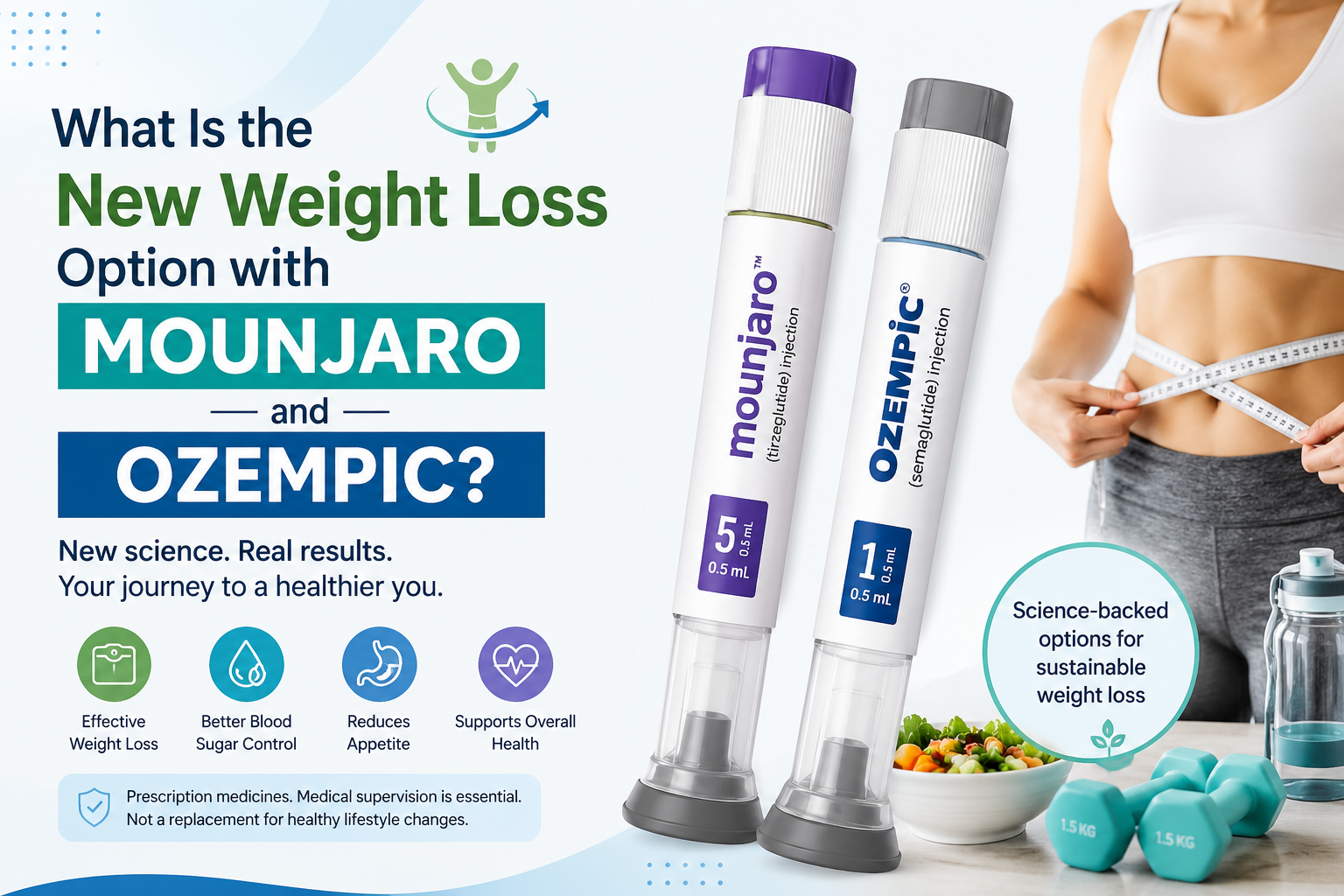
If you have been searching for newer options for weight loss, you have probably come across two names repeatedly: Mounjaro and Ozempic.
Social media has made these medicines sound almost like quick fixes for obesity. The medical reality is more nuanced. These are prescription medicines that affect appetite, blood sugar regulation and digestion, and they can produce substantial weight loss in appropriately selected patients. But they are not suitable for everyone, and taking them without medical supervision can be risky.
There is also an important distinction that patients often miss. Mounjaro contains tirzepatide, while Ozempic contains semaglutide. They are not the same medicine, and the brands are not interchangeable.
For patients considering Obesity Treatment in Delhi, the bigger question is not simply, “Which injection causes more weight loss?” A proper assessment should consider your BMI, medical conditions, medications, eating patterns, previous weight-loss attempts and whether medication, lifestyle treatment, bariatric surgery or a combination approach is most appropriate.
Recent head-to-head research has made the discussion even more interesting. In the SURMOUNT-5 trial, adults with obesity but without type 2 diabetes experienced greater average weight loss with tirzepatide than with semaglutide over 72 weeks.
So, what exactly are these medicines, how do they work, and should you consider them?
What Are Mounjaro and Ozempic?
Mounjaro and Ozempic belong to a newer generation of medicines that work through gut-hormone pathways involved in appetite and glucose regulation.
Mounjaro: tirzepatide
Mounjaro contains tirzepatide. It acts on two hormone receptors: GIP (glucose-dependent insulinotropic polypeptide) and GLP-1 (glucagon-like peptide-1).
In the United States, Mounjaro is approved for improving blood sugar control in people with type 2 diabetes. Tirzepatide is also approved under the brand name Zepbound for chronic weight management in eligible adults with obesity or overweight plus a weight-related condition.
Tirzepatide can help reduce appetite and food intake while improving metabolic regulation. It is generally given as a once-weekly injection, with the dose increased gradually according to medical advice.
Ozempic: semaglutide
Ozempic contains semaglutide, a GLP-1 receptor agonist.
Ozempic is primarily approved for type 2 diabetes and certain cardiovascular risk reduction indications. Semaglutide is also available as Wegovy, which is specifically indicated for chronic weight management in eligible patients.
This distinction matters because many people casually use the term “Ozempic for weight loss.” The medicine may cause weight loss, but the specific product, dose and approved indication need to be considered.
How Do These Medicines Help With Weight Loss?
The most important effect for many patients is reduced appetite.
GLP-1 and GIP-related medicines influence areas of the body involved in hunger, fullness and blood glucose regulation. They can also slow stomach emptying, which may help a person feel satisfied after eating smaller amounts.
This is one reason some patients describe a significant change in their relationship with food. They may feel less hungry between meals or find it easier to stop eating when they are full.
However, these medicines do not simply “burn fat.”
Weight reduction occurs primarily because the person consumes fewer calories over time, alongside the metabolic effects of the medication.
That is why medical treatment should still include attention to protein intake, nutrition quality, physical activity, sleep and long-term behaviour changes.
Mounjaro vs Ozempic: What Is the Difference?
The simplest way to understand the difference is:
| Feature | Mounjaro | Ozempic |
|---|---|---|
| Active ingredient | Tirzepatide | Semaglutide |
| Main hormone pathways | GIP + GLP-1 | GLP-1 |
| Common use | Type 2 diabetes; tirzepatide is also marketed as Zepbound for obesity | Type 2 diabetes; semaglutide is marketed as Wegovy for chronic weight management |
| Dosing | Once weekly injection | Once weekly injection |
| Weight-loss effect | Can be substantial | Can be substantial |
| Prescription required | Yes | Yes |
| Suitable for everyone? | No | No |
It is important not to choose between them based only on advertisements, social-media testimonials or another person’s results.
Your medical history can change which treatment is appropriate.
Which One Causes More Weight Loss?
This is one of the most common questions patients ask.
A 2025 randomized head-to-head trial, known as SURMOUNT-5, compared maximum tolerated doses of tirzepatide and semaglutide in 751 adults with obesity who did not have type 2 diabetes.
After 72 weeks, average body-weight reduction was approximately 20.2% with tirzepatide compared with 13.7% with semaglutide. Waist circumference also decreased more with tirzepatide.
These results are clinically important, but they should not be interpreted as “Mounjaro is always better.”
Clinical trials report average results. An individual patient’s response can be very different.
Some people may respond well to semaglutide. Others may have better results with tirzepatide. Some may have side effects that make one medicine less suitable.
The right decision should therefore be personalised.
What Are the Benefits Beyond Weight Loss?
Weight loss is not the only potential benefit.
For people with obesity and metabolic problems, effective treatment may improve several health markers.
Depending on the individual, weight reduction can contribute to improvements in:
- Blood glucose control
- Insulin resistance
- Blood pressure
- Waist circumference
- Fatty liver risk
- Sleep-related breathing problems
- Physical mobility
- Obesity-related joint stress
- Overall metabolic health
Longer-term research has also shown sustained weight reduction with tirzepatide in people with obesity and prediabetes, together with a substantially lower progression to type 2 diabetes during the treatment period.
Semaglutide has also demonstrated important cardiovascular benefits in selected patients. For example, the FDA approved an indication for Wegovy to reduce the risk of cardiovascular death, heart attack and stroke in certain adults with cardiovascular disease and obesity or overweight.
That does not mean every person taking these medicines will experience the same benefits. The underlying medical condition and the indication for treatment matter.
Who May Be Considered for Medical Weight-Loss Treatment?
Prescription weight-loss medication is generally considered when excess weight is affecting health and lifestyle measures alone have not produced adequate results.
Eligibility can depend on factors such as:
- BMI
- Weight-related medical conditions
- Previous attempts at weight loss
- Type 2 diabetes or prediabetes
- High blood pressure
- Abnormal cholesterol
- Obstructive sleep apnea
- Fatty liver disease
- Cardiovascular risk
- Current medications
- Pregnancy plans
- Previous gastrointestinal or pancreatic problems
A doctor may also discuss bariatric surgery when obesity is severe or when medication and lifestyle treatment are unlikely to provide sufficient long-term benefit.
This is particularly relevant because medication and bariatric surgery are not necessarily competing choices. In some patients, they can be considered at different stages of a comprehensive obesity-management plan.
Common Side Effects of Mounjaro and Ozempic
The most common side effects are related to the digestive system.
Patients may experience:
- Nausea
- Vomiting
- Diarrhoea
- Constipation
- Abdominal discomfort
- Indigestion
- Bloating
- Reduced appetite
These symptoms are often more noticeable when treatment begins or when the dose is increased. In the SURMOUNT-5 trial, gastrointestinal side effects were the most common adverse events and were primarily mild to moderate during dose escalation.
This is why increasing the dose rapidly on your own is not advisable.
If nausea or vomiting is persistent, dehydration can become a concern. Severe or unusual abdominal pain also requires prompt medical assessment.
Are There Serious Risks?
Yes. These medicines are effective prescription treatments, not ordinary slimming supplements.
For example, prescribing information for tirzepatide includes warnings concerning pancreatitis, gallbladder disease, severe gastrointestinal reactions, kidney injury related to dehydration and hypoglycaemia when used with certain diabetes medicines.
Semaglutide products also carry warnings concerning pancreatitis, gallbladder disease, kidney injury and hypoglycaemia in certain circumstances.
Both tirzepatide and semaglutide carry a boxed warning related to thyroid C-cell tumours based on findings in rats. They should not be used in people with a personal or family history of medullary thyroid carcinoma or with Multiple Endocrine Neoplasia syndrome type 2.
This is one reason a proper medical consultation is essential before starting treatment.
Can You Take Mounjaro and Ozempic Together?
No. They should not be combined simply to try to accelerate weight loss.
Mounjaro contains tirzepatide, whereas Ozempic contains semaglutide. Both act on incretin pathways, and combining such medicines without medical direction could increase adverse effects without providing a proven reason to do so.
The FDA prescribing information for Wegovy specifically states that coadministration with other semaglutide-containing products or GLP-1 receptor agonists is not recommended.
Never combine, switch or increase these medicines without speaking to the prescribing doctor.
What Happens When You Stop the Medicine?
This is an important part of the conversation that is often missed online.
Obesity is a chronic disease, and treatment may need to be long term.
When an effective weight-management medicine is stopped, appetite can return and some weight regain may occur. The exact response varies between individuals.
This does not mean the treatment has “failed.” It means obesity management needs to be approached as an ongoing health strategy rather than a short-term diet challenge.
A doctor may therefore discuss what happens after the initial weight-loss phase, including continued medication, nutrition, exercise, behavioural support or other treatment options.
Can Mounjaro or Ozempic Replace Bariatric Surgery?
Not necessarily.
For some people with obesity, medication can produce meaningful weight loss and improve obesity-related conditions. For others, particularly those with severe obesity or significant obesity-related complications, bariatric surgery may provide a more appropriate long-term treatment option.
The decision depends on the person’s BMI, health conditions, previous treatment, surgical suitability, expectations and preferences.
A bariatric surgeon can help compare medication-based treatment with procedures such as sleeve gastrectomy or gastric bypass when appropriate.
The goal should not simply be to achieve a lower number on the weighing scale. It should be to improve health and maintain those improvements over time.
What Should You Eat While Taking These Medicines?
There is no special “Mounjaro diet” that everyone needs to follow.
However, because appetite may fall significantly, food quality becomes particularly important.
A practical approach is to focus on:
Protein
Include adequate protein through foods such as dal, beans, paneer, curd, eggs, fish, chicken or other suitable sources.
Protein becomes especially important during substantial weight loss because preserving lean muscle should be part of the treatment goal.
Vegetables and fibre
Vegetables, fruits and appropriate whole-grain or fibre-rich foods can support nutritional quality and bowel regularity.
Hydration
Drink sufficient fluids, particularly if nausea, vomiting or diarrhoea occurs.
Smaller meals
Large, heavy meals may become uncomfortable when appetite and gastric emptying change. Smaller portions eaten slowly may be easier to tolerate.
Indian patients do not need to abandon familiar foods completely. Portion size, preparation methods and overall dietary balance usually matter more than following an unnecessarily restrictive diet.
What About Exercise?
Medication works best as part of a broader weight-management plan.
Once your doctor confirms that exercise is safe, combine:
- Walking or other aerobic activity
- Resistance training
- Daily movement
- Mobility exercises
- Activities that you can maintain consistently
Resistance training deserves special attention during significant weight loss because preserving muscle is important for strength, function and long-term metabolic health.
If joint pain, severe obesity or other health conditions make exercise difficult, start with a medically appropriate programme rather than forcing high-impact workouts.
When Should You See a Bariatric or Obesity Specialist?
Consider a consultation if:
- Your BMI is in the obesity range.
- You repeatedly lose and regain weight.
- Diet and exercise alone have not produced sustainable results.
- You have diabetes, prediabetes or fatty liver disease.
- You have high blood pressure or cholesterol.
- You snore heavily or have suspected sleep apnea.
- Obesity is affecting your mobility or quality of life.
- You are considering Mounjaro, Ozempic or another prescription weight-loss medicine.
- You are wondering whether medication or bariatric surgery would be more appropriate.
One pattern doctors commonly see is that patients wait until obesity has already contributed to another problem before seeking help.
There is no need to wait for diabetes, severe joint pain or sleep apnea before discussing treatment.
Early assessment can help identify the safest and most appropriate options.
How Is the Right Treatment Chosen?
A good obesity consultation should involve more than checking your weight.
Your doctor may review:
- BMI and waist circumference
- Blood pressure
- Blood sugar and HbA1c
- Lipid profile
- Liver function and metabolic health
- Current medications
- Eating and activity patterns
- Sleep quality
- Previous weight-loss attempts
- Family and medical history
- Weight-related complications
- Your treatment goals
After this assessment, the options may include structured lifestyle treatment, prescription medication, bariatric surgery or a combination of approaches.
There is no single “best weight-loss treatment” for every patient.
Mounjaro vs Ozempic: Which Is Better for You?
The answer depends on the person.
Current evidence suggests that tirzepatide can produce greater average weight loss than semaglutide in adults with obesity without type 2 diabetes, based on the SURMOUNT-5 head-to-head trial.
But efficacy is only one part of the decision.
A doctor also needs to consider:
- Your medical history
- Diabetes status
- Cardiovascular risk
- Gastrointestinal symptoms
- Other medications
- Potential contraindications
- Side-effect tolerance
- Cost and availability
- Long-term treatment plan
- Whether surgery should be considered
In other words, the strongest medicine on paper is not automatically the right medicine for you.
New Developments in Weight-Loss Medicines
The field of obesity medicine continues to evolve rapidly.
Semaglutide and tirzepatide have already changed how doctors approach pharmacological weight management. New formulations and higher-dose options are also emerging. For example, in March 2026, the FDA approved a higher-dose 7.2 mg version of Wegovy for certain adults with obesity or overweight with a weight-related condition.
This is encouraging for patients, but it also makes professional guidance more important.
New does not automatically mean better for every person.
Treatment should be based on evidence, individual risk and realistic long-term goals rather than online trends.
Frequently Asked Questions
Is Mounjaro better than Ozempic for weight loss?
Recent head-to-head research found greater average weight loss with tirzepatide than semaglutide in adults with obesity without type 2 diabetes. However, individual responses differ, so the better option depends on the patient’s medical circumstances.
Is Ozempic officially a weight-loss injection?
Ozempic contains semaglutide and is primarily approved for type 2 diabetes and certain cardiovascular-risk indications. Semaglutide is also marketed as Wegovy for chronic weight management in eligible patients.
Is Mounjaro approved for weight loss?
Tirzepatide is approved in the U.S. under the brand name Zepbound for chronic weight management in eligible adults with obesity or overweight plus a weight-related condition. Mounjaro itself is the tirzepatide product indicated for type 2 diabetes.
How quickly do Mounjaro and Ozempic work?
Weight loss generally develops over weeks and months rather than immediately. Doses are usually increased gradually, and the amount of weight lost varies considerably between patients.
Can I take these injections without a prescription?
These are prescription medicines and should be used under medical supervision. Self-medicating or purchasing unverified products online can expose patients to incorrect dosing, counterfeit products and avoidable complications.
Do Mounjaro and Ozempic have side effects?
Yes. Nausea, vomiting, diarrhoea, constipation and abdominal symptoms are among the commonly reported side effects. More serious problems, including pancreatitis and gallbladder disease, can occur and require medical attention.
Can I stop Mounjaro or Ozempic after reaching my target weight?
Do not stop treatment without discussing it with your doctor. Obesity is a chronic condition, and some patients regain weight after stopping effective medication. A long-term maintenance plan should be discussed before treatment is discontinued.
Are Mounjaro and Ozempic suitable during pregnancy?
Weight-loss treatment with these medicines is not appropriate during pregnancy. Anyone who is pregnant, planning pregnancy or breastfeeding should discuss medication choices with their doctor before starting or continuing treatment.
Can these medicines replace bariatric surgery?
Not for everyone. Medication can be highly effective for some patients, while bariatric surgery may offer greater or more durable weight reduction for others with severe obesity. A specialist assessment can help determine which approach is appropriate.
Conclusion
Mounjaro and Ozempic have changed the conversation around medical weight management, but they should not be treated as cosmetic slimming injections.
Tirzepatide and semaglutide are powerful prescription medicines that can help selected patients achieve meaningful weight loss when combined with appropriate nutrition, physical activity and medical follow-up. Current head-to-head evidence suggests tirzepatide produces greater average weight loss than semaglutide in adults with obesity without diabetes, but that does not make it the right choice for every patient.
For patients considering Obesity Treatment in Delhi, the most useful first step is a personalised assessment rather than choosing a medicine based on social-media popularity.
If obesity is affecting your health, mobility, confidence or quality of life, speak with an experienced obesity or bariatric specialist. A careful evaluation can help you understand whether medication, lifestyle treatment, bariatric surgery or a combination of approaches makes the most sense for your individual situation.
Medical disclaimer: This article is intended for general educational purposes and should not replace a consultation with a qualified doctor. Prescription weight-loss medicines should only be started, adjusted or stopped under appropriate medical supervision.
Leave a Reply