

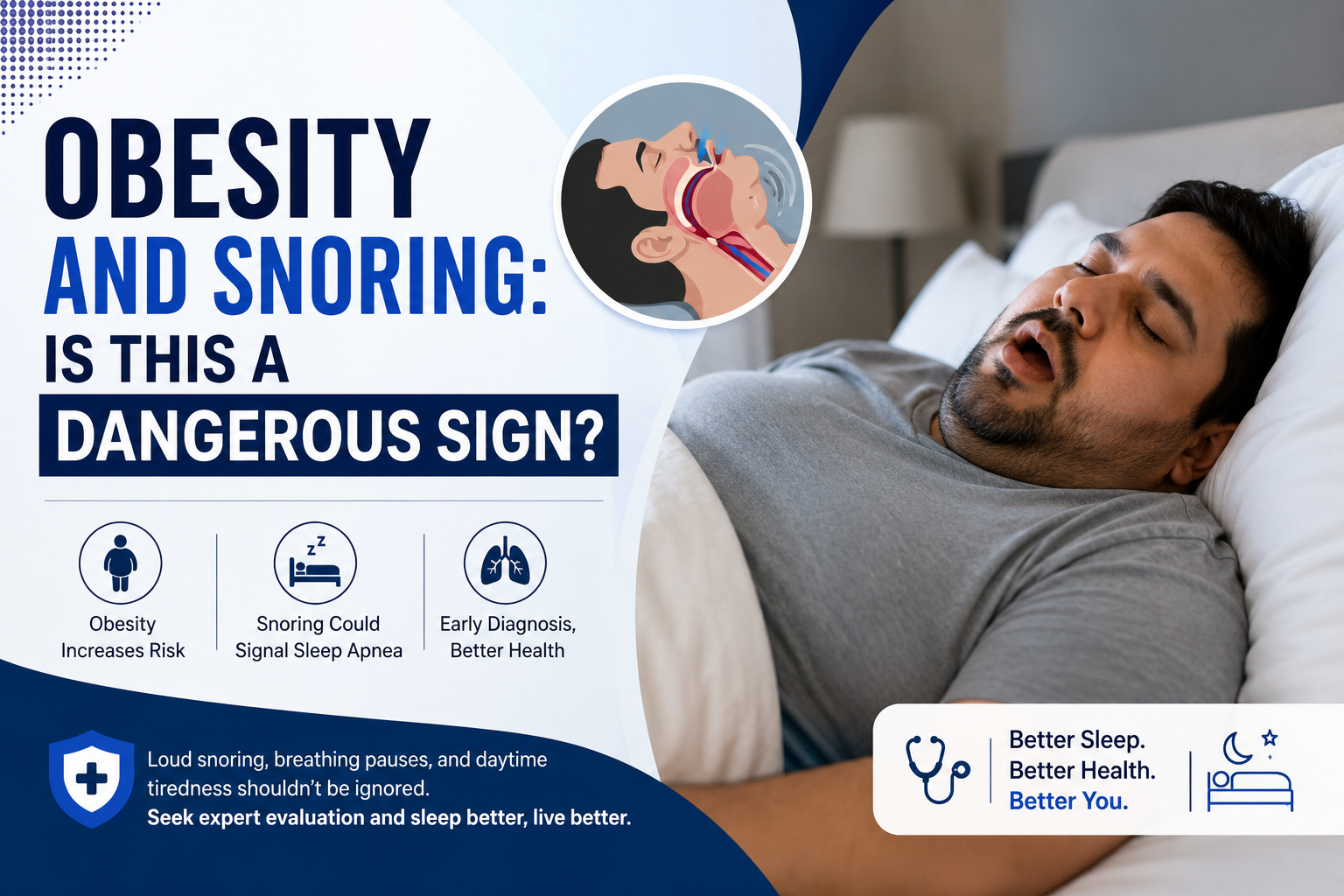
Snoring is often dismissed as an annoying but harmless part of sleep. Many people assume that it is simply caused by being tired, sleeping on the back, or having a blocked nose.
But when snoring is frequent, loud, or accompanied by pauses in breathing, gasping, choking, or excessive daytime sleepiness, it deserves more attention.
This is particularly important in people who are overweight or living with obesity. Extra tissue around the neck and upper airway can contribute to narrowing of the airway during sleep, increasing the risk of obstructive sleep apnea (OSA).
So, is snoring with obesity dangerous?
It can be a warning sign, especially when it is associated with obstructive sleep apnea. Snoring itself does not automatically mean that a person has sleep apnea, but certain patterns should not be ignored.
For patients seeking Obesity Treatment in Delhi, understanding this connection is important because managing excess weight can be part of a broader approach to improving sleep-related breathing problems and overall health.
What Is the Connection Between Obesity and Snoring?
Snoring happens when air does not move freely through the nose and throat during sleep. As air passes through a narrowed airway, the surrounding tissues can vibrate, producing the familiar snoring sound.
Obesity can make this narrowing more likely.
People with obesity may have increased fatty tissue around the neck and upper airway. During sleep, the muscles that normally help keep the airway open relax. If the airway is already narrowed, it can become partially or completely blocked.
This is one of the reasons obesity is an important risk factor for obstructive sleep apnea.
However, it is worth making one point clear: not everyone who snores has sleep apnea, and not everyone with sleep apnea is obese.
Anatomy, age, enlarged tonsils, tongue size, nasal problems, certain hormonal conditions, and other factors can also contribute to sleep-disordered breathing.
When Is Snoring More Than Just Snoring?
Occasional snoring after a particularly exhausting day may not be a cause for concern.
The situation becomes more important when snoring is persistent and accompanied by other symptoms.
Watch for:
- Loud or frequent snoring
- Pauses in breathing noticed by a partner or family member
- Gasping or choking during sleep
- Waking up repeatedly during the night
- Morning headaches
- Dry mouth after waking
- Excessive daytime sleepiness
- Difficulty concentrating
- Feeling tired despite apparently getting enough sleep
- Frequent nighttime urination
- Irritability or changes in mood
These symptoms can occur with sleep apnea.
One common problem in clinical practice is that patients often do not realise what happens while they are asleep. They may come to the clinic because of daytime fatigue or difficulty concentrating, while their partner is the person who has noticed the loud snoring and pauses in breathing.
That is why information from a spouse or family member can sometimes be surprisingly useful when discussing sleep symptoms with a doctor.
What Is Obstructive Sleep Apnea?
Obstructive sleep apnea is a sleep-related breathing disorder in which the upper airway repeatedly becomes blocked during sleep.
When the airway closes, airflow can decrease or stop temporarily. The brain may then partially awaken the person so that normal breathing can resume. These interruptions can happen repeatedly throughout the night, sometimes without the person remembering them the next morning.
The result is fragmented sleep and, in some cases, reduced oxygen levels.
Untreated sleep apnea can affect concentration, alertness and quality of life. It is also associated with an increased risk of serious cardiovascular problems, including high blood pressure, stroke and heart attack.
This does not mean that every person who snores is at immediate risk of these complications. The key issue is whether the snoring is a symptom of an underlying sleep disorder that needs diagnosis and treatment.
Why Does Obesity Increase the Risk of Sleep Apnea?
There are several reasons.
Extra tissue around the neck
Fat deposits around the neck can reduce the space available for air to pass through the upper airway. When the throat muscles relax during sleep, this narrowing can become more pronounced.
Changes in breathing mechanics
Excess weight around the chest and abdomen can also affect breathing mechanics. In people with severe obesity, this can contribute to more significant breathing problems.
A related condition called obesity hypoventilation syndrome (OHS) occurs when a person with obesity has too much carbon dioxide and too little oxygen in the blood. Many people with OHS also have sleep apnea.
Sleep disruption
Poor-quality sleep can leave a person tired during the day. Over time, disrupted sleep may also make it harder to maintain healthy activity levels and routines.
This creates an important reason to look at the whole patient rather than treating snoring as an isolated complaint.
Other Risk Factors for Snoring and Sleep Apnea
Obesity is an important risk factor, but it is not the only one.
Other factors may include:
- Increasing age
- Large tonsils
- A large tongue or other upper-airway anatomical features
- Certain hormonal or endocrine conditions
- Family history
- Nasal obstruction
- Sleeping on the back
- Alcohol consumption
- Certain medications
- Smoking
The risk of sleep apnea can also increase with age as changes in the tissues of the neck and tongue affect the airway.
Symptoms You Should Not Ignore
Snoring alone may not tell you how severe a person’s breathing problem is.
The more concerning pattern is snoring combined with breathing interruptions or daytime symptoms.
For example, if your spouse says:
“You snore loudly, then suddenly stop breathing, and sometimes gasp for air,”
that is a much stronger reason to seek medical evaluation than simple occasional snoring.
Similarly, if you regularly fall asleep while watching television, feel unusually sleepy while travelling, struggle to concentrate at work, or wake with headaches despite spending enough time in bed, it is worth discussing these symptoms with a doctor.
Daytime sleepiness can be especially important because untreated sleep apnea may impair alertness and reaction time.
How Is Sleep Apnea Diagnosed?
A doctor will usually begin by discussing your symptoms, medical history, sleep habits and risk factors.
The evaluation may include:
Medical and sleep history
Your doctor may ask about:
- Snoring frequency and severity
- Witnessed pauses in breathing
- Gasping or choking at night
- Daytime sleepiness
- Sleep duration
- Medication use
- Alcohol and tobacco use
- Existing medical conditions
Your doctor may also ask a partner or family member about what they observe while you sleep.
Physical examination
Weight, height, BMI, neck circumference and features of the nose and throat may be assessed.
BMI is useful as a screening measure, but it does not tell the complete story. Body-fat distribution and other health factors also matter.
Sleep study
If sleep apnea is suspected, your doctor may recommend a sleep study.
A sleep study can help determine whether sleep apnea is present and how severe it is. Depending on the individual situation, testing may be performed in a sleep centre or with an appropriate home-based monitoring device.
The purpose is not simply to put a label on the snoring. The goal is to understand what is happening to your breathing and oxygen levels during sleep so that treatment can be chosen appropriately.
Treatment Options for Obesity-Related Snoring and Sleep Apnea
Treatment depends on the cause and severity of the problem.
There is no single treatment that is suitable for everyone.
1. Weight management
For people whose sleep apnea is associated with obesity, weight management can be an important part of treatment.
A structured approach may include:
- Nutrition counselling
- Regular physical activity
- Behavioural changes
- Sleep improvement
- Medical weight-management treatments when appropriate
- Bariatric surgery for selected patients
Even moderate weight loss can have meaningful health benefits. NHLBI notes that losing around 5% to 10% of body weight can improve health and quality of life.
However, weight loss should not be viewed as a reason to postpone treatment for diagnosed sleep apnea.
2. CPAP or other PAP therapy
Continuous positive airway pressure, commonly called CPAP, is one of the most established treatments for obstructive sleep apnea.
The device delivers air pressure through a mask to help keep the airway open while sleeping. Other forms of positive airway pressure may be appropriate for some patients.
For someone with confirmed moderate or severe sleep apnea, simply trying to lose weight without addressing the breathing disorder may not be enough.
3. Oral appliances
Some patients may benefit from a custom oral appliance designed to help keep the airway open during sleep.
These devices are not appropriate for every patient, so assessment by a qualified healthcare professional is important.
4. Positional therapy and lifestyle changes
Some people experience more airway obstruction when sleeping on their back.
A doctor may recommend sleeping on the side, along with other lifestyle measures such as regular physical activity, healthy sleep habits and avoiding factors that worsen sleep-disordered breathing.
5. Surgery or advanced treatment
In selected patients, surgery or other interventions may be considered.
Depending on the underlying problem, treatment may involve procedures to address enlarged tonsils, upper-airway obstruction, jaw anatomy or other causes.
For people with obesity and significant obesity-related health problems, bariatric surgery may also be considered as part of comprehensive obesity treatment when appropriate. It is not a treatment that every patient needs, and the decision requires an individual medical assessment.
Can Losing Weight Reduce Snoring?
It can, particularly when excess weight is contributing to airway narrowing or sleep apnea.
Healthy weight management may improve sleep-related breathing problems in some patients. However, the degree of improvement varies from person to person.
This is why it is better to think beyond the question, “How can I stop snoring?”
A more useful question is:
“Why am I snoring, and could I have an underlying sleep-related breathing disorder?”
If obesity is part of the picture, a comprehensive Obesity Treatment in Delhi plan may address weight, metabolic health, physical activity, nutrition and obesity-related complications rather than focusing only on the number on the weighing scale.
When Should You See a Doctor?
You should consider medical evaluation if:
- You snore loudly and regularly.
- Someone notices that you stop breathing during sleep.
- You wake up choking or gasping.
- You feel excessively sleepy during the day.
- You have morning headaches or persistent fatigue.
- You have obesity along with significant snoring.
- You have high blood pressure, type 2 diabetes or other obesity-related health problems.
- You are struggling to stay awake while driving or performing routine activities.
People with obesity and symptoms suggesting sleep apnea deserve particular attention because obesity is a recognised risk factor for obstructive sleep apnea.
What Can You Do at Home?
There are practical steps that can support better sleep and overall health.
Work toward a healthy weight
If you are overweight or have obesity, speak with a healthcare professional about a realistic and sustainable weight-management plan.
Avoid crash diets. The goal is long-term improvement rather than rapid changes that are difficult to maintain.
Stay physically active
Regular physical activity can support weight management and overall cardiovascular health.
If you have significant obesity or other medical conditions, discuss the safest exercise level with your doctor before beginning a new programme.
Review your sleep habits
Aim for consistent sleep and wake times. Poor sleep habits can make daytime fatigue worse.
Avoid smoking and limit alcohol
These can contribute to sleep and breathing problems in some individuals. Your doctor can advise you based on your overall health and medications.
Do not ignore witnessed breathing pauses
If your partner tells you that your breathing stops during sleep, do not simply assume it is “normal snoring.”
That observation may be an important clue that you need evaluation for sleep apnea.
Obesity and Snoring: What Patients Often Get Wrong
One of the most common misconceptions is that snoring is simply a weight problem.
It isn’t always.
A person with obesity may snore because of obstructive sleep apnea, but another person may snore because of nasal obstruction, throat anatomy, alcohol use, sleeping position or other factors.
Another misconception is that losing weight should come before seeking help.
That is not necessarily safe. If someone has significant sleep apnea, diagnosis and appropriate treatment should not be unnecessarily delayed while waiting for weight loss. Weight management can be addressed alongside sleep apnea treatment.
Frequently Asked Questions
Is snoring a sign of obesity?
Not necessarily. Snoring has several possible causes. However, obesity can increase the likelihood of snoring because excess tissue around the neck and upper airway can contribute to airway narrowing during sleep.
Is snoring dangerous if I am obese?
Persistent snoring in a person with obesity can be a warning sign of obstructive sleep apnea. Snoring itself is not always dangerous, but snoring accompanied by breathing pauses, gasping or excessive daytime sleepiness should be medically evaluated.
How do I know if my snoring is sleep apnea?
You cannot reliably diagnose sleep apnea based on snoring alone. Loud snoring, witnessed breathing pauses, gasping during sleep and excessive daytime sleepiness are important warning signs. A sleep study may be required for diagnosis.
Can weight loss stop snoring?
Weight loss may reduce snoring and improve sleep apnea in people whose airway obstruction is related to excess weight. However, results vary, and people with diagnosed sleep apnea should continue recommended treatment while working on weight management.
Does everyone with obesity develop sleep apnea?
No. Obesity increases the risk, but sleep apnea can occur in people who are not obese as well. Other factors, including age, airway anatomy and certain medical conditions, can contribute.
Is CPAP necessary if I lose weight?
Not necessarily forever, but you should not stop CPAP on your own. If significant weight loss occurs, your doctor may reassess your sleep apnea and determine whether treatment needs to be changed.
Can bariatric surgery help with obesity-related sleep apnea?
Bariatric surgery may be considered for selected patients with obesity, particularly when obesity is severe or associated with other health problems. It can be part of a broader obesity-management strategy, but it is not appropriate for everyone.
Should I see a doctor if my partner says I stop breathing while sleeping?
Yes. Witnessed pauses in breathing are an important warning sign of possible sleep apnea and should be discussed with a healthcare professional.
Conclusion
Snoring is easy to laugh off, especially when it has been happening for years. But persistent, loud snoring should not always be treated as a harmless nuisance.
For someone living with obesity, it may be a clue that the airway is becoming restricted during sleep. When snoring occurs alongside gasping, choking, witnessed breathing pauses or excessive daytime sleepiness, obstructive sleep apnea should be considered.

Leave a Reply