
Recovering from bariatric surgery is about much more than allowing your surgical wounds to heal. It marks the beginning of a lifelong commitment to healthier habits that support lasting weight loss and overall well-being. While bariatric surgery can be a powerful treatment for obesity, the long-term results depend largely on how well patients follow medical advice during recovery and beyond.
Many patients believe that the surgery itself will solve their weight concerns. However, experienced bariatric surgeons know that surgery is only one part of the journey. Healthy eating, regular physical activity, follow-up care, and lifestyle modifications all play a vital role in achieving successful outcomes.
In clinical practice, one of the most common observations is that patients who carefully follow post-operative instructions tend to recover more smoothly, experience fewer complications, and achieve better long-term weight loss than those who ignore dietary and lifestyle recommendations.
If you are planning or have recently undergone Obesity Treatment in Delhi, this comprehensive guide explains the essential dos and don’ts after bariatric surgery to help you recover safely and maximize the benefits of your procedure.
What Is Bariatric Surgery?
Bariatric surgery refers to a group of surgical procedures designed to help people with obesity lose weight by altering the digestive system. These procedures either reduce the size of the stomach, limit calorie absorption, or combine both approaches.
Common bariatric procedures include:
Sleeve Gastrectomy
A large portion of the stomach is removed, leaving behind a smaller, tube-shaped stomach. Patients feel full after eating much smaller meals.
Gastric Bypass Surgery
The stomach is divided into a small pouch, and part of the small intestine is bypassed. This reduces calorie absorption while limiting food intake.
Mini Gastric Bypass
A simplified variation of gastric bypass that provides effective weight loss with a shorter operating time in selected patients.
Revisional Bariatric Surgery
Performed when previous weight-loss surgery has not produced the desired results or complications need correction.
These procedures are usually recommended for patients with severe obesity after a comprehensive medical evaluation.
Why Following Recovery Guidelines Matters
Bariatric surgery changes the way your digestive system functions. Your body needs time to adapt to these changes.
Following your surgeon’s advice helps:
- Promote proper healing
- Prevent complications
- Reduce nutritional deficiencies
- Improve weight loss results
- Build lifelong healthy habits
- Lower the risk of weight regain
Skipping post-operative instructions can increase the likelihood of dehydration, vomiting, nutritional deficiencies, and delayed recovery.
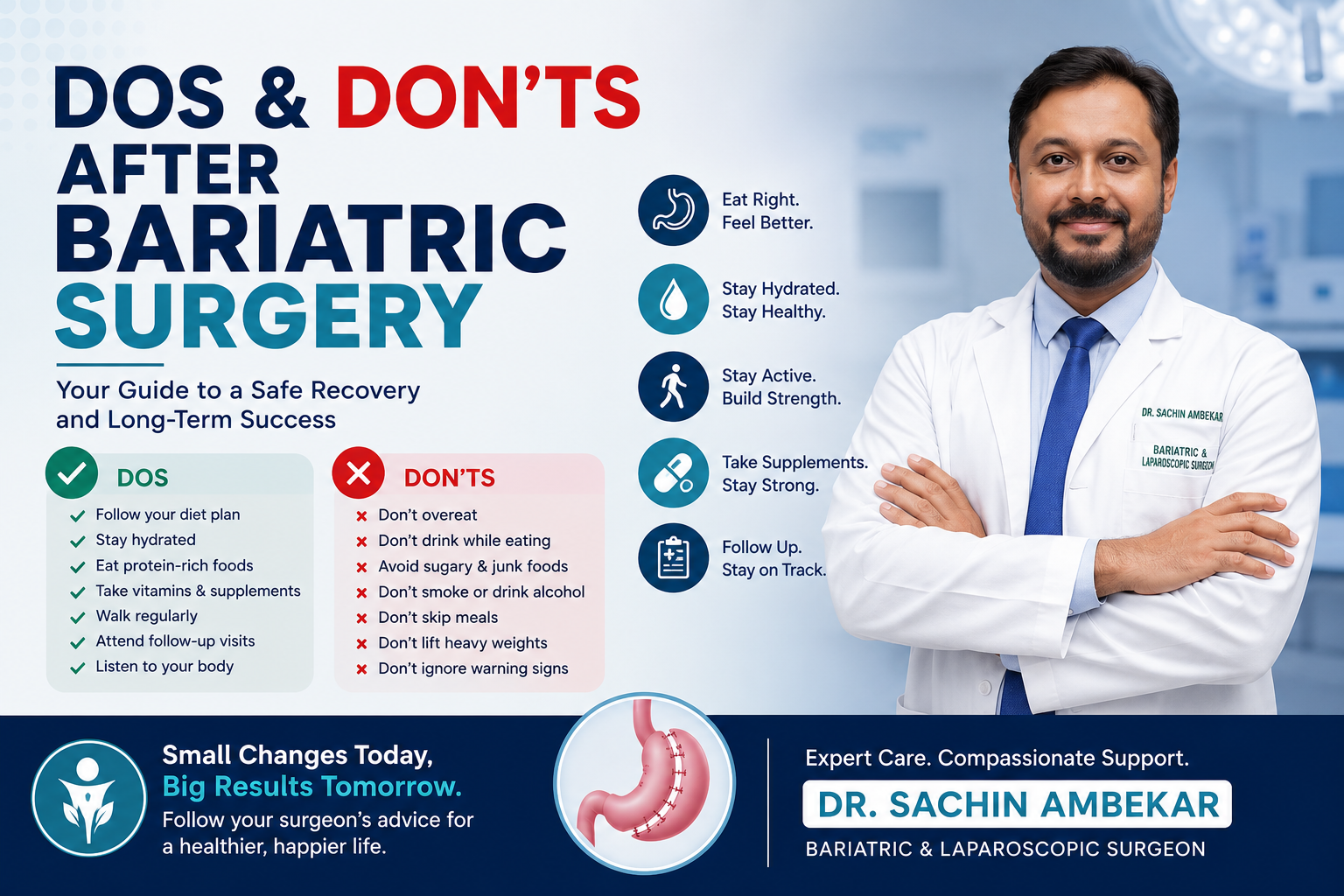
The Dos After Bariatric Surgery
1. Follow Your Diet Progression Carefully
Your stomach needs time to heal before it can tolerate regular food.
Most recovery plans progress through stages:
Stage 1: Clear Liquids
Usually begins immediately after surgery.
Examples include:
- Water
- Clear soups
- Sugar-free electrolyte drinks
- Coconut water (if recommended)
- Clear vegetable broth
Stage 2: Full Liquids
- Protein shakes
- Low-fat milk
- Thin dal water
- Blended soups
- Unsweetened yogurt
Stage 3: Soft Foods
- Scrambled eggs
- Mashed vegetables
- Soft paneer
- Well-cooked oats
- Soft fruits
Stage 4: Solid Foods
Regular foods are introduced gradually under medical supervision.
Every patient progresses differently, so always follow your surgeon’s advice rather than comparing your recovery with others.
2. Prioritize Protein Intake
Protein is essential for healing and preserving muscle mass during rapid weight loss.
Good protein sources include:
- Eggs
- Fish
- Chicken
- Low-fat dairy
- Paneer
- Tofu
- Lentils
- Protein supplements prescribed by your healthcare team
3. Stay Hydrated
Dehydration is one of the most common reasons patients return to the hospital after bariatric surgery.
Aim to:
- Sip water throughout the day
- Drink small amounts frequently
- Reach your surgeon’s recommended daily fluid goal
- Separate drinking from meals
Signs of dehydration include:
- Dizziness
- Dark urine
- Dry mouth
- Fatigue
- Headache
4. Walk Every Day
Gentle walking helps improve circulation, reduce blood clot risk, prevent lung complications, improve digestion, and support recovery.
5. Take Prescribed Vitamins and Supplements
Because bariatric surgery affects nutrient absorption, lifelong supplementation is often necessary.
Common supplements include:
- Multivitamins
- Vitamin B12
- Iron
- Calcium
- Vitamin D
Never skip supplements without consulting your doctor.
6. Attend Regular Follow-Up Appointments
Routine follow-ups help your surgeon monitor healing, nutritional status, blood tests, weight loss progress, and lifestyle adjustments.
7. Eat Slowly
Take small bites, chew thoroughly, and allow each meal to last around 20–30 minutes.
8. Listen to Your Body
Stop eating as soon as you feel comfortably full.
The Don’ts After Bariatric Surgery
1. Don’t Overeat
Overeating can stretch your stomach pouch and reduce the long-term effectiveness of surgery.
2. Don’t Drink While Eating
Avoid drinking fluids for about 30 minutes before and after meals unless advised otherwise.
3. Don’t Consume Sugary Foods
Avoid:
- Cakes
- Sweets
- Soft drinks
- Sugary juices
- Ice cream
4. Don’t Eat High-Fat Fast Foods
Limit burgers, fries, pizza, fried snacks, and processed meats.
5. Don’t Smoke
Smoking delays healing and increases the risk of ulcers and infections.
6. Don’t Drink Alcohol
Alcohol is absorbed much faster after bariatric surgery and should be avoided, particularly during the first year.
7. Don’t Skip Meals
Small, balanced meals throughout the day help maintain nutrition and energy.
8. Don’t Lift Heavy Weights Too Soon
Allow your body enough time to heal before returning to strenuous exercise.
9. Don’t Ignore Warning Signs
Seek medical attention if you experience:
- Persistent vomiting
- Severe abdominal pain
- Fever
- Chest pain
- Difficulty breathing
- Persistent dehydration
- Redness or discharge from the incision
Common Challenges During Recovery
- Temporary hair loss
- Constipation
- Fatigue
- Emotional changes
These issues are common and can often be managed with proper nutrition, hydration, supplementation, and regular follow-up care.
Long-Term Lifestyle Tips for Lasting Success
- Exercise regularly
- Prioritize protein
- Stay hydrated
- Get adequate sleep
- Manage stress
- Monitor your weight
- Keep follow-up appointments
- Continue lifelong vitamin supplementation
When Should You Contact Your Bariatric Surgeon?
Contact your healthcare provider immediately if you experience:
- Continuous vomiting
- Difficulty swallowing
- Persistent abdominal pain
- Fever
- Rapid heartbeat
- Signs of dehydration
- Black stools
- Excessive bleeding
- Redness or swelling around surgical wounds
Safety Disclaimer
This article is intended for educational purposes only and should not replace professional medical advice. Recovery after bariatric surgery varies for every patient. Always follow the personalized instructions provided by your bariatric surgeon.
Frequently Asked Questions
How long does recovery take after bariatric surgery?
Most patients return to light daily activities within two to four weeks, while complete recovery may take several months.
What foods should I avoid after bariatric surgery?
Avoid sugary foods, fried foods, alcohol, carbonated drinks, and processed snacks until your surgeon advises otherwise.
Can I exercise after bariatric surgery?
Yes. Walking is encouraged early, while more intense exercise should only begin after medical clearance.
Why is protein important after bariatric surgery?
Protein supports wound healing, preserves muscle mass, and promotes healthy weight loss.
Do I need vitamins for life?
Yes. Many patients require lifelong vitamin and mineral supplementation to prevent nutritional deficiencies.
Can I regain weight after bariatric surgery?
Yes. Long-term success depends on maintaining healthy eating habits, regular exercise, and consistent medical follow-up.
Conclusion
Bariatric surgery is a highly effective treatment for obesity, but long-term success depends on the lifestyle choices you make after surgery. Following the recommended dos and avoiding the common don’ts can significantly improve healing, reduce complications, and support sustainable weight loss.
Patients who stay committed to healthy eating, regular physical activity, lifelong nutritional supplementation, and scheduled follow-up appointments generally achieve the best outcomes. If you are considering or have undergone Obesity Treatment in Delhi, partnering with an experienced bariatric surgeon will help you navigate recovery safely and achieve lasting health benefits.

Leave a Reply