
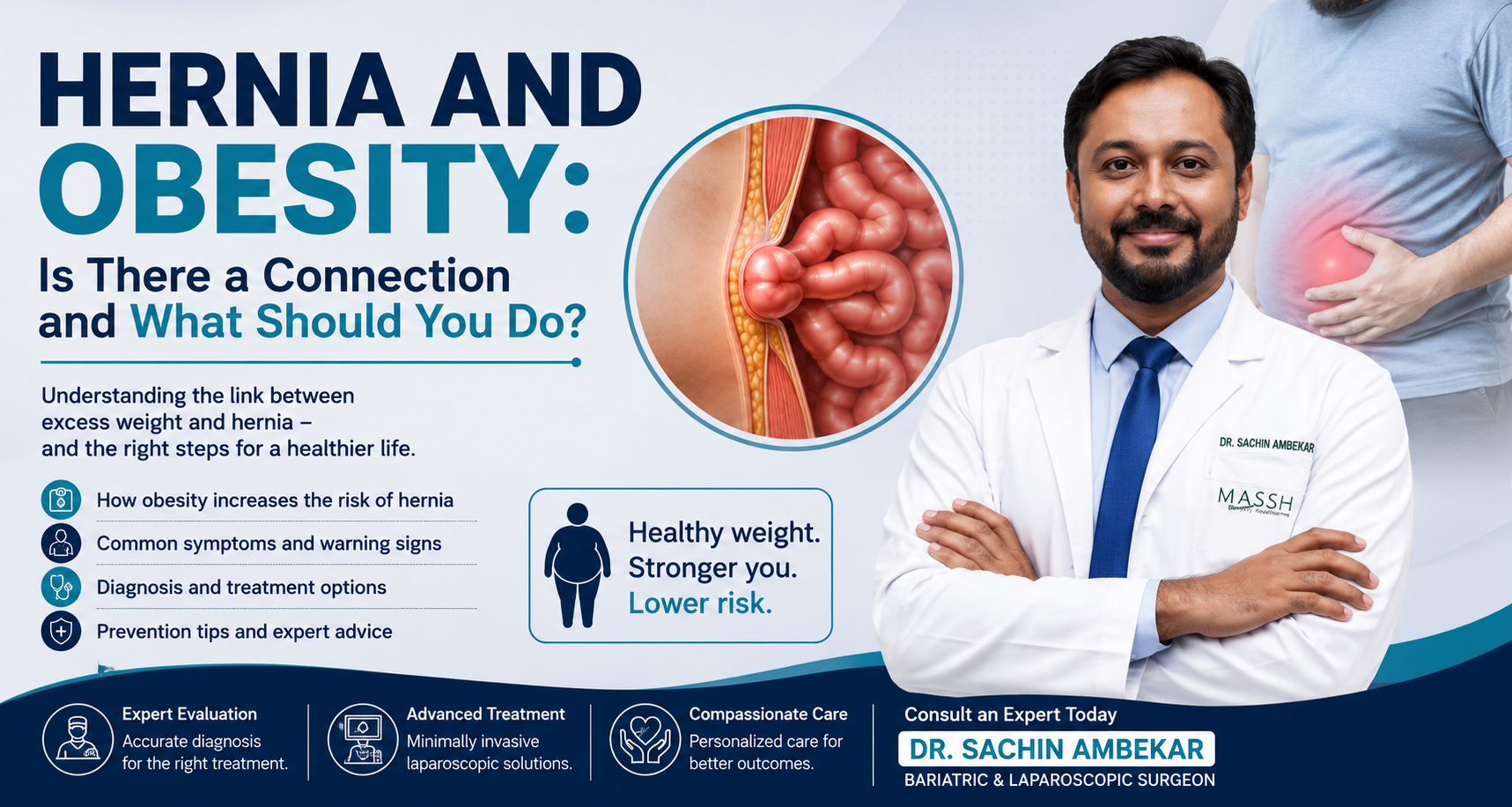
Obesity is no longer just about carrying extra weight. It is a complex medical condition that can affect nearly every organ in the body, increasing the risk of diabetes, heart disease, fatty liver, joint pain, sleep apnea, and even hernias. Yet many people are surprised to learn that excess body weight can significantly increase the chances of developing a hernia and make existing hernias more difficult to treat.
Many patients assume that a hernia develops only after lifting heavy objects or engaging in strenuous exercise. While those factors can contribute, obesity is one of the most important—and often overlooked—risk factors. Excess abdominal fat places continuous pressure on the abdominal wall, gradually weakening the muscles over time.
As an experienced bariatric and laparoscopic surgeon, Dr. Sachin Ambekar frequently evaluates patients who have both obesity and hernias. In many cases, treating obesity becomes an essential part of achieving successful hernia repair and preventing recurrence.
If you are considering Obesity Treatment in Delhi, understanding the relationship between obesity and hernias can help you make informed decisions about your health before complications arise.
What Is a Hernia?
A hernia occurs when an internal organ or fatty tissue pushes through a weak area in the surrounding muscle or connective tissue. Most hernias develop in the abdominal wall, where weakened muscles allow part of the intestine or fatty tissue to protrude.
Although hernias can affect anyone, they become more common with increasing age, obesity, pregnancy, chronic coughing, and previous abdominal surgeries.
Common types of hernias include:
Inguinal Hernia
The most common type, usually occurring in the groin. It is seen more frequently in men but can also affect women.
Umbilical Hernia
Develops near the belly button and is commonly associated with obesity and pregnancy.
Incisional Hernia
Occurs through the site of a previous surgical incision where the abdominal wall remains weak.
Hiatal Hernia
Part of the stomach moves upward through the diaphragm into the chest cavity. This type often causes acid reflux symptoms.
Femoral Hernia
Less common but more frequently seen in women. It develops in the upper thigh near the groin.
Understanding Obesity
Obesity is a chronic disease characterized by excessive body fat that affects overall health. It is commonly assessed using Body Mass Index (BMI), although waist circumference and body fat distribution also play an important role.
People with obesity often experience:
- Increased abdominal pressure
- Chronic inflammation
- Reduced muscle strength
- Poor wound healing
- Greater surgical risks
These factors together make obesity closely linked with hernia formation and recurrence.
Is There Really a Connection Between Obesity and Hernias?
The answer is yes.
Medical research consistently shows that obesity increases both the risk of developing hernias and the likelihood that hernia repair may fail if obesity is not addressed.
Think of your abdominal wall like the fabric of a tightly stretched bag. The more pressure applied from inside, the more likely weak areas are to stretch or tear. Excess body weight continuously increases this internal pressure.
Patients often do not notice this gradual weakening until they observe a visible bulge or begin experiencing discomfort.
How Obesity Increases the Risk of Hernia
Increased Intra-Abdominal Pressure
Excess fat inside the abdomen creates constant pressure against the abdominal muscles. Over months and years, this weakens natural support structures, making hernias more likely.
Weakening of Abdominal Muscles
Obesity is associated with reduced muscle quality and poor connective tissue strength. This decreases the body’s ability to support abdominal organs.
Chronic Inflammation
Fat tissue is metabolically active and releases inflammatory chemicals that interfere with normal tissue repair and collagen production.
Reduced Blood Supply
Poor circulation slows tissue healing, especially after surgery.
Higher Risk After Previous Surgery
Patients with obesity have a greater chance of developing incisional hernias following abdominal operations because wound healing may be delayed.
Can Obesity Make an Existing Hernia Worse?
Absolutely.
Many patients delay treatment because their hernia causes only mild discomfort initially. However, continued weight gain can make the hernia progressively larger.
Potential complications include:
- Increasing pain
- Larger abdominal bulge
- Difficulty exercising
- Difficulty bending
- Cosmetic concerns
- Hernia becoming trapped (incarcerated)
- Blood supply being cut off (strangulated hernia)
A strangulated hernia is a medical emergency requiring immediate surgery.
Common Risk Factors
While obesity is a major contributor, several other factors increase hernia risk.
Chronic Cough
Persistent coughing repeatedly raises abdominal pressure.
Constipation
Repeated straining during bowel movements weakens abdominal muscles.
Heavy Weight Lifting
Improper lifting technique places sudden stress on weak muscle areas.
Pregnancy
Growing abdominal pressure stretches the abdominal wall.
Smoking
Smoking affects collagen formation and delays healing.
Previous Surgery
Scar tissue creates natural weak points.
Age
Muscles naturally weaken with advancing age.
Family History
Some individuals inherit weaker connective tissue.
Symptoms of a Hernia
Symptoms depend on the type and size of the hernia.
Common symptoms include:
- Visible lump or swelling
- Bulge that increases while standing
- Pain when lifting
- Groin discomfort
- Burning sensation
- Feeling of pressure
- Heaviness in the abdomen
- Pain after prolonged standing
Seek immediate medical attention if you experience:
- Severe pain
- Sudden swelling
- Redness
- Vomiting
- Fever
- Hernia that cannot be pushed back
These may indicate a strangulated hernia requiring emergency surgery.
Why Hernias Are Often Missed in People with Obesity
One interesting observation from surgical practice is that hernias may be harder to detect in individuals with obesity.
The excess abdominal fat can hide smaller hernias, allowing them to grow unnoticed. Patients sometimes attribute discomfort to weight gain, gas, or muscle strain instead of seeking medical evaluation.
By the time they visit a surgeon, the hernia may already be considerably larger.
This is one reason regular medical evaluation is important for people living with obesity.
How Is a Hernia Diagnosed?
Diagnosis usually begins with a detailed medical history and physical examination.
Your surgeon may ask:
- When did you first notice the swelling?
- Does it disappear when lying down?
- Is there pain?
- Have you had previous surgeries?
- Has your weight changed recently?
Additional investigations may include:
Ultrasound
Useful for diagnosing many abdominal wall hernias.
CT Scan
Provides detailed imaging for complex or recurrent hernias.
MRI
Occasionally recommended in selected cases.
Endoscopy
Sometimes performed if a hiatal hernia is suspected.
Treatment Options
Treatment depends on the size, symptoms, location, and overall health of the patient.
Watchful Waiting
Small, painless hernias may simply be monitored in carefully selected patients.
However, hernias generally do not heal on their own.
Laparoscopic Hernia Repair
Minimally invasive surgery uses small incisions and specialized instruments to repair the defect.
Benefits include:
- Smaller scars
- Less pain
- Faster recovery
- Reduced hospital stay
- Earlier return to work
Robotic Hernia Surgery
For selected patients, robotic-assisted surgery offers enhanced precision during complex repairs.
Open Hernia Surgery
May be recommended for very large or complicated hernias.
Why Weight Loss Matters Before Hernia Surgery
For patients living with obesity, weight management is often one of the most important parts of successful hernia treatment.
Losing excess weight can:
- Reduce abdominal pressure
- Lower surgical risk
- Improve wound healing
- Decrease infection rates
- Reduce recurrence
- Improve long-term outcomes
Many experienced surgeons recommend weight reduction before elective hernia repair whenever medically appropriate.
Can Bariatric Surgery Help?
For patients with severe obesity, lifestyle changes alone may not achieve sufficient weight loss.
In such cases, bariatric surgery may be considered as part of comprehensive Obesity Treatment in Delhi.
Weight loss surgery can:
- Significantly reduce body weight
- Improve diabetes
- Lower blood pressure
- Reduce fatty liver disease
- Improve mobility
- Lower hernia recurrence risk
- Improve overall surgical safety
In selected patients, bariatric surgery and hernia repair may even be planned together after careful evaluation by an experienced bariatric surgeon. The decision depends on the size of the hernia, overall health, BMI, and associated medical conditions.
Lifestyle Changes That Help Prevent Hernias
While not every hernia can be prevented, adopting healthier habits can lower your risk.
Maintain a Healthy Weight
Even modest weight loss reduces pressure on the abdominal wall.
Eat a Balanced Diet
A diet rich in vegetables, fruits, lean proteins, whole grains, and fiber supports healthy weight management and prevents constipation.
Exercise Regularly
Strengthening your core muscles safely can improve abdominal support. Avoid exercises that place excessive strain on the abdomen without professional guidance.
Lift Properly
Always bend your knees and avoid sudden jerking movements while lifting heavy objects.
Quit Smoking
Smoking weakens connective tissues and slows healing.
Treat Chronic Cough
Persistent coughing should never be ignored, especially if it lasts for several weeks.
When Should You See a Doctor?
Do not ignore a lump simply because it is painless.
You should consult a specialist if you notice:
- A new swelling in the groin or abdomen
- Persistent discomfort
- Pain while lifting
- Hernia becoming larger
- Difficulty reducing the bulge
- Symptoms interfering with daily life
Early evaluation often leads to simpler treatment and better outcomes.
Frequently Asked Questions
Does obesity directly cause hernias?
Obesity does not directly create a hernia, but it significantly increases abdominal pressure and weakens the abdominal wall, making hernias much more likely to develop.
Can losing weight make a hernia disappear?
No. Weight loss cannot close the existing defect in the abdominal wall. However, it can reduce symptoms, lower surgical risks, and improve treatment outcomes.
Is hernia surgery safe for people with obesity?
Yes, but obesity may increase the risk of surgical complications. An experienced surgeon will evaluate whether weight reduction before surgery would provide safer and more effective results.
Can obesity cause a hernia to come back after surgery?
Yes. Excess body weight is one of the major factors associated with hernia recurrence because it places ongoing pressure on the repaired area.
Should I undergo bariatric surgery before hernia repair?
This depends on your BMI, the size of the hernia, your overall health, and associated medical conditions. A bariatric surgeon can recommend the most appropriate treatment sequence after evaluation.
Is every abdominal bulge a hernia?
No. Swellings may also result from fatty lumps, enlarged lymph nodes, muscle injuries, or other conditions. A medical examination is necessary for an accurate diagnosis.
Conclusion
The connection between obesity and hernias is stronger than many people realize. Excess body weight increases pressure on the abdominal wall, weakens supporting tissues, and raises the risk of both developing a hernia and experiencing recurrence after surgery.
One common pattern seen in clinical practice is that patients often ignore small bulges because they are painless or assume the symptoms are simply related to weight gain. Unfortunately, delaying evaluation can allow the hernia to enlarge and become more complicated to treat.
If you have noticed a persistent swelling, abdominal discomfort, or have been diagnosed with obesity, seeking timely medical advice is the best step. Early assessment allows your surgeon to recommend the most appropriate treatment plan, whether that involves lifestyle changes, weight management, minimally invasive hernia repair, or comprehensive Obesity Treatment in Delhi.
With expert evaluation, personalized care, and a long-term focus on overall health, most patients can achieve excellent outcomes while reducing the risk of future complications.

Leave a Reply