

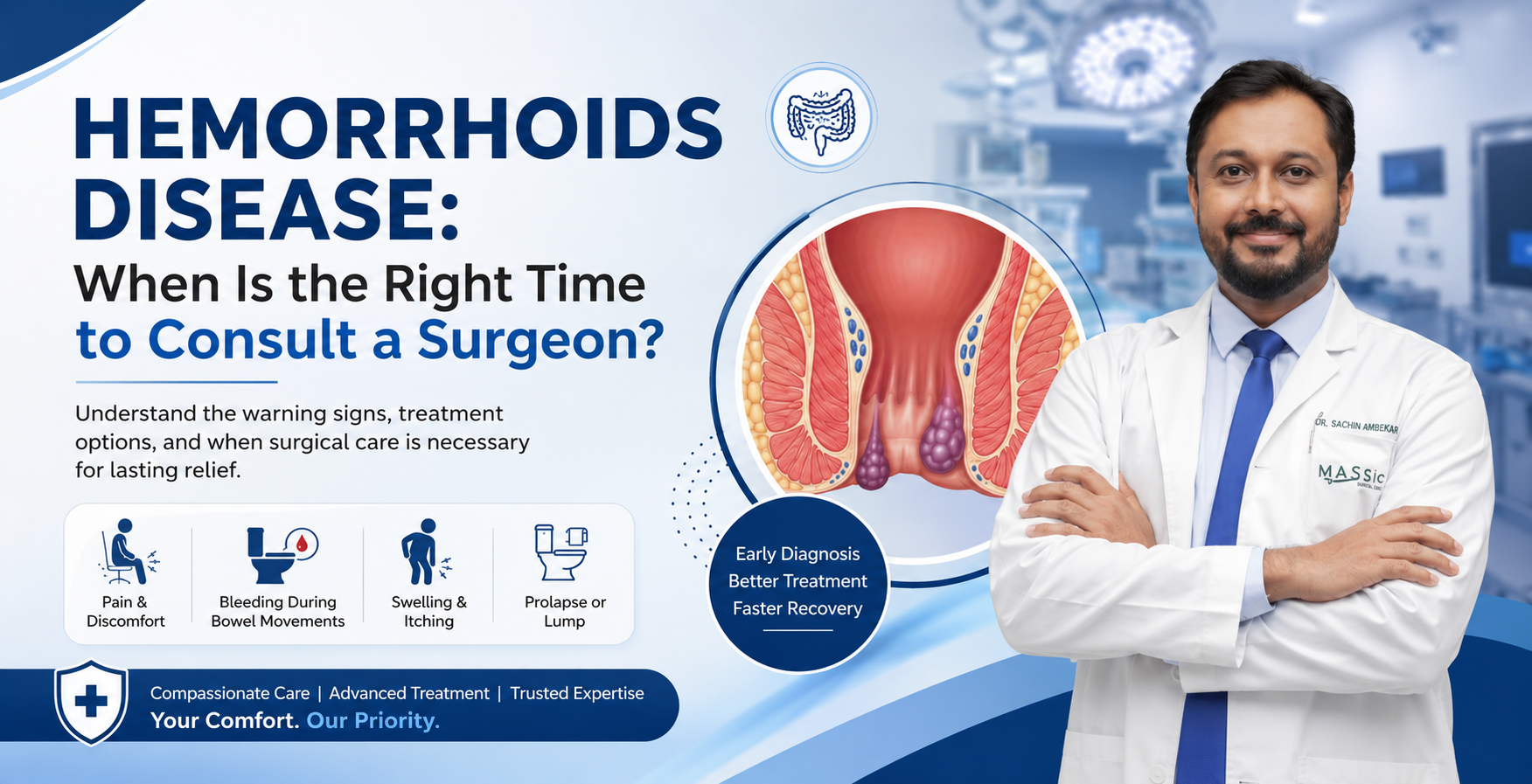
Hemorrhoids are one of the most common yet least discussed health conditions. Many people silently live with pain, itching, or bleeding because they feel embarrassed or assume the problem will resolve on its own. While mild hemorrhoids often improve with lifestyle changes and medication, there comes a point when delaying medical care can lead to unnecessary discomfort and complications.
In clinical practice, many patients wait for months—or even years—before seeking help. They often try home remedies, over-the-counter creams, or advice from friends. Unfortunately, by the time they visit a specialist, the hemorrhoids may have progressed to a stage where surgery becomes the most effective option.
The good news is that modern hemorrhoid surgery is safer, less painful, and allows faster recovery than many people imagine. Knowing when to consult a surgeon can help you receive timely treatment, avoid complications, and improve your quality of life.
This guide explains when hemorrhoids require surgical evaluation, available treatment options, and what patients should expect during recovery.
What Are Hemorrhoids?
Hemorrhoids, commonly known as piles, are swollen veins located in the lower rectum or around the anus. They develop when increased pressure causes these veins to enlarge and become inflamed.
Everyone has hemorrhoidal tissue that helps maintain normal bowel control. Problems arise when these tissues become swollen or prolapse.
Hemorrhoids are broadly classified into two categories:
Internal Hemorrhoids
These develop inside the rectum and usually aren’t visible. They may cause painless rectal bleeding during bowel movements and, in advanced stages, may protrude outside the anus.
External Hemorrhoids
These form under the skin around the anus. They often cause pain, swelling, itching, and discomfort, especially while sitting or passing stools.
In some cases, a blood clot forms inside an external hemorrhoid, creating a thrombosed hemorrhoid, which can cause sudden, severe pain.
How Common Are Hemorrhoids?
Hemorrhoids affect millions of adults worldwide and are particularly common among people aged 40 years and above. However, they can occur at any age.
In India, sedentary lifestyles, low-fiber diets, obesity, prolonged sitting, and chronic constipation have contributed to increasing cases of hemorrhoidal disease.
Many patients delay treatment due to embarrassment, despite the condition being extremely common and highly treatable.
Causes and Risk Factors
Several factors increase pressure inside the rectal veins, leading to hemorrhoids.
Chronic Constipation
Repeated straining while passing stools remains one of the leading causes.
Chronic Diarrhea
Frequent bowel movements can irritate the anal canal and contribute to hemorrhoid formation.
Low-Fiber Diet
Diets lacking fruits, vegetables, and whole grains often result in hard stools and increased straining.
Obesity
Excess body weight increases pressure on the pelvic veins.
Pregnancy
Hormonal changes and pressure from the growing uterus commonly lead to hemorrhoids during pregnancy.
Sitting for Long Hours
People with desk jobs or drivers often remain seated for prolonged periods, increasing pressure around the rectum.
Heavy Weight Lifting
Repeated lifting of heavy weights can elevate abdominal pressure.
Aging
Supporting tissues naturally weaken with age, making hemorrhoids more common.
Family History
Some individuals inherit weaker connective tissues, increasing susceptibility.
Symptoms of Hemorrhoids
Symptoms vary depending on the type and severity.
Common signs include:
- Bright red blood during bowel movements
- Pain while passing stools
- Itching around the anus
- Burning sensation
- Swelling near the anus
- A lump around the anal opening
- Mucus discharge
- Feeling of incomplete bowel emptying
- Discomfort while sitting
Internal hemorrhoids often bleed without causing pain, whereas external hemorrhoids are more likely to be painful.
Why Patients Often Delay Seeing a Surgeon
Many people believe hemorrhoids are simply a part of aging or that surgery is the only treatment available. Others rely on temporary relief from creams or home remedies.
In reality, not every hemorrhoid needs surgery. However, waiting too long may allow the condition to worsen.
During surgical consultations, patients commonly mention that they ignored symptoms because the bleeding occurred only occasionally. Over time, the bleeding became frequent, the swelling increased, and daily activities became difficult.
Early evaluation often allows for simpler and less invasive treatment.
When Is the Right Time to Consult a Surgeon?
Knowing when to seek specialist care is essential.
Persistent Bleeding
Occasional bleeding should never be ignored.
If bleeding continues despite medication or lifestyle changes, consult a surgeon.
Importantly, rectal bleeding may also indicate more serious conditions such as colorectal polyps, inflammatory bowel disease, or colorectal cancer. Proper evaluation helps establish the correct diagnosis.
Severe Pain
Hemorrhoids are not always painful.
If you experience intense pain, especially with swelling around the anus, it could indicate:
- Thrombosed external hemorrhoids
- Strangulated hemorrhoids
- Infection
- Anal fissure
Immediate surgical assessment may be necessary.
Prolapsed Hemorrhoids
When internal hemorrhoids begin protruding outside the anus and cannot be pushed back easily, they usually require specialist evaluation.
Persistent prolapse increases discomfort and hygiene difficulties.
Frequent Recurrence
If hemorrhoids repeatedly return despite medications and dietary improvements, surgery may provide a more lasting solution.
Difficulty Performing Daily Activities
Pain during sitting, walking, exercising, or working should never be ignored.
When hemorrhoids interfere with normal life, surgical consultation becomes appropriate.
Large External Swelling
Large external hemorrhoids may become painful, inflamed, or prone to clot formation.
These often require procedural treatment rather than medication alone.
Chronic Anemia Due to Bleeding
Long-term blood loss from hemorrhoids can gradually lower hemoglobin levels.
Patients may develop:
- Fatigue
- Weakness
- Dizziness
- Breathlessness
This requires prompt medical attention.
Grades of Internal Hemorrhoids
Doctors classify hemorrhoids into four grades.
Grade I
Small hemorrhoids remain inside the rectum.
Usually managed without surgery.
Grade II
Hemorrhoids prolapse during bowel movements but return automatically.
May respond to office-based procedures.
Grade III
They prolapse and require manual repositioning.
Surgical treatment is often recommended.
Grade IV
They remain permanently outside the anus.
These usually require surgery.
How Are Hemorrhoids Diagnosed?
An experienced surgeon begins with a detailed history and physical examination.
Additional tests may include:
- Digital Rectal Examination
- Proctoscopy
- Anoscopy
- Colonoscopy (when indicated)
Treatment Options
Treatment depends on severity.
Lifestyle Changes
Early hemorrhoids often improve with:
- High-fiber diet
- Adequate water intake
- Regular exercise
- Avoiding prolonged sitting
- Avoiding excessive straining
- Healthy bowel habits
Medications
Doctors may prescribe:
- Stool softeners
- Pain relief medication
- Anti-inflammatory creams
- Suppositories
These reduce symptoms but may not permanently eliminate advanced hemorrhoids.
Non-Surgical Procedures
Suitable for selected patients.
These include:
- Rubber Band Ligation
- Injection Sclerotherapy
- Infrared Coagulation
These procedures are generally effective for early-stage internal hemorrhoids.
Surgical Treatment
Surgery becomes the preferred option for advanced or persistent hemorrhoids.
Modern techniques offer faster recovery and improved patient comfort.
Hemorrhoidectomy
This is considered the gold standard for large external or Grade III and Grade IV hemorrhoids.
Stapled Hemorrhoidopexy
Primarily used for prolapsing internal hemorrhoids.
Laser Hemorrhoid Surgery
Laser-assisted procedures may be appropriate in selected patients, depending on the type and severity of hemorrhoids. They generally involve less tissue damage and may offer reduced postoperative pain with quicker recovery.
Recovery After Surgery
Recovery depends on the procedure performed.
Most patients experience:
- Mild discomfort for a few days
- Improved symptoms within one to two weeks
- Gradual return to work
- Better bowel comfort after healing
Recovery improves with:
- Drinking plenty of water
- Eating fiber-rich foods
- Taking prescribed medicines
- Avoiding constipation
- Walking regularly
Following postoperative instructions carefully significantly improves healing.
When Should You Seek Immediate Medical Care?
Consult your doctor urgently if you experience:
- Heavy rectal bleeding
- Severe pain
- Fever
- Pus discharge
- Sudden swelling
- Difficulty passing urine
- Black stools
- Persistent dizziness
These symptoms may indicate complications or another medical condition requiring prompt evaluation.
Can Hemorrhoids Be Prevented?
Helpful measures include:
- Eat 25–35 grams of fiber daily.
- Drink adequate water.
- Avoid delaying bowel movements.
- Exercise regularly.
- Maintain a healthy weight.
- Limit prolonged sitting.
- Avoid excessive straining.
- Take short walking breaks during desk work.
These habits also reduce recurrence after treatment.
When to Consult an Experienced Surgeon
You should consult a qualified surgeon if:
- Bleeding occurs repeatedly.
- Pain becomes severe.
- Hemorrhoids prolapse frequently.
- Home treatment fails.
- Symptoms return repeatedly.
- Daily activities become difficult.
- There is uncertainty about the diagnosis.
A timely evaluation can help distinguish hemorrhoids from other colorectal conditions and ensure you receive the most appropriate treatment.
Conclusion
Hemorrhoids are common, but living with persistent pain, bleeding, or discomfort is not something you have to accept. While many cases improve with lifestyle changes and medication, ongoing or severe symptoms deserve professional evaluation. Early consultation with an experienced surgeon can lead to accurate diagnosis, effective treatment, and a quicker return to normal life.
If you notice persistent bleeding, painful swelling, or hemorrhoids that continue to recur, don’t delay seeking medical advice. A personalized assessment can help determine whether conservative treatment or a minimally invasive procedure is the best option for your condition.
Disclaimer: This article is intended for educational purposes only and should not replace professional medical advice, diagnosis, or treatment. Always consult a qualified healthcare professional for persistent or concerning symptoms.
Frequently Asked Questions (FAQs)
1. How do I know if my hemorrhoids need surgery?
Surgery may be recommended if hemorrhoids are Grade III or IV, prolapse outside the anus, cause persistent bleeding, severe pain, recur despite treatment, or significantly affect your quality of life.
2. Is hemorrhoid surgery painful?
Modern surgical techniques, effective anesthesia, and pain management have made hemorrhoid surgery much more comfortable than many people expect.
3. Can hemorrhoids go away without surgery?
Yes. Mild hemorrhoids often improve with dietary changes, hydration, medications, and healthy bowel habits.
4. Is rectal bleeding always caused by hemorrhoids?
No. Persistent rectal bleeding should always be evaluated by a doctor because it can have other causes.
5. How long does recovery take after hemorrhoid surgery?
Many patients resume light activities within one to two weeks, although complete healing may take several weeks.
6. Can hemorrhoids return after surgery?
Yes. Maintaining healthy bowel habits and preventing constipation significantly reduces the risk of recurrence.

Leave a Reply