

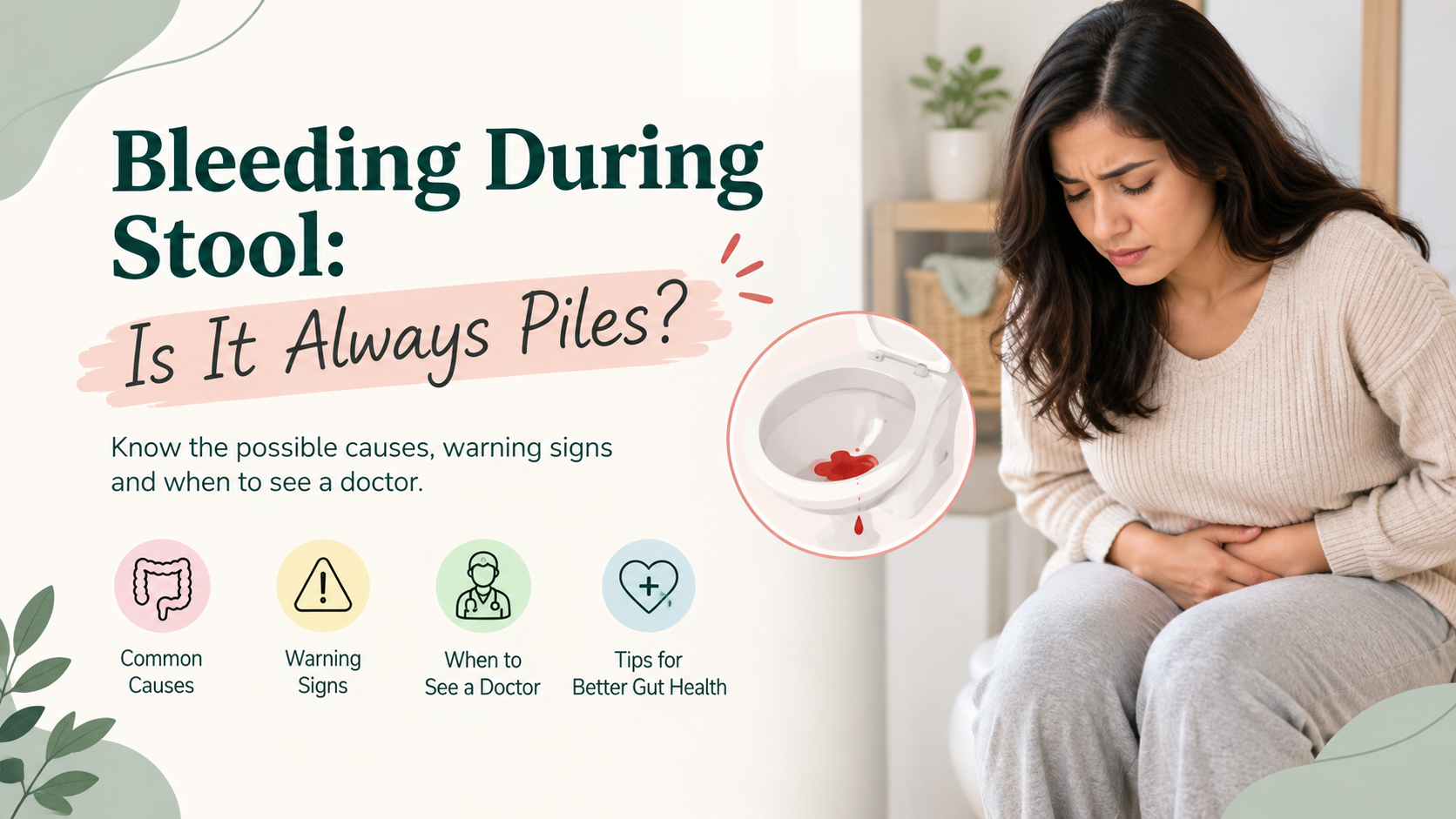
Seeing blood while passing stool can be frightening. For many people, the first thought is, “It must be piles.” Hemorrhoids, commonly called piles, are indeed one of the common causes of rectal bleeding. But they are not the only cause.
Blood during or after a bowel movement can also occur because of an anal fissure, constipation, intestinal inflammation, polyps, infections, diverticular disease, or conditions affecting the colon and rectum. In some cases, rectal bleeding can be a warning sign of colorectal cancer.
This does not mean that every episode of bleeding is serious. A small amount of bright red blood after a hard stool may be related to a fissure or hemorrhoid. The important point is that the appearance of blood alone cannot reliably tell you the cause.
Patients sometimes ignore bleeding because they have had piles before, particularly when the bleeding stops after a few days. But recurring or unexplained bleeding deserves proper evaluation.
If you are experiencing bleeding during stool, understanding the possible causes can help you know when home care may be reasonable and when it is time to see a surgeon or doctor.
What does bleeding during stool mean?
Bleeding during stool means that blood is coming from somewhere in the digestive tract and is being noticed during or after bowel movement.
The blood may appear in different ways. You might notice:
- Bright red blood on toilet paper
- Red streaks on the outside of the stool
- Drops of blood in the toilet bowl
- Blood mixed with stool
- Dark red stool
- Black or tar-like stool
The colour and pattern can provide clues about where the bleeding may be coming from, but they do not establish a diagnosis on their own.
Bright red blood is often associated with bleeding from the lower digestive tract, including the anus, rectum, or lower colon. Hemorrhoids and anal fissures are common causes. However, polyps, inflammatory bowel disease and colorectal cancer can also cause rectal bleeding.
Black, tarry stool can indicate bleeding higher up in the digestive tract and needs medical attention, particularly when accompanied by weakness, dizziness, abdominal pain, or other concerning symptoms.
Is bleeding during stool always piles?
No.
Piles are a common explanation, but you should not assume that every episode of rectal bleeding is caused by hemorrhoids.
Internal hemorrhoids can cause bright red bleeding during bowel movements. In many cases, internal hemorrhoids do not cause significant pain unless they prolapse or develop another complication.
However, other conditions can produce very similar symptoms.
For example, a person with constipation may develop an anal fissure, which is a small tear in the lining of the anus. This can cause pain and bright red bleeding when passing stool.
Similarly, bleeding caused by a polyp or another condition in the colon may not cause obvious pain at all.
That is why the safest approach is to look at the whole symptom pattern, rather than simply matching blood in the stool with piles.
Common causes of bleeding during stool
1. Hemorrhoids or piles
Hemorrhoids are swollen and inflamed veins around the anus or in the lower rectum. They can be internal or external.
Internal hemorrhoids commonly cause bright red blood on the stool, toilet paper, or in the toilet bowl after bowel movement. Prolapsed hemorrhoids may also cause discomfort or a sensation of tissue coming out of the anus.
Constipation, straining during bowel movements, spending a long time on the toilet, chronic diarrhoea, a low-fibre diet and ageing can contribute to hemorrhoids.
2. Anal fissure
An anal fissure is a small tear in the tissue around the anus.
It commonly occurs after passing a hard or large stool. People may experience sharp or burning pain during bowel movement, followed by a small amount of bright red blood.
Because the symptoms can resemble hemorrhoids, some people assume they have piles and delay appropriate treatment.
3. Constipation and hard stools
Constipation itself can contribute to bleeding.
Repeated straining and passing hard stools can irritate the anal canal and contribute to hemorrhoids or fissures. The important step is not simply treating the blood but addressing the underlying constipation.
Increasing dietary fibre, drinking adequate fluids, staying physically active and following appropriate bowel habits can help prevent constipation in many people.
4. Intestinal infections
Certain gastrointestinal infections can cause diarrhoea, abdominal cramps and blood in the stool.
Bloody diarrhoea should not automatically be attributed to piles, particularly when it occurs with fever, abdominal pain or a sudden change in bowel habits.
5. Inflammatory bowel disease
Conditions such as ulcerative colitis and Crohn’s disease can cause inflammation and bleeding in the digestive tract.
Depending on the condition, symptoms may include persistent diarrhoea, abdominal pain, urgency to pass stool, fatigue and blood in the stool.
6. Colon polyps
Colon polyps are growths that develop in the lining of the colon.
Many polyps do not cause symptoms. However, some can bleed and may result in visible blood in the stool or hidden blood that is detected through testing.
Because some types of polyps can develop into colorectal cancer over time, unexplained or persistent bleeding should not simply be labelled as piles.
7. Colorectal cancer
Rectal bleeding can sometimes be a symptom of colorectal cancer.
This does not mean that blood in the stool means cancer. There are many more common causes of bleeding, including hemorrhoids and fissures. However, colorectal cancer can cause bright red rectal bleeding, dark blood in the stool, changes in bowel habits, abdominal discomfort, unexplained weight loss, weakness or fatigue.
This is particularly important when bleeding is recurrent or occurs along with other changes that are unusual for you.
How can you tell whether bleeding is from piles?
There is no reliable way to diagnose the cause based only on the appearance of blood.
Certain patterns may suggest a particular cause.
For example, bright red blood after passing a hard stool, especially with anal pain, may occur with a fissure.
Bright red bleeding without much pain can occur with internal hemorrhoids.
But these patterns overlap. A different bowel condition can sometimes produce similar symptoms.
For this reason, doctors consider:
- Your age
- How long the bleeding has been occurring
- Whether it is recurring
- The colour and amount of blood
- Constipation or diarrhoea
- Pain during bowel movements
- Abdominal pain
- Changes in stool pattern
- Unexplained weight loss
- Family history of bowel disease or colorectal cancer
- Existing medical conditions
- Medicines you take
The aim is to identify the cause rather than simply stop the visible bleeding.
Symptoms that should not be ignored
One of the biggest mistakes patients make is assuming that bleeding is harmless because they have experienced piles previously.
You should arrange a medical evaluation if:
- Rectal bleeding keeps coming back.
- You are unsure why you are bleeding.
- The amount of blood is increasing.
- You notice blood mixed into the stool.
- Your bowel habits have changed.
- You have persistent constipation or diarrhoea.
- Your stools have become unusually narrow.
- You have abdominal pain or cramping.
- You feel unusually tired or weak.
- You are losing weight without trying.
- You have a lump or persistent pain around the anus.
- You have a family history of colorectal cancer or bowel disease.
Colorectal cancer can sometimes cause rectal bleeding along with changes in bowel habits, abdominal pain, fatigue or unintended weight loss. Importantly, these symptoms can also have non-cancerous causes, so evaluation is needed to determine what is actually happening.
When is rectal bleeding an emergency?
Not every episode of bleeding requires emergency treatment, but heavy or ongoing bleeding does.
Seek urgent medical attention if you have:
- A large amount of blood
- Continuous or heavy rectal bleeding
- Large blood clots
- Black or tar-like stool
- Dark red stool
- Severe abdominal pain
- Dizziness or fainting
- Significant weakness
- Shortness of breath
- Rapid heartbeat
- Confusion or loss of consciousness
Severe gastrointestinal bleeding can cause significant blood loss and, in extreme cases, shock.
If the toilet water becomes red or you see substantial amounts of blood or clots, do not wait for the bleeding to settle on its own. Seek urgent medical care.
How is bleeding during stool diagnosed?
Diagnosis starts with a detailed history and physical examination.
A doctor may ask when the bleeding started, how frequently it occurs, whether the blood is bright red or dark, whether you experience pain, and whether your bowel habits have changed.
The doctor may then examine the anal and rectal area.
A digital rectal examination may be performed to check for tenderness, blood, hemorrhoids, lumps or other abnormalities. Depending on the situation, an anoscopy or another examination may be used to look directly at the anal canal and lower rectum.
Further testing depends on the patient’s symptoms and risk factors.
Possible investigations include:
Blood tests
Blood tests may be recommended when ongoing bleeding raises concern about anaemia or another underlying problem.
Chronic gastrointestinal bleeding can sometimes result in anaemia, which may cause tiredness, weakness or shortness of breath.
Stool tests
Stool testing can sometimes detect blood that is not visible.
However, when a person already has obvious rectal bleeding, the doctor may need to investigate the source directly rather than relying on a screening stool test alone.
Colonoscopy
A colonoscopy allows a specialist to examine the lining of the colon and rectum using a flexible camera.
It may be recommended when symptoms or risk factors suggest that the source of bleeding could be higher in the digestive tract or when colorectal cancer or polyps need to be ruled out.
The appropriate investigation depends on the individual patient rather than the presence of blood alone.
Treatment depends on the cause
There is no single treatment for rectal bleeding because the treatment must address its underlying cause.
Treatment for hemorrhoids
Mild hemorrhoids may improve with dietary and toilet-habit changes.
Depending on severity, treatment can include increasing fibre, avoiding excessive straining, managing constipation, medications or local treatments, and procedures for persistent or more advanced hemorrhoids.
Some patients may require surgical treatment when hemorrhoids are severe or do not respond adequately to other approaches.
Treatment for anal fissure
Treatment generally focuses on keeping stools soft and reducing strain during bowel movements.
Depending on the severity and duration, a doctor may recommend dietary changes, medicines or other treatments. Chronic fissures may require a surgical procedure in selected patients.
Treatment for other bowel conditions
If bleeding is caused by inflammatory bowel disease, infection, polyps, diverticular disease or another intestinal condition, treatment will be directed at that diagnosis.
If a polyp is found during colonoscopy, it may sometimes be removed during the procedure and sent for laboratory examination.
If cancer is suspected, additional investigations are required before an appropriate treatment plan can be developed.
What can you do to reduce the risk of bleeding from piles and fissures?
Some everyday habits can reduce the risk of constipation and straining.
Eat enough fibre
Fibre helps add bulk and softness to stool. Fruits, vegetables, whole grains, legumes and other fibre-rich foods can form part of a balanced diet.
Increase fibre gradually if your current intake is low, as a sudden increase can cause bloating in some people.
Drink enough fluids
Adequate fluid intake supports normal bowel function. Your individual fluid needs may vary depending on your health, climate, activity level and medical conditions.
Avoid prolonged sitting on the toilet
Sitting for long periods and repeatedly straining can increase pressure around the anal area.
Try not to treat the toilet as a place to spend extended periods scrolling on your phone.
Do not ignore the urge to pass stool
Repeatedly delaying bowel movements can contribute to constipation in some people.
Stay physically active
Regular physical activity supports general health and can help maintain healthy bowel habits.
Should you treat bleeding at home?
If you have had a doctor-confirmed diagnosis of hemorrhoids and experience the same mild symptoms again, your doctor may have already provided a home-care plan.
But if this is the first time you have noticed rectal bleeding, if the bleeding keeps returning, or if the symptoms have changed, it is better to get assessed rather than repeatedly treating yourself for piles.
This is particularly important when bleeding occurs with weight loss, anaemia, abdominal symptoms or a persistent change in bowel habits.
The goal is not to frighten patients. Most causes of rectal bleeding are not cancer. The goal is simply to avoid missing a condition that requires different treatment.
When should you see a surgeon?
You should consider consulting a general surgeon or colorectal specialist when bleeding is recurrent, when hemorrhoids or fissures are causing persistent symptoms, or when the diagnosis is uncertain.
A specialist can determine whether the bleeding is actually coming from hemorrhoids or whether further investigation is required.
Patients often wait because the bleeding is painless or disappears for a few days. But the disappearance of bleeding does not necessarily prove that the underlying cause has resolved.
A proper evaluation can provide reassurance when the cause is minor and allow appropriate treatment when something more significant is present.
Frequently Asked Questions
Is blood during stool always caused by piles?
No. Hemorrhoids are a common cause of rectal bleeding, but anal fissures, infections, inflammatory bowel disease, polyps and other conditions can also cause bleeding.
What does bright red blood in stool usually mean?
Bright red blood often indicates bleeding from the lower part of the digestive tract, such as the anus, rectum or lower colon. Hemorrhoids and anal fissures are common causes, but other conditions can also produce bright red blood.
Is painless bleeding during stool always piles?
No. Internal hemorrhoids can cause painless bright red bleeding, but painless bleeding can also have other causes. Recurrent or unexplained bleeding should be evaluated rather than automatically attributed to piles.
Can constipation cause blood in stool?
Yes. Hard stools and straining can contribute to anal fissures and hemorrhoids, both of which can cause bleeding during or after bowel movements.
Can colorectal cancer cause blood in stool?
Yes. Rectal bleeding or blood in the stool can be a symptom of colorectal cancer. Other possible symptoms include persistent changes in bowel habits, abdominal pain, fatigue and unexplained weight loss. However, these symptoms are also caused by many non-cancerous conditions.
When is blood in stool an emergency?
Heavy or continuous bleeding, large blood clots, black or dark red stool, dizziness, fainting, weakness, shortness of breath or signs of shock require urgent medical attention.
Do piles always need surgery?
No. Many cases of hemorrhoids can be managed without surgery. Treatment depends on the severity of symptoms, the type of hemorrhoid and how well the condition responds to conservative treatment.
What tests are used to find the cause of rectal bleeding?
Depending on the symptoms, a doctor may perform a physical and rectal examination and may use anoscopy, blood tests, stool tests, sigmoidoscopy or colonoscopy. The appropriate investigation depends on the suspected cause.
Should I see a doctor for one episode of rectal bleeding?
A small, one-time episode may have a minor cause, particularly after a hard bowel movement. However, you should not ignore unexplained bleeding, especially if it returns or occurs with other symptoms. A healthcare professional can determine whether further evaluation is necessary.
Conclusion
Bleeding during stool is not always piles.
Hemorrhoids are a common cause, but they are only one possibility. Anal fissures, constipation, infections, inflammatory bowel disease, polyps and colorectal conditions can also cause blood in or around the stool.
The good news is that many causes are treatable. The important step is identifying the correct cause instead of assuming that every episode of bleeding is hemorrhoids.
If you are experiencing repeated rectal bleeding, pain, changes in bowel habits, unexplained weight loss, fatigue or other concerning symptoms, consult a qualified doctor or surgeon for an appropriate evaluation.
For patients looking for Obesity Treatment in Delhi, managing overall health also means paying attention to symptoms that may initially seem unrelated to weight. A patient-centred assessment can help identify the right treatment rather than treating symptoms in isolation.
Medical disclaimer: This article is intended for general educational purposes and should not be used for self-diagnosis or as a substitute for an examination by a qualified healthcare professional. Seek urgent medical care for heavy or ongoing bleeding, black stools, dizziness, fainting or other severe symptoms.

Leave a Reply