Gall Stones: Early Symptoms You Should Never Ignore
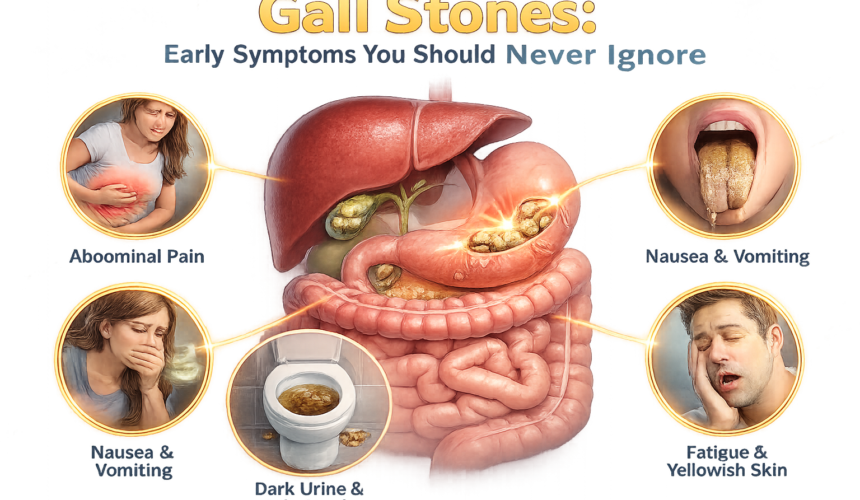
Many people ignore occasional stomach discomfort, assuming it is simply acidity, gas, or indigestion. But sometimes, recurring pain after meals — especially oily or heavy meals — may point to something more serious: gall stones.
Gall stones are a common digestive problem seen in both men and women, although women and people above 40 are generally at higher risk. In clinical practice, one pattern is seen repeatedly — patients often delay medical evaluation because the symptoms come and go in the early stages.
Unfortunately, untreated gall stones can sometimes lead to severe pain, infection, jaundice, pancreatitis, or emergency surgery.
Recognizing the warning signs early can help prevent complications and allow timely treatment.
This article explains the early symptoms of gall stones, why they occur, how they are diagnosed, and when you should consult a doctor.
What Are Gall Stones?
Gall stones are hardened deposits that form inside the gallbladder — a small organ located below the liver.
The gallbladder stores bile, a digestive fluid that helps break down fats. When substances in bile, such as cholesterol or bilirubin, become imbalanced, stones may gradually develop.
Gall stones can range in size from tiny grains to larger stones resembling small pebbles.
Some people may have gall stones without symptoms, while others develop painful attacks that interfere with daily life.
Types of Gall Stones
Cholesterol Stones
These are the most common type and are usually yellowish in color. They form when bile contains excess cholesterol.
Pigment Stones
These darker stones form due to excess bilirubin and are more common in people with liver disease or certain blood disorders.
Early Symptoms of Gall Stones You Should Never Ignore
1. Pain in the Upper Right Abdomen
This is one of the earliest and most common symptoms.
The pain usually occurs in the upper right side of the abdomen, just below the ribs. Some patients describe it as:
- Sharp
- Cramping
- Sudden
- Heavy pressure-like discomfort
The pain may last from a few minutes to several hours.
Many people notice it after eating oily, spicy, or heavy meals.
2. Pain After Eating Fatty Foods
Gallbladder contractions increase after fatty meals to release bile for digestion. If stones block bile flow, pain may develop shortly after eating.
Patients often say:
- “The pain starts after dinner.”
- “Fried food triggers discomfort.”
- “I feel bloated after eating.”
This symptom is commonly mistaken for simple indigestion in the beginning.
3. Nausea and Vomiting
Persistent nausea after meals can be an early warning sign of gallbladder disease.
Some patients also experience:
- Vomiting
- Feeling overly full
- Loss of appetite
When these symptoms repeatedly occur alongside abdominal pain, medical evaluation becomes important.
4. Bloating and Indigestion
Gall stones can interfere with normal digestion, especially fat digestion.
Common complaints include:
- Gas
- Burping
- Abdominal heaviness
- Bloating after meals
These symptoms are often ignored for months because they resemble acidity or gastritis.
5. Pain Radiating to the Back or Shoulder
Gallbladder pain does not always remain limited to the abdomen.
Some patients experience pain:
- Between the shoulder blades
- In the right shoulder
- In the upper back
This referred pain pattern is quite typical in gallbladder disease.
6. Sudden Severe Pain (Gallbladder Attack)
A gallbladder attack may occur when a stone temporarily blocks the bile duct.
Symptoms can include:
- Intense abdominal pain
- Sweating
- Restlessness
- Nausea
- Difficulty sitting comfortably
The pain often appears suddenly and may become severe enough to require emergency medical attention.
7. Fever and Chills
If gall stones cause infection or inflammation of the gallbladder, fever may develop.
This can indicate acute cholecystitis, a condition requiring prompt treatment.
Never ignore:
- Fever with abdominal pain
- Chills
- Persistent vomiting
8. Jaundice
If a stone blocks the common bile duct, bile flow may become obstructed.
This can lead to:
- Yellowing of eyes and skin
- Dark urine
- Pale stools
Jaundice associated with gall stones should always be medically evaluated.
Why Do Gall Stones Develop?
Several factors increase the risk of gall stone formation.
Common Risk Factors
- Obesity
- Rapid weight loss
- High-fat diet
- Diabetes
- Pregnancy
- Family history
- Liver disease
- Age above 40
- Sedentary lifestyle
In Indian patients, dietary habits and metabolic conditions such as obesity and diabetes commonly contribute to gallbladder disease.
Who Is More Likely to Develop Gall Stones?
Doctors often remember the “4 Fs” risk profile:
- Female
- Forty
- Fertile
- Fat
However, gall stones can occur in younger adults and men as well.
Today, rising obesity rates and sedentary lifestyles have increased gall stone cases among younger individuals too.
When Patients Commonly Ignore Symptoms
One of the biggest challenges with gall stones is that symptoms may come and go initially.
Patients often:
- Self-medicate with acidity medicines
- Delay scans because pain improves temporarily
- Avoid medical consultation until attacks become severe
Unfortunately, delayed treatment can increase the risk of:
- Infection
- Pus formation
- Pancreatitis
- Blocked bile ducts
- Emergency surgery
Early diagnosis is always safer than waiting for complications.
How Are Gall Stones Diagnosed?
Clinical Examination
Doctors assess:
- Pain location
- Symptom pattern
- Food triggers
- Associated symptoms
Ultrasound Scan
Ultrasound is the most common and effective test for detecting gall stones.
It helps identify:
- Number of stones
- Stone size
- Gallbladder inflammation
Blood Tests
Blood tests may evaluate:
- Liver function
- Infection
- Pancreatitis markers
Additional imaging may sometimes be needed if bile duct blockage is suspected.
Treatment Options for Gall Stones
Observation (For Silent Stones)
The present recommendation is removal of gall bladder by minimal access surgery even for silent stones as they may not remain silent forever causing life threatening situations and not optimised scenarios for surgeries then
Medications
Medicines may temporarily help manage mild symptoms in selected cases, but they usually do not permanently remove stones.
Home remedies alone are generally not reliable for treating symptomatic gall stones.
Laparoscopic Gallbladder Surgery
For symptomatic gall stones, laparoscopic cholecystectomy is the standard treatment.
This minimally invasive procedure involves removing the gallbladder through small incisions.
Benefits Include:
- Smaller scars
- Less pain
- Faster recovery
- Shorter hospital stay
Most patients recover well and can return to normal activities within days to weeks, depending on overall health.
Can Gall Stones Be Prevented?
While prevention is not always possible, certain lifestyle habits may reduce risk.
Prevention Tips
- Maintain healthy body weight
- Avoid crash dieting
- Exercise regularly
- Limit excessive oily foods
- Manage diabetes properly
- Eat balanced meals with fiber
Rapid weight loss programs can sometimes increase gall stone risk, so gradual weight management is usually safer.
When Should You See a Doctor?
Consult a doctor if you experience:
- Recurrent abdominal pain
- Pain after meals
- Nausea with bloating
- Fever with stomach pain
- Jaundice
- Sudden severe abdominal attacks
Persistent digestive symptoms should not be ignored repeatedly.
Frequently Asked Questions (FAQs)
What are the first signs of gall stones?
Early signs often include pain in the upper right abdomen, bloating, nausea, and discomfort after fatty meals.
Can gall stones go away naturally?
Most gall stones do not disappear naturally. Symptomatic stones often require medical treatment or surgery.
Is gall stone surgery safe?
Laparoscopic gallbladder surgery is commonly performed and generally considered safe when done by experienced surgeons.
Can I live normally without a gallbladder?
Yes. Most people live normal healthy lives after gallbladder removal.
What foods trigger gall stone pain?
Fatty, fried, oily, and heavy meals commonly trigger symptoms.
Are gall stones dangerous?
If untreated, gall stones may cause infection, jaundice, pancreatitis, or bile duct blockage.
Can young people get gall stones?
Yes. Gall stones are increasingly seen in younger adults due to obesity and sedentary lifestyles.
Is acidity the same as gall stone pain?
No. Gall stone pain usually occurs in the upper right abdomen and may worsen after fatty meals.
Conclusion
Gall stones often begin with mild, easily ignored symptoms — occasional pain, bloating, nausea, or discomfort after meals. But delaying medical evaluation can sometimes lead to serious complications.
The good news is that modern diagnosis and minimally invasive treatment options make gall stone management safer and more effective than before.
If you repeatedly experience upper abdominal pain or digestive discomfort, it is important to seek proper medical evaluation rather than relying only on self-medication.
Early diagnosis can help prevent complications and support smoother recovery.